
Hambantota International Port Expands RoRo Capacity with New Yard
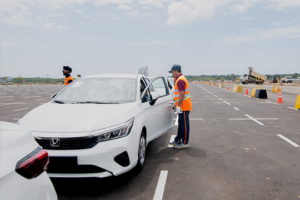
Hambantota International Port (HIP) has inaugurated a new six-hectare RoRo (Roll-on/Roll-off) yard as part of Stage I of Phase II of its expansion plan. This development is a significant step in supporting its long-term automotive transhipment strategy.
The newly established yard significantly enhances vehicle handling capabilities, adding space for 4,500 vehicles per terminal block. This expansion is designed to alleviate congestion, optimize yard planning, improve traffic flow, and ultimately accelerate vessel turnaround times.
In 2025, HIP demonstrated robust growth by handling 726,153 vehicles, with increased volumes observed across Asia, the Middle East, and Africa. The port is now setting its sights on achieving a capacity of 1 million vehicles per year in its subsequent development phases.
Wilson Qu, CEO of HIPG, highlighted that the expansion will not only reduce congestion but also significantly boost productivity. He emphasized that this initiative further solidifies HIP's value proposition for global RoRo operators utilizing the vital East-West trade lane.
Strategically located just 10 nautical miles from the main East-West shipping route, HIP offers reduced deviation times for vessels. This prime location effectively connects South Asia's vehicle export markets with key hubs in Asia, the Middle East, and Africa.
The port boasts deep-water berths and dedicated RoRo terminals, capable of accommodating some of the world's largest Pure Car and Truck Carriers (PCTCs). HIP remains committed to continuous investment in yard space, equipment, and digital systems to ensure the delivery of reliable services.
Stage II of Phase II of the expansion is currently under construction and is slated for launch in the second quarter of this year. Concurrently, Nippon Yusen Kabushiki Kaisha (NYK) announced the commencement of two new RoRo services to HIP, underscoring strong market confidence in the port's capabilities.
Hambantota International Port continues to reinforce its position as a pivotal automotive hub within the Indian Ocean region.