
Maritime CEO Forum Monaco: Masterclass on how to spend it
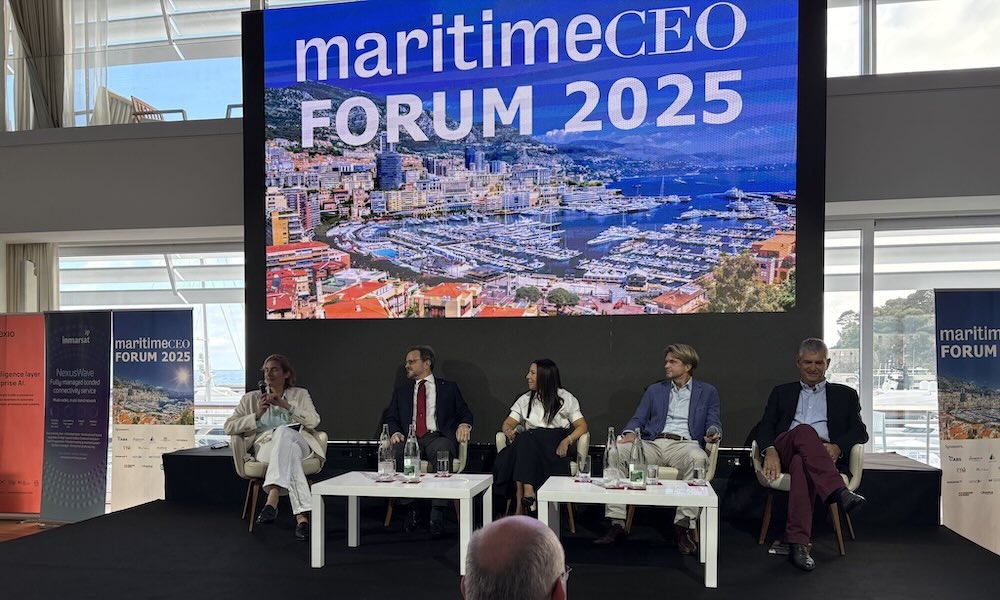
<strong><em>At the 2025 Maritime CEO Forum in Monaco, panelists wrestle with a market awash in capital yet riddled with uncertainty, debating fleet strategy, funding, and whether the next generation should join the family business.</em></strong>From geopolitics to ageing fleets, from alternative finance to AI in shipping, the discussion at the Money & Ships panel at the Maritime CEO Forum on Tuesday left no stone unturned.Moderator Isabelle Rickmers, CEO of TURTLE, kicked off by reflecting on the tension between operational reality and long-term strategy. “I’ve lived uncertainty my whole life — from 2010 to 2019 running our family shipowning business, then after covid, and frankly, at any point in time,” she said. “It’s never been certain. The question is, do you love uncertainty, or just survive it?”<em>Calm markets make you work hard for low returns; turbulent markets create opportunity</em>Andreas Povlsen, managing director at Hayfin, highlighted how global upheavals — from the Red Sea disruptions to Russian sanctions — are both a threat and an opportunity. “Geopolitics is critical, but the key is data,” he said. “If you can position yourself away from the sharp edge, you can manage around disruption. Big enough, you can navigate the chaos.”Graham Porter, chairman of Tiger Group Investments, added a historical perspective detailing how back in his Seaspan days with the Asian financial crisis, he signed a mammoth order with Samsung Heavy Industries that saved that yard.“Calm markets make you work hard for low returns; turbulent markets create opportunity,” Porter said. He said he was particularly worried about US-China trade, noting that China is preparing for a full cutoff of trade with the US in the next three months. “Anyone expecting normalisation is dreaming.”Financing was another hot topic. Christina Anagnostara, managing director of the investment banking division at AΧΙΑ Ventures Group, described a market overflowing with funds. “Banks are competing with new providers — leasing houses, infrastructure funds, Asian capital. Margins are extremely tight, 135 to 200 basis points,” she said. Povlsen noted that private equity and hedge funds now dominate shipping capital, replacing banks. “Diversifying capital is both an opportunity and a challenge — it can make the market opaque,” he said.Ageing fleets and fuel uncertainty dominated technical discussions. Massimo Giovannini, managing partner at TST Group, cautioned against rushing to order new ships. “Maintenance and investment, not age, dictate a ship’s value. Ordering today is tricky — engines, fuel types, regulations. AI is probably the best crystal ball we have.”On the human side, the panel explored whether they would encourage the next generation to join shipping. Giovannini’s advice was unconventional: “I’d have my daughter stay a ballroom dancer and study AI in shipping instead.” Povlsen stressed diversification and global reach: “If I had a child interested, I’d advise co-investment across regions, not a single ship type. AI and data centers will shape the future.” Porter, meanwhile, recommended strategic focus on product shipping rather than chasing large containers blindly.Concrete investment advice emerged too. Povlsen flagged containers and one-year charter vessels, while Giovannini favoured feeder container ships for liquidity. On stock picks, Porter and Povlsen saw hidden value in well-managed Greek companies, trading at deep discounts despite strong balance sheets. “Financial markets ignore shipping, so opportunities exist if you look carefully,” Povlsen said.The audience chipped in, highlighting the paradox: ageing fleets, plentiful capital, and record high share prices amid extreme uncertainty. Panelists agreed that caution is essential. Porter noted the risk of overreliance on banks, citing lessons from 2007–2008 when liquidity vanished almost overnight.Rickmers closed the session by framing the bigger picture: the era of uniform global frameworks is over. “We are entering a world of two,” she said, echoing sentiments about divergent US-China policies and a reshaped trade order. “Shipping will survive, but only for those who navigate uncertainty with flexibility and foresight.”