
Shipper purchase orders hold steady despite tariff uncertainty
Shipper purchase orders hold steady despite tariff uncertainty
Meetings with China and the USMCA negotiation could further shake up supply chains, Port of Los Angeles Executive Director Gene Seroka said.
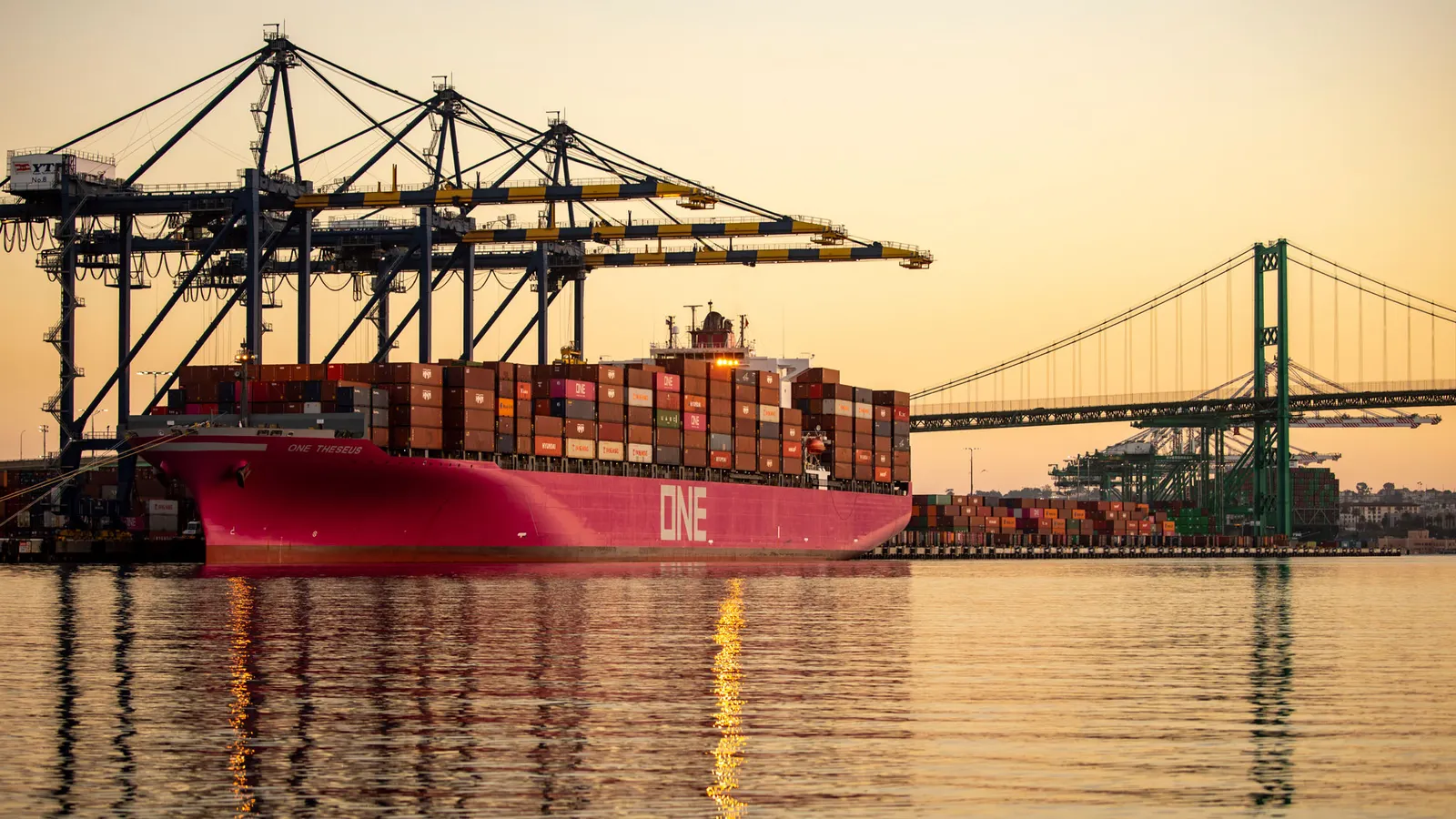
Published Feb. 25, 2026 Kelly Stroh Editor An ocean vessel at the Port of Los Angeles during sunrise. The Port of Los Angeles handled 812,000 TEUs in January, down 12% year over year. Courtesy of The Port of Los Angeles Listen to the article 3 min This audio is auto-generated. Please let us know if you have feedback.Shippers continue to place orders with overseas suppliers, even as evolving trade regulations present a murky supply chain outlook, Port of Los Angeles Executive Director Gene Seroka said during a Feb. 17 media briefing.
“I watch purchase orders that go out three months in advance to Asia factories, and right now they're looking stable,” Seroka said. He added that in the past, he’s seen shippers cancel purchase orders during years with a “bumpy” economic output.
As a result, the port will likely experience traditional seasonality trends this year, including spring and summer fashion, back-to-school season, Halloween, and eventually the anticipated holiday season, Seroka said.
Port of Los Angeles: January By the numbers 812,000 Total processed TEUs, down 12% YoY 421,594 Loaded imports in TEUs, down 13% YoY 104,297 Loaded exports in TEUs, down 8% YoY 286,110 Empty container units in TEUs, down 12% YoYMeanwhile, February arrivals at the Port of Los Angeles are looking flat compared to the prior year, with the port also expected to see the traditional post-Lunar New Year slowdown in March, Seroka said.
This is the result of several factors, Seroka told reporters.
“First, we're comparing against elevated 2025 numbers when importers were scrambling to get cargo in ahead of tariffs,” he said. “We'll be seeing these high year-over-year comps through much of 2026.”
Additionally, inventories remain slightly higher nationwide, due to the earlier cargo surge and a more cautious approach to inventory management.
“All that to say, compared to last year's big first quarter, I project a decline of less than 10% for Q1, and I don't see the economy or cargo volume dropping off a cliff after that,” the port director said. “And even though holiday sales were softer than we would have liked, I don't see a dire situation.”
Companies have grappled with uncertainty as U.S. trade policy rapidly evolves under the Trump administration, impacting end-to-end supply chain operations. Most recently, the Supreme Court ruled Trump’s broad use of the 1977 International Emergency Economic Powers Act as a way to enact global reciprocal tariffs is illegal.
Chad Bown, Reginald Jones senior fellow at the Peterson Institute for International Economics, said leaders should keep tariff changes and major trade developments on their radar to navigate the year ahead.
The anticipated meeting between Trump and China’s President Xi Jinping is important to watch, Bown said, noting that the last time the two presidents got together, “there tended to be deals.”
The United States-Mexico-Canada Agreement is also set to be reviewed this summer, which could further shake up cross-border supply chains.
But Bown said it is unclear what the administration's priorities are, ahead of the review.
“Do they want to keep it as is? They have suggested no, but they haven't really articulated what it is that they want to see changed about the agreement,” Bown said. “In President Trump's first term, renegotiating what was then the NAFTA — the North American Free Trade Agreement — was a huge priority.”
“So, I think watching how all of that plays out over the course of 2026 is going to be important,” Bown said.
Editor's note: This story was first published in our Logistics Weekly newsletter. Sign up here.
Recommended Reading
- 2026 port volumes likely to dip as inventories remain elevated By Kelly Stroh • Dec. 19, 2025