
From sharpies to vinyl: the professionalization of truck identity in cargo theft
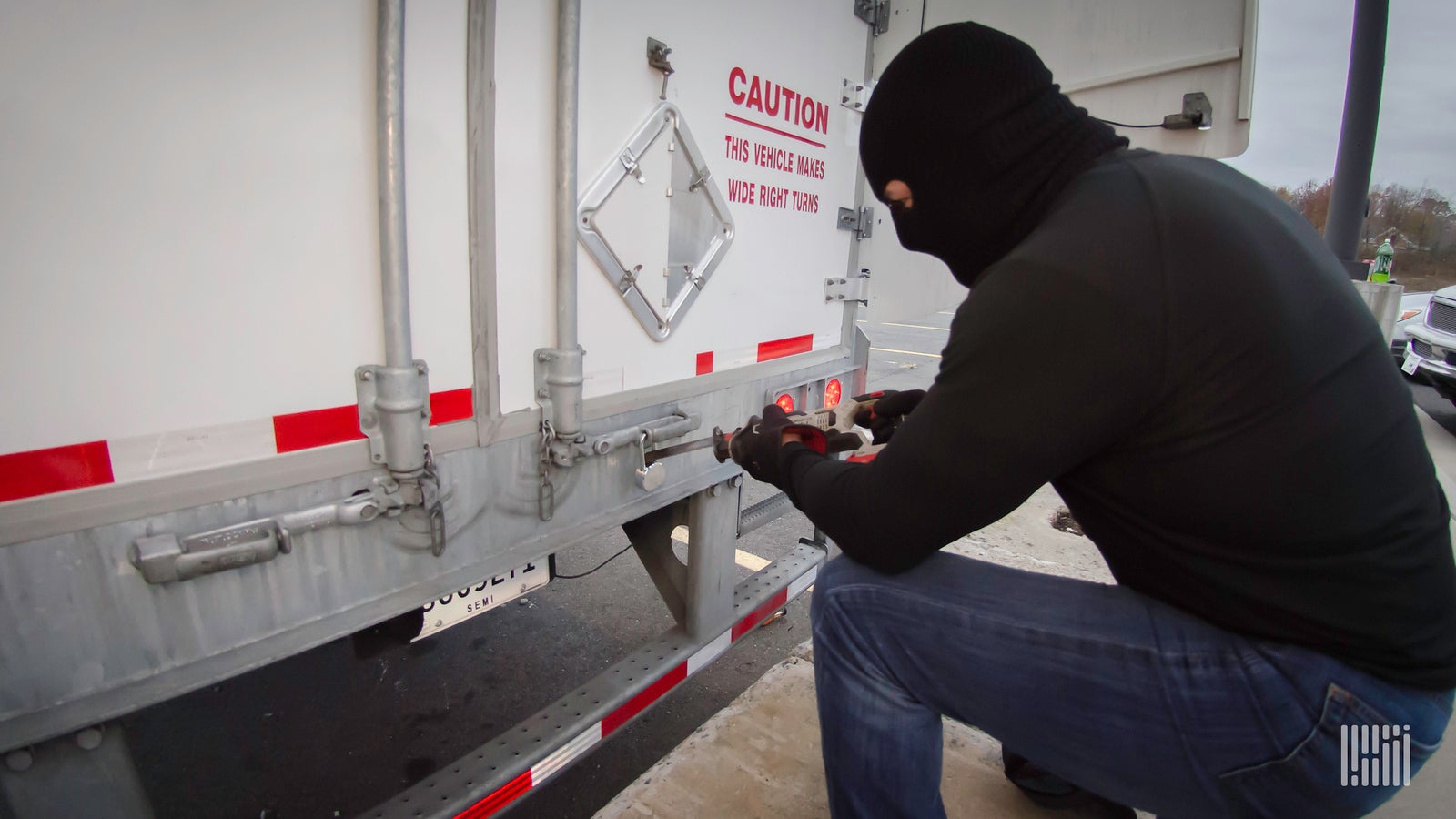
For years, the industry has joked about fraudulent trucks showing up with handwritten signs taped to the doors. A company name written in marker on a piece of paper became the stereotype of cargo theft. If you were paying attention, you could usually spot it. That environment is changing. Criminal groups operating in freight are getting more organized, and the physical appearance of legitimacy is becoming easier to create and harder to challenge in the moment when decisions are made.
We are now seeing patterns that suggest actors are using rapidly produced vinyl decals to create temporary truck identities within hours. The goal is not branding. The goal is access. A truck only needs to look legitimate long enough to remove freight from a facility. Once the freight moves, the identity can disappear just as quickly.
Most fraud prevention conversations still center around documentation. Carrier packets, certificates of insurance, operating authority status and email verification are all important, but they only address part of the exposure. Modern cargo theft increasingly combines digital deception with physical impersonation. A fraudulent carrier identity may exist online long enough to pass onboarding checks. By the time a truck arrives for pickup, the paperwork often appears reasonable on the surface. The final step is making the equipment visually match the identity that was booked.
Temporary decals solve that problem efficiently. They are inexpensive, widely available and easy to apply or remove. More importantly, they create enough credibility to pass a quick visual check during busy shipping operations where personnel are under time pressure. The truck does not need to withstand deep scrutiny. It only needs to avoid suspicion for a few minutes.
One consistent factor across these situations is urgency. Requests tied to suspicious activity often happen on compressed timelines with immediate production, immediate pickup and little concern about quality or accuracy. That urgency tells us something important. There is usually a narrow window between when a fraudulent load is secured and when pickup occurs. Criminal groups are optimizing for speed of execution, not perfection of presentation.
Another important shift is how physical identifiers are being treated. Instead of permanent branding, they are becoming disposable tools. In some cases, identifiers can be removed quickly after pickup, allowing the same equipment to operate under different identities. From a risk standpoint, that means the truck observed today may not present the same identity tomorrow. The equipment may stay the same while the identity changes.
Many facilities still rely heavily on visual confirmation as a primary control. Personnel are trained to check whether the truck has the correct company name, whether it matches the paperwork and whether it looks professional. Those checks were designed for an environment where impersonation required significant effort. That is no longer true. Low cost production and local availability mean a convincing truck identity can be created quickly in almost any major freight corridor.
What is emerging is not just a new tactic. It is a structural shift. Cargo theft is moving toward a model that blends digital identity compromise, operational knowledge of freight workflows, physical impersonation and time-based execution. Each individual piece may appear normal when viewed alone. Only when the sequence is connected does the risk become visible.
For brokers, shippers and carriers, the implications are practical. Identity verification has to extend beyond paperwork to include confirmation of who is actually operating the equipment arriving for pickup. Operational urgency should be treated as a risk indicator. Facilities may need to reconsider how carrier identity is validated at pickup, with visual appearance serving as only one layer instead of the primary control.
The larger takeaway is that criminals are becoming more professional because the incentives remain high. The days of obvious fraud indicators are fading. The next generation of cargo theft often looks legitimate right up until the freight is gone.
The post From sharpies to vinyl: the professionalization of truck identity in cargo theft appeared first on FreightWaves.