The largest battery-electric ship ever constructed was powered up yesterday and successfully completed its first e-motor trial in Hobart, Tasmania.
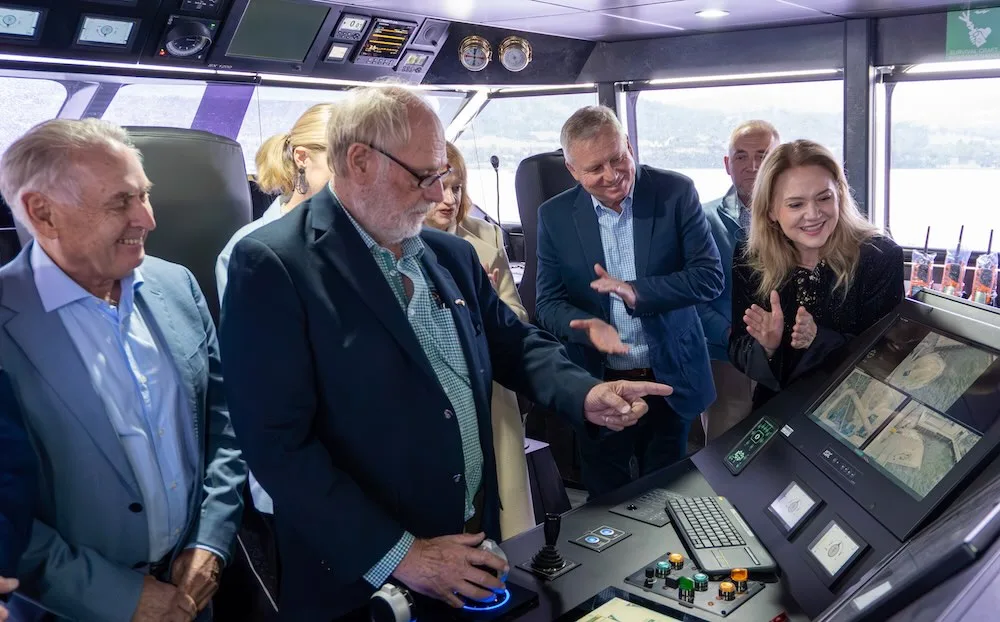
The powering of Hull 096 – the largest electric vehicle of any type on the planet – was witnessed by many dignitaries at a ceremony at Australian yard Incat Tasmania.
The 130 m long vessel, capable of carrying 2,100 passengers and more than 220 vehicles, boasts the largest battery-electric propulsion system ever installed on a ship.
Powered by more than 250 tonnes of batteries, the vessel’s energy storage system delivers over 40 megawatt-hours of installed capacity – four times larger than any previous maritime battery installation in the world.
“This is the first time a ship of this size, anywhere in the world, has been trialled under 100% battery-electric propulsion. It’s a remarkable achievement by our workforce and a turning point for shipbuilding,” said Incat chairman Robert Clifford.
Yesterday’s test was the first in a series of trials for the groundbreaking ferry before it departs for South America in the coming months.
Marine battery developments are accelerating around the world.
China’s BYD, the world’s fourth-largest car manufacturer, is looking at getting into marine.
Subsidiary BYD Energy Storage signed a memorandum of understanding with Norway’s Corvus Energy earlier this month, a market leader in marine energy storage systems (ESS), to establish a strategic collaboration aimed at advancing next-generation battery solutions for the maritime sector.
The MoU combines BYD Energy Storage’s scale and technological leadership in LFP batteries with Corvus Energy’s expertise in marine ESS applications.
Elsewhere, Green Whale Technology from the Netherlands has formed an alliance with China’s EVE Energy to provide batteries to ships worldwide. This collaboration combines EVE Energy’s advanced lithium marine battery system technology and GWT’s marine engineering, lifecycle service and commissioning expertise.
EVE Energy is one of the world’s largest battery manufacturers, with an ESS system factory capacity of over 10 MWh per day and is offering 15-year guarantees for its marine batteries as well as a very competitive price of below $300 per kWh.
Chinese battery giant CATL is also accelerating its push into the marine sector, aiming to electrify shipping beyond rivers and coastlines. Already a major supplier of marine battery systems—powering nearly 900 vessels and roughly 40 % of the global electric-ship market—CATL’s marine division believes that in the next three years, shipping will see large pure-electric vessels navigating the open seas.