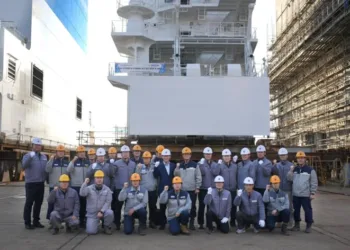
Almost a year after President Donald Trump called for a revitalization of American maritime fortunes, the White House on Friday released a detailed plan that focuses on expanding capacity at U.S. shipyards.
A key element of the plan authored by the Office of Management and Budget, which assumed oversight of the initiative after a White House maritime office was dissolved, is a tonnage fee on cargo arriving at U.S. ports aboard foreign-built ships. Similar to the short-lived tax on Chinese vessels that earlier this year sent shockwaves through international shipping, the plan estimates a fee of 1 cent per kilogram would generate revenue of $66 billion over 10 years, while a 25-cent fee would generate close to $1.5 trillion, to fund the proposed Maritime Security Trust, a source of dedicated funding for maritime infrastructure similar to the Highway Trust Fund.
The plan does not explain how the revenue estimates were calculated.
The release of “America’s Maritime Action Plan” also comes just days after a report by the New York Times highlighted the lack of progress since Trump prioritized maritime development in April at a high-profile media event in the Oval Office.
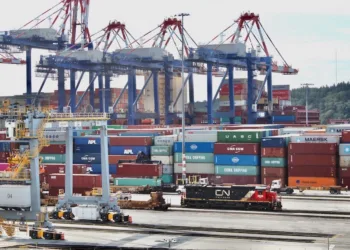
The plan also calls for a tax on imports arriving through land ports. That would target seaborne shipments that skirt the Harbor Maintenance Tax by routing through Mexico and Canada hubs, and enter the U.S. via truck and train.
The plan, which enumerates an array of available and proposed incentives, financing and loans, would also stimulate private investment by establishing Maritime Prosperity Zones, for maritime industries and waterfront communities.
The plan recommends expanding federal financing and tax incentives to lower the after-tax cost of vessel construction and shipyard investments, and create dedicated credit and loan programs for shipyard capital projects.
“Clear, flexible, long-term financing and predictable tax treatment will improve cash flow and make U.S. shipbuilding and yard upgrades financially viable,” the plan states. “Refundable production-based tax credits tied to the output of maritime vessels could send the strongest signal to producers, while minimizing allocation decision politics.”
To increase the maritime workforce, planners are calling for expanded training of ships’ crews, including modernization of the U.S. Merchant Marine Academy. The plan recommends financial incentives to stabilize the ranks of credentialed mariners and students.
But some observers were skeptical of the plan’s chances for success.
“While the goal of a Maritime Security Trust Fund is vital, the funding mechanism must not come at the expense of American competitiveness,” former Federal Maritime Commission Chairman-turned-lobbyist Louis Sola told FreightWaves. “Redistributing capital through a fee on essential imports and exports threatens to eliminate the very margins that keep our domestic industries viable on the only ships that can carry those goods.”
Find more articles by Stuart Chirls here.
Related coverage:
DP World chairman resigns after Epstein links revealed
Lower freight shipments weigh on world container rates
Investors halt deals with DP World over CEO’s Epstein ties
New MOL executive team to succeed CEO
The post White House eyes fees on foreign vessels to fund shipbuilding appeared first on FreightWaves.