Venezuela has begun deploying naval escorts for vessels carrying oil byproducts as they depart its ports, underscoring a rapid escalation in maritime tensions following US president Donald Trump’s threat of a “total and complete” blockade of sanctioned oil tankers trading to and from the country.
According to The New York Times, Venezuelan vessels loaded with cargoes such as urea and petroleum coke sailed from Puerto José between Tuesday evening and Wednesday morning under naval protection, citing ship-tracking data and people familiar with the matter. A US official confirmed Washington is aware of the escorts and said a range of responses is being considered. It remains unclear whether the escorted ships themselves were under US sanctions.
Venezuela’s state oil company PDVSA sought to play down the move, saying its associated vessels continue to operate “with full security, technical support and operational guarantees in legitimate exercise of their right to free navigation.”
The dark fleet’s days of operating with impunity are numbered
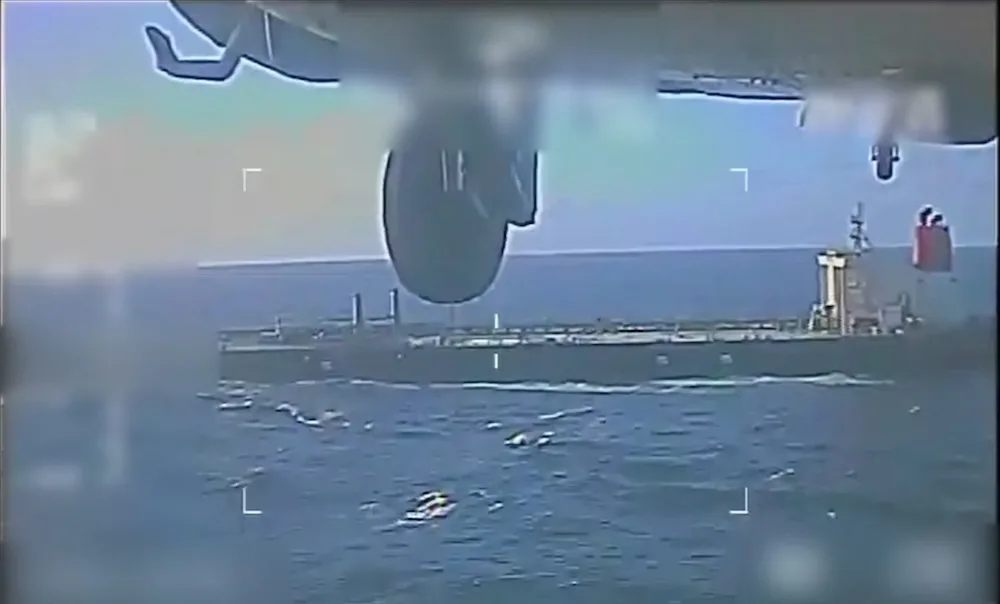
Trump announced the blockade threat earlier this week, accusing president Nicolás Maduro’s government of using oil revenues to fund “drug terrorism, human trafficking, murder, and kidnapping.” Caracas condemned the move as illegal, with Maduro warning it risked triggering a “new Vietnam.” The standoff sharpened after US forces seized the sanctioned tanker Skipper (pictured) off Venezuela on December 10, an action the Venezuelan government labelled “international piracy.”
Data compiled by TankerTrackers.com highlights the scale and complexity of the fleet now in focus. “There are 75 proven sanctions violators currently in Venezuela. Of that 75, only 38 are under US sanctions,” the tracking firm said. Narrowing the picture to export-capable vessels, TankerTrackers.com identified 26 OFAC-blacklisted tankers suitable for exports, of which 15 are currently laden with oil. The breakdown includes seven VLCCs/ULCCs (six laden), two suezmaxes (one laden) and 17 aframaxes (eight laden).
TankerTrackers.com also reported that despite the blockade claims a Panama-flagged, US-blacklisted VLCC which tends to use the name of a dead tanker, snuck its way into Venezuela earlier this week while spoofing on AIS to show that it was in a completely different part of the world.
Meanwhile, maritime risk specialist Windward reports a sharp surge in high-risk tanker activity in the region. “Tankers associated with Iran, Venezuela, or Russia conducted over 130 area visits to the Caribbean Sea in the past 30 days, involving 116 vessels,” Windward said. Of these, 19 vessels are sanctioned, 81 are classified as high risk and 14 are operating under fraudulent flags, with Caribbean area visits up 95% year-on-year.
Windward also noted deepening links between Moscow and Caracas, saying Russia is now supplying PDVSA with diluent after US shipments stopped, with Venezuela importing three times as much Russian naphtha this year as in all of 2024. The firm pointed to the arrival of Russian dark fleet tanker Seahorse in late November, after its route was disrupted by the US Navy while sailing from Cuba.
Windward cautioned that further escalation could accelerate sanctions-evasion tactics, including GNSS manipulation, ship-to-ship transfers and the creation of new shell companies modelled on Iran’s playbook.
“The dark fleet’s days of operating with impunity are numbered,” Windward claimed in a social media posting.