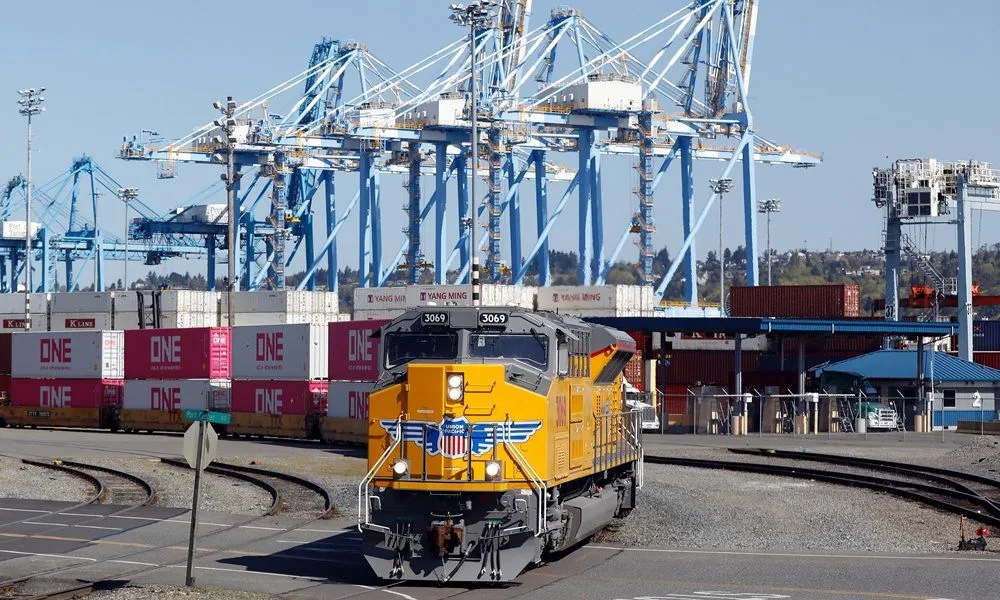
Union Pacific has struck a deal to acquire rival railroad Norfolk Southern in a stock-and-cash transaction valued at $85bn, in a move that would form the first coast-to-coast freight rail network in the US.
The combined operator would span more than 50,000 route miles across 43 states and link close to 100 ports, giving it a dominant position in the movement of bulk goods, vehicles, grain, and intermodal cargo.
Union Pacific, which covers territory west of the Mississippi River, will fold in Norfolk Southern’s 19,500-mile network across 22 eastern states. The aim is to streamline east-west cargo flows, reduce interchange delays, and improve service levels on high-volume freight corridors.
The companies estimate the merger could generate around $2.75bn in annual synergies. The duo expects to file for regulatory approval with the Surface Transportation Board (STB) within six months, targeting a formal closing in early 2027.
Union Pacific CEO Jim Vena, who will lead the merged company, said the deal would reduce friction in the supply chain by integrating operations and removing transfer points between carriers.
“This is about giving shippers a faster, more reliable product,” Vena said. “With coast-to-coast reach, we’ll be able to compete more effectively and bring more freight back to rail.”
The transaction, if approved, would give the new Union Pacific-Norfolk Southern combination a projected enterprise value above $250bn and position it to challenge Canadian railroads, particularly CN and CPKC, for cross-border and intermodal traffic.
Union Pacific said three Norfolk Southern board members — including Mark George and Richard Anderson — will join the company’s board post-merger.
Not everyone is on board. Major rail unions, including SMART‑TD, have voiced concerns that the deal could undermine safety and cut jobs. Past rail mergers, they argue, have led to service disruptions, crew reductions, and lower maintenance standards.
Rail analysts also suggest the move could trigger a fresh wave of consolidation, with CSX and BNSF — the two other large U.S. operators — potentially exploring defensive tie-ups to stay competitive.
Despite the pushback, the companies argue the merger will enhance domestic freight competitiveness, improve export connectivity, and support US manufacturing. The companies also point to the potential for better service in regions like the Ohio Valley and across both sides of the Mississippi, where rail connections have traditionally lagged.
US freight railroads currently move about 1.5bn tons of cargo annually. The new coast-to-coast system is pitched as a more truck-competitive option, potentially easing congestion on highways and offering a lower-carbon freight solution at scale.