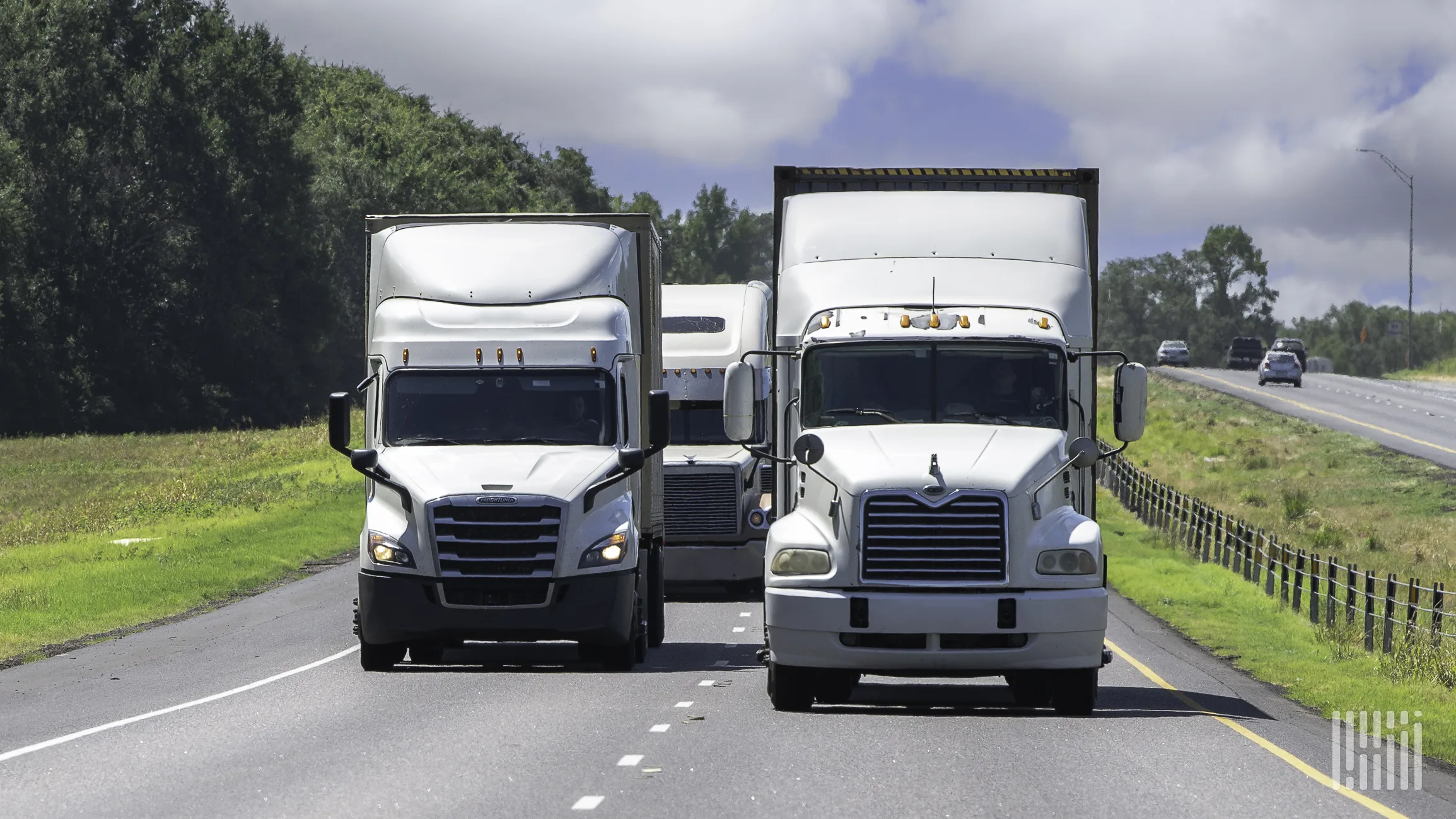
WASHINGTON — In the wake of a new presidential administration that swept into D.C. in January came a wave of regulatory policy changes affecting truck markets. Here are 10 of the biggest that made headlines in 2025:
1
March 12: EPA announces rollback of Biden-Harris emissions rules
Environmental Protection Agency Administrator Lee Zeldin announced on Wednesday that the agency is reviewing emissions rules put in place under the Biden-Harris administration. Included in the announcements, the EPA plans to take aim at the previous administration’s Clean Trucks Plan, which included rules on nitrous oxide emissions from heavy-duty trucks. This move, part of what Zeldin calls the “greatest and most consequential day of deregulation in U.S. history,” aims to dismantle what critics referred to as the Biden-Harris “electric vehicle mandate.”
2
April 28: Trump requiring that truckers speak and read English
President Trump signed an executive order on Monday requiring truck drivers to be able to speak English or be placed out of service. Among other requirements, the order “mandates revising out-of-service criteria to ensure drivers violating English proficiency rules are placed out-of-service, enhancing roadway safety,” according to a fact sheet published by the White House.
3
June 27: DOT will crack down on non-domiciled CDL holders
The Trump administration is launching a nationwide audit of non-domiciled CDL holders in an effort to crack down on unqualified drivers who pose a potential safety hazard to the nation’s roads. The effort is part of a sweeping package of new pro-trucker initiatives and regulatory rollbacks that includes a $275 million grant for truck parking and the cancellation of a rulemaking that would have limited top speeds for heavy-duty trucks.
4
July 23: Feds axe truck speed limiter mandate citing data gaps
Proposals that would have limited speeds for large trucks to as low as 60 mph lacked enough safety and economic data to justify moving forward, according to federal regulators. The Federal Motor Carrier Safety Administration and the National Highway Traffic Safety Administration, acting on a directive issued by Transportation Secretary Sean Duffy in June, canceled the two proposed rulemakings: the first issued 2016 under the Obama administration – by request from the American Trucking Associations, Schneider National, and others – and a follow-up proposal issued in 2022 under the Biden administration.
5
September 4: FMCSA pumps brakes on broker transparency, side guards
The Trump administration has pushed into 2026 a slate of potential regulations affecting the trucking industry, including a second proposed rule aimed at combatting alleged price gouging by freight brokers. In addition to delaying FMCSA’s new broker transparency rule, NHTSA is delaying until at least January 2026 considering a rule that would require side-guard equipment on trailers and semitrailers to reduce injuries and deaths in crashes with automobiles, according to the new agenda.
6
October 7: Barrs confirmed as new FMCSA administrator
Derek Barrs was confirmed by the U.S. Senate on Tuesday to serve as the eighth FMCSA administrator. Barrs was nominated for the position in March by President Trump after FMCSA Acting Administrator Adrienne Camire abruptly left the agency after less than two weeks. A former law enforcement official, Barrs had previously served as the Florida Highway Patrol’s lead representative within the Commercial Vehicle Safety Alliance’s Enforcement and Industry Modernization Committee.
7
October 30: Duffy declares war on CDL mills and fleets that hire from them
U.S. Department of Transportation Secretary Sean Duffy unveiled an aggressive new initiative targeting so-called “CDL mills” — commercial driver’s license schools accused of certifying unqualified drivers, many of whom lack English proficiency, basic operating skills, and proper citizenship documentation. The crackdown addresses a longstanding issue exacerbated by a 2022 FMCSA regulatory change that allowed self-certification for CDL trainers, leading to over 32,000 registered providers offering minimal training—sometimes as little as a few hours or even just watching YouTube videos.
8
November 26: FMCSA to poll ‘several thousand’ drivers on truck parking
The Trump administration wants to poll thousands of drivers on their truck parking experience with the intention of finding out how adding parking spaces will benefit truckers. The effort, to be conducted by FMCSA, comes after years of lobbying by large and small trucking companies pushing lawmakers for dedicated funding sources, along with studies estimating how the lack of parking is costing the industry.
9
December 1: FMCSA overhauls vetting of truckers’ ELDs
FMCSA is revamping its vetting process for electronic logging devices to help eliminate non-compliant equipment used to record truck drivers’ hours-of-service. Loopholes in the previous system made it easier to register sub-standard devices or re-register those that had been revoked, according to FMCSA, which has led to repeated revocations along with “costly, inconvenient replacements” for motor carriers, the agency noted.
10
December 17: Will marijuana rescheduling be a trucking game changer?
President Donald Trump rescheduled marijuana from Schedule I to Schedule III under the Controlled Substances Act. The trucking world should be paying very close attention because the Department of Transportation could eventually lose its legal authority to test nearly 4 million CDL holders for the drug that accounts for 60% of all positive tests in the FMCSA Drug and Alcohol Clearinghouse.
Related articles:
- Top 10 trucking policies likely to be affected by Trump’s return
- Top 10 freight market rulemakings scheduled for 2025
- Top 10 states that won Biden’s bridge-fixing windfall
Click for more FreightWaves articles by John Gallagher.
The post Trucking’s top 10 regulatory headlines of 2025 appeared first on FreightWaves.