WASHINGTON — Without federal oversight and the ability to coordinate and share information, cargo theft – particularly high-tech “strategic theft” directed by organizations operating outside the U.S. – will continue to surge, trucking and retail officials told lawmakers on Wednesday.
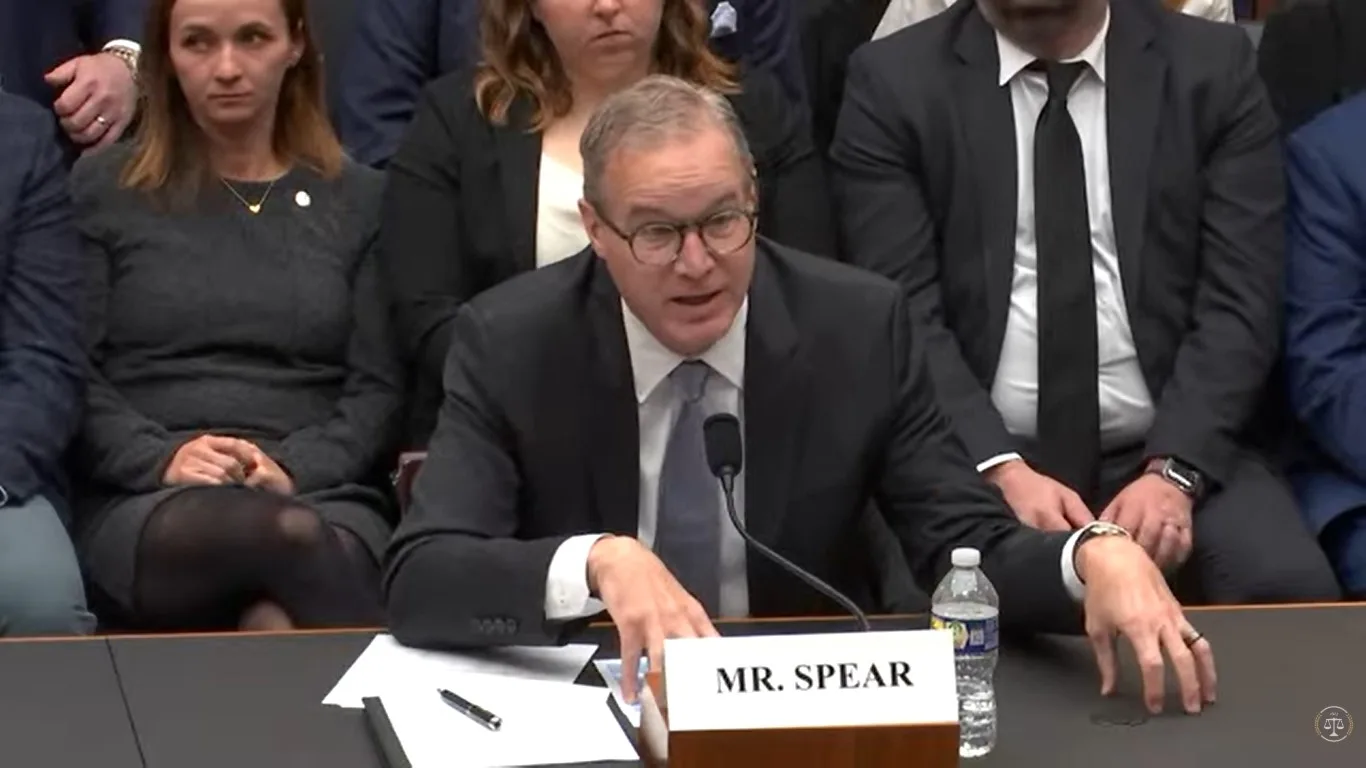
“This goes way beyond the hit-and-run type of straight theft that we’ve seen for over a hundred years with trucks,” American Trucking Associations President and CEO Chris Spear told House Judiciary committee lawmakers.
“This is a very complex, digitally-driven renaissance. These groups are operating out of Eastern Europe, Russia, South Africa, China – places where if you have a laptop, you can go into a bill of lading and redirect freight as it’s in motion. That freight’s long gone before the company figures out that it was taken.”
A survey released in October by the American Transportation Research Institute, an affiliate of ATA, revealed that cargo theft costs motor carriers between $1.83 billion and $6.56 billion annually in direct and indirect costs, with the average loss per incident $29,108 for motor carriers and $95,351 for logistics companies.
Strategic theft, Spear said, has risen 1,500% since the first quarter of 2021, with the average value per theft over $200,000.
Solving the problem, he told the committee, will require a “federal fabric” that closes a current law enforcement gap that currently undercuts the ability to understand where threats are coming from and how to prevent them.
It’s a key piece of the Combating Organized Retail Crime Act (CORCA), bipartisan, bicameral legislation that has a combined 230 cosponsors between House and Senate companion bills.
“State and local governments do not have that ability to attack transnational organizations. That is a federal responsibility, it’s the missing piece of the puzzle. If you put it in under CORCA, then you really have a full solution to tackling this problem quickly,” Spear said.
The aim of the legislation is to establish a unified federal response to organized retail crime and cargo theft, and addresses both physical and digital theft that fuels transnational criminal organizations
Provisions in the bill include:
- Organized Retail and Supply Chain Crime Coordination Center: Establishes a new central coordination center within U.S. Immigration and Customs Enforcement. The center’s mandate is to align federal, state, and local law enforcement efforts to assist in information sharing, track criminal trends, and provide technical assistance and training for multi-jurisdictional investigations.
- Money laundering: Expands statutes to include the illicit use of gift cards as part of criminal enterprises.
- Interstate transportation of stolen property: Lowers the threshold for federal intervention. It applies to stolen goods with an aggregate value of $5,000 or more over any 12-month period.
- Digital and marketplace oversight: Targets the illegal acquisition and subsequent sale of retail goods and cargo through both physical and online retail marketplaces.
Shane Bennett, principal of cyber defense and theft at big-box retailer Target Corporation (NYSE: TGT), told lawmakers at the hearing that gift card scams – which CORCA addresses – have surged, with over $1 billion in fraud losses estimated over the past two years.
“Criminals steal inactive gift cards off retail shelves, tamper with the card by copying the activation data, then reseal them before putting them back on store shelves,” Bennett testified. “Once an unsuspecting shopper loads money onto the card at checkout, fraudsters use automated systems or bots to detect a balance. Criminals then drain the funds by buying items, which are sold on the secondary market, online or overseas with the profits funding the criminal organizations.”
The problem intensifies during the holiday season, he said, when gift card purchases spike.
Passing CORCA, he said, would “establish the federal partnership needed to protect consumers, strengthen supply chains, and disrupt sophisticated criminal enterprises operating across borders.
“Retailers like Target have made substantial investments to protect our guests and secure our supply chain. But we cannot dismantle interstate and transnational theft- and fraud-driven networks on our own.”
Related articles:
- Trucking braces for Thanksgiving cargo-theft surge
- Lawmakers look at expanding FMCSA’s power to rein in cargo theft
- Sneaker reseller’s arrest highlights surge in US cargo thefts
Click for more FreightWaves articles by John Gallagher.
The post Trucking, retail pressure lawmakers to pass anti-theft bill appeared first on FreightWaves.