Ben Bailey, director of programme at The Mission to Seafarers, has an urgent message to protect the global maritime workforce.
Every day, close to 2m seafarers sail the world’s oceans, keeping global trade flowing and economies alive. These men and women operate in environments defined by isolation, long hours, and immense responsibility. Yet, as our latest Seafarer Happiness Index (SHI) reveals, the well-being of those at sea is under renewed strain, and the loss of meaningful shore leave plays a critical role in that decline.
The Q3 2025 Seafarers Happiness Index paints a sobering picture. After a period of improvement earlier in the year, overall happiness has fallen sharply in Q3. This downturn spans almost every area of seafaring life, from wages and health to food quality, training, and workload management.
Most worryingly, access to shore leave is continuing to deteriorate. Across many ports, seafarers report that opportunities to disembark are dwindling, driven by shorter turnaround times, security restrictions, and prohibitive transport costs. Some seafarers even described their ships as “floating prisons,” a phrase that should give the industry pause.
The SHI shows that seafarers are increasingly exhausted and overstretched. Manning levels are often too low, administrative demands are rising, and genuine rest is a rare luxury. When shore leave is denied, it compounds every other challenge, from fatigue and stress to homesickness and disconnection.
Shore leave is often treated as an operational inconvenience, something to be squeezed out to meet schedules and security requirements. But it is, in reality, a matter of safety, welfare, and human dignity.
For centuries, seafarers have relied on time ashore to rest, recover, and reconnect. Stepping off the ship, even briefly, helps relieve the mental pressure of living and working in the same confined space for months at a time. It restores perspective and allows crews to recharge before returning to duty.
When that lifeline is removed, we see the consequences in declining morale, higher fatigue, and, ultimately, compromised safety. It is no coincidence that, according to Lloyd’s List Intelligence and DNV, an estimated 80% of maritime accidents are linked to human error. A burned-out, overworked crew is a risk to itself and to every vessel at sea. Shore leave, therefore, must be seen not as a privilege but as a core component of a good safety management plan.
The human impact of confinement
Imagine working in a sealed environment where you cannot step outside, breathe fresh air, or see your family for months. For many seafarers, that is daily life. The ship is their workplace, their accommodation, and their confinement all at once.
In the Q3 Index, seafarers described how this relentless confinement is eroding their mental and physical health. Exercise and well-being scores have dropped sharply. Many spoke of chronic fatigue, limited sleep, and little opportunity for physical activity. The phrase “too much but not tasty” was used to describe shipboard food, a small but telling sign of how even the few comforts available at sea are being undermined by economic pressures and tight budgets.
These experiences are not isolated. They represent a systemic issue in modern shipping, one that threatens to undermine both safety and sustainability. If we want resilient, skilled, and motivated seafarers, we must give them the means to live like human beings, and that starts with shore leave.
Bridging the welfare gap
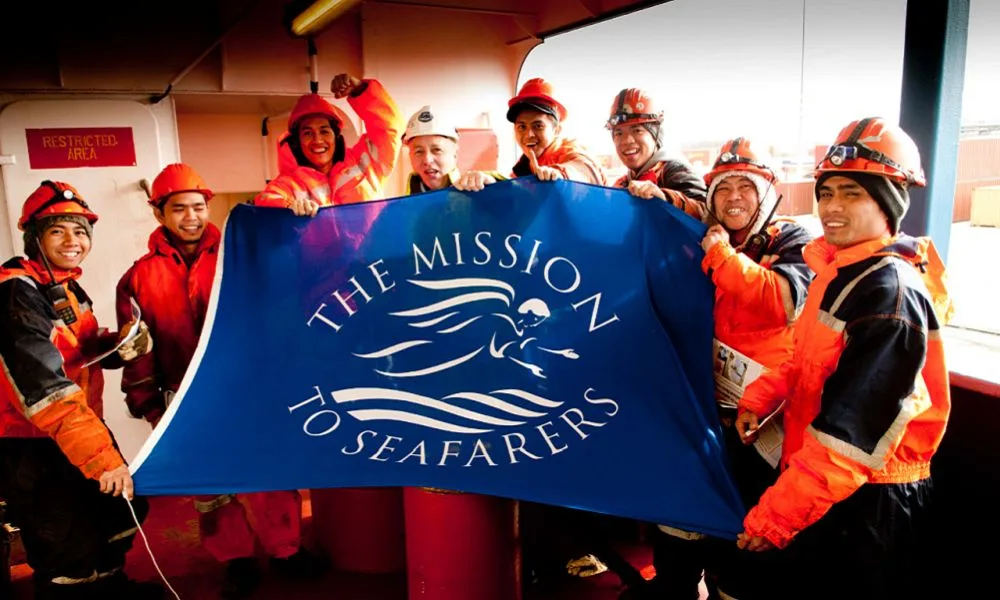
At The Mission to Seafarers, our teams are working tirelessly across more than 200 ports in 50 countries to support those who cannot get ashore. Last year, we visited over 48,000 ships and supported more than 500,000 seafarers and their families. Our Flying Angel Centres offer Wi-Fi, transport, and a safe space for crews to unwind, a small but vital substitute for the freedoms of shore leave.
Our Happy@Sea app, developed with support from DNV, Cargill, and The Seafarers’ Charity, also plays a valuable role in helping crews locate welfare centres, arrange transport, and access wellbeing resources. Yet, as valuable as these initiatives are, they cannot replace the restorative power of actual time ashore. Technology can connect seafarers with loved ones, but it cannot give them the sense of humanity and freedom that only shore leave provides.
The findings from the latest SHI report are a clear call to action – we must make shore leave a consistent reality again, not just a theoretical right.
To achieve this, the maritime industry must enforce meaningful shore leave regulations. Simply put, every ship’s schedule must include planned time for the crew to go ashore, even on short port calls. Port infrastructure must also improve, with safe, affordable, and accessible transportation provided from ship to shore, even in high-security zones.
Most importantly, mental health must be seen as an absolute safety priority: crew wellbeing should be recognised as a measurable safety indicator, on par with mechanical maintenance and compliance checks.
Finally, welfare organisations must be allowed easier access to vessels so that no crew is left isolated or unsupported.
The industry has shown remarkable adaptability in embracing digitalisation and decarbonisation. Now it must demonstrate the same commitment to the human side of shipping.
Reclaiming humanity at sea
The Q3 2025 Seafarers Happiness Index offers a sobering but valuable reminder: progress can quickly unravel if the people at the heart of shipping are pushed beyond their limits. The well-being of seafarers is not a secondary concern; it is fundamental to safety, sustainability, and the future of global trade.
Shore leave must once again become a normal, expected, and protected part of life at sea. When we allow seafarers to rest, breathe, and reconnect with the world, we not only honour their humanity, but we also make the oceans safer for everyone.