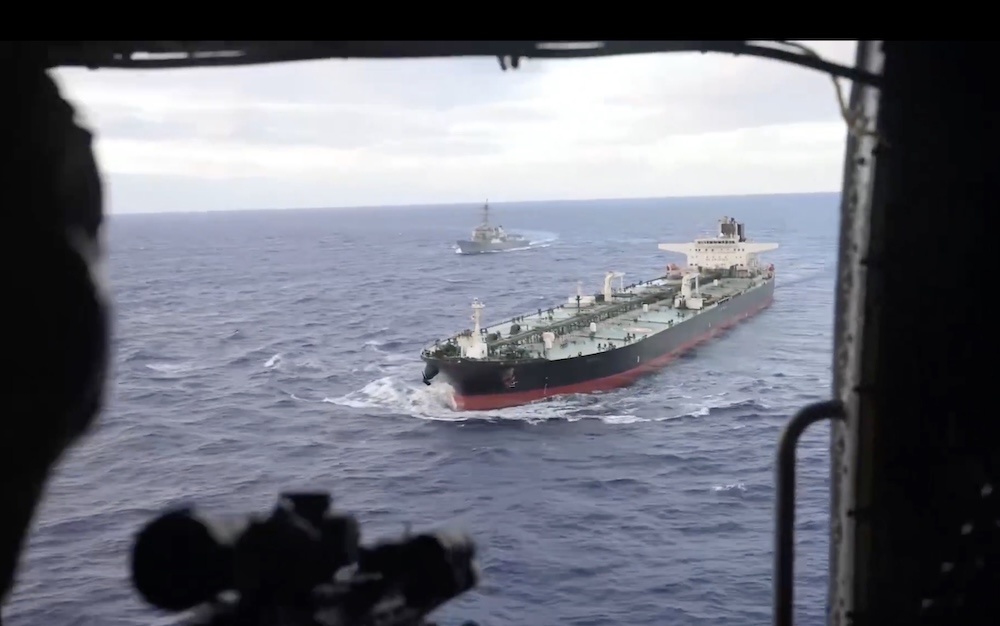
Windward, a maritime analytics firm that tracks the sprawling shadow fleet, is predicting at least 120 falsely flagged, sanctioned tankers are likely to reflag to Russia’s registry in the coming months, as Western interdictions of stateless shadow fleet vessels accelerates a structural shift in Russia’s oil export logistics.
All ships identified by Windward fit the profile and trading pattern of tankers that have already switched to Russia’s flag following a governance crackdown and nine interdictions of sanctioned, stateless vessels in just over eight weeks.
Nearly 70 dark fleet tankers have been tracked by Windward broadcasting Russia as their new flag since May 2025, including 40 since the boarding, seizure, or detention of falsely flagged ships by the US, UK, and France began in December.
Data from Clarksons Research shows the Russian flag has grown by more than 25% over the past 12 months.
At least three vessels – Akkord, Saga, and Topaz – switched to Russia’s flag from fraudulent registries last week alone.
Throughout 2025, more than 300 shadow fleet tankers involved in sanctioned Iranian, Venezuelan, or Russian oil trades shifted to fraudulent flags, often after repeated flag hopping.
These vessels were subsequently deregistered by permissive registries, after sustained pressure to remove Western-sanctioned tonnage, leaving many ships effectively stateless.
This left the tankers vulnerable at sea. Reflagging to Russia, which is often the only registry willing to accept them, restores legal protection under international maritime law, at least for now. Roughly half of the reflagged tankers are beneficially owned by Sovcomflot, Russia’s government-controlled shipping company.
Windward data shows approximately 120 Russia-trading tankers over 180 m in length broadcasting flags from 19 fraudulent registries, including Botswana, Guyana, Guinea, and Madagascar. These vessels are part of the more than 650 tankers sanctioned for evading Russia-related measures and have been under close surveillance while sailing to and from Russian Baltic ports over the past two years.
A joint statement issued on January 26 by multiple European governments warned of increased action against vessels without nationality or valid documentation, reinforcing the growing enforcement risk of stateless ships.
The reflagging strategy will become more urgent if the European Commission’s proposed a 20th sanctions package gets voted through later this month.
Europe plans to scrap the crude oil price cap and replace it with a full ban on maritime services linked to Russian crude exports.
“If implemented, the EU proposal, which followed consultations with the US, would put significant additional pressure on the Kremlin. The Russians would become almost completely reliant on the dark fleet,” suggested experts at tanker broker Poten & Partners in their latest weekly report.