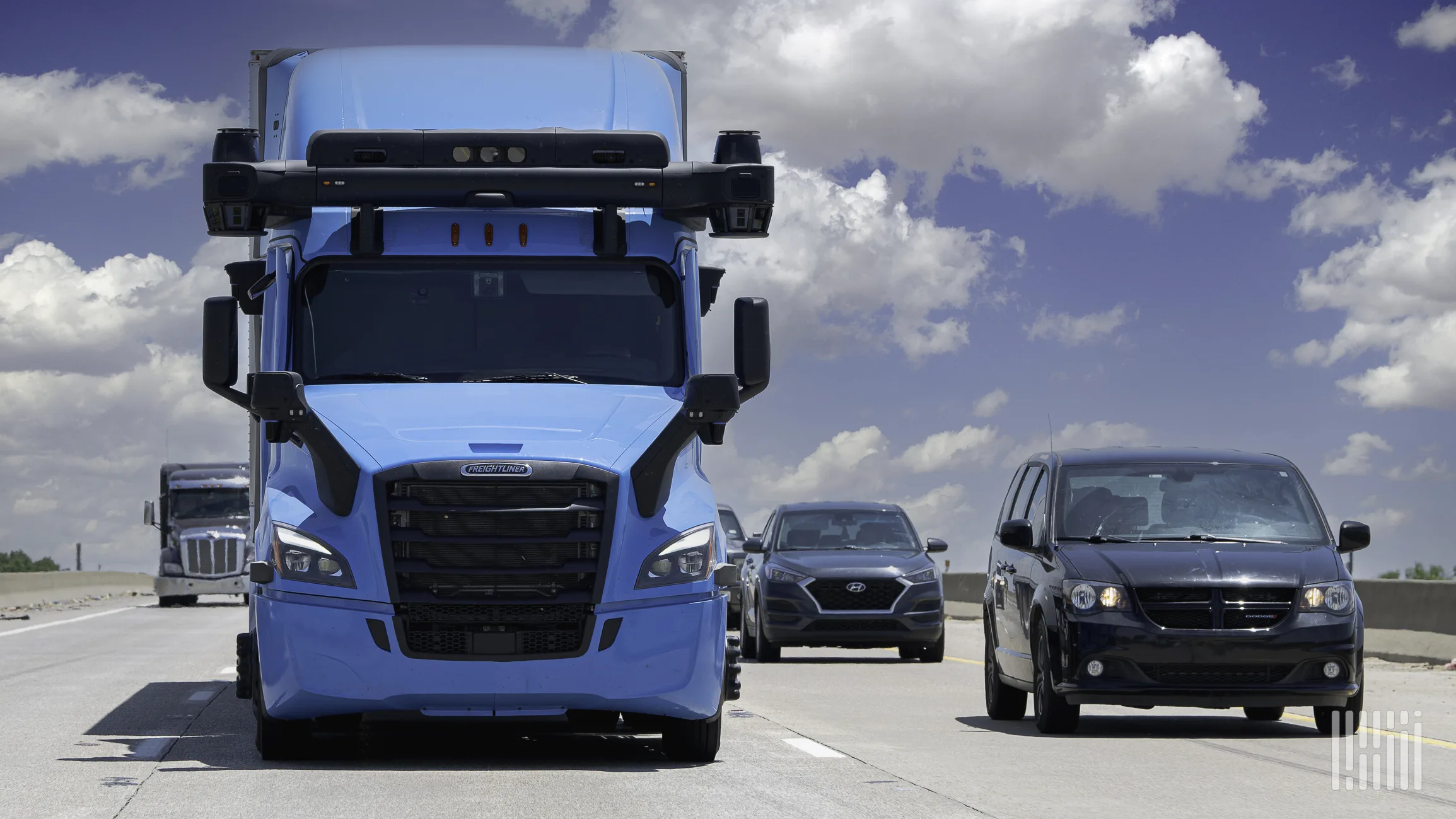
WASHINGTON — The Self Drive Act of 2026 has officially cleared a significant hurdle for autonomous trucking: the ability to earn while you test.
Moving beyond the framework of an earlier discussion draft, the official version introduced on February 5 by U.S. Rep. Bob Latta, R-Ohio, gives the secretary of transportation explicit authority to allow manufacturers and fleets to engage in “limited commercial operations” while under a testing permit.
For the first time, federal legislation defines a path for autonomous rigs to carry members of the public as passengers or – crucially for the trucking sector – to transport freight as part of their evaluation process, effectively transitioning pilot programs from cost centers into revenue streams.
While the discussion draft touched on testing, the bill as introduced provides the green light for these rigs to generate revenue by considering a manufacturer’s specific “operational use case” and mileage objectives.
To protect the market from unregulated deployment, the transportation secretary is empowered to set reasonable limits on the number of participating vehicles and revenue generation on a jurisdiction-by-jurisdiction basis, ensuring that testing remains rigorous while allowing carriers to prove the economic viability of driverless technology.
There are several other reasons why the official legislation is likely to be viewed by the trucking industry as more “industry friendly” that the draft version.
Both aim to end the regulatory patchwork” among individual states that hinders interstate commerce, but federal preemption in the official bill is hardened by specifically prohibiting any state or local subdivision from enacting laws that “prohibit in whole or in part” the manufacture, sale, or introduction of automated driving systems into interstate commerce.
Regarding the creation of a National Automated Vehicle Safety Data Repository, the official version of the bill gives manufacturers 30 days after a crash occurs – or 10 days after they receive notice of it – to file a report. The previous version was much tighter, requiring reports within 20 days of the crash or 7 days after notice. The extra 10 days will likely be considered a win for carrier legal and safety teams.
The official bill also narrowed the scope of what data must be handed over to the federal government. Data reporting is triggered by objective outcomes such as fatalities, hospital-transported injuries, airbag deployment, strikes of vulnerable road users, or vehicle towing.
As initially drafted, the bill had included a police report as a standalone trigger for a mandatory report. By removing this in the official version, the bill prevents fleets from having to report minor “fender benders” that happen to involve a police report but result in no damage or injury.
In addition, the official bill adds a specific state prohibition with regard to data confidentiality: a state may not require a manufacturer to report covered crash data directly to them if that data is already being reported to the federal repository. This ensures a “single point of entry” for data, reducing the risk of proprietary fleet information leaking through state records requests.
The bill is scheduled to be marked up in committee this week.
Related articles:
- Autonomous trucking faces growing product liability risks
- DOT moves to clear the road for self-driving trucks
- Feds predict at least 200 automated vehicle crashes annually
Click for more FreightWaves articles by John Gallagher.
The post Self-driving bill greenlights revenue-generating rigs appeared first on FreightWaves.