Wolfgang Lehmacher discusses New York’s Climate Lab.
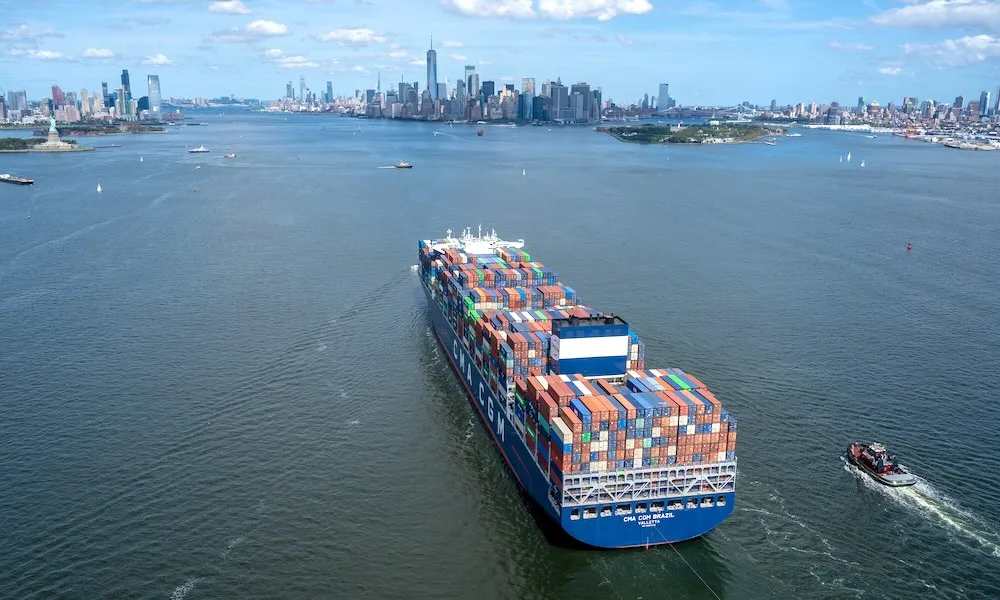
New York wants its waterfront to be a bellwether of the climate transition, and, in the process, to test whether a port–city climate lab can really move the needle for global shipping. At the Brooklyn Army Terminal, the city plans BATWorks, a 200,000 sq ft climate innovation hub that, according to NYCEDC, is expected to host around 150 start-ups over 10 years, backed by $100m in public investment and projected to generate $2.6bn in economic impact.
New York joins a race to turn ports into transition engines, but it is choosing a different starting point. BATWorks sits at the centre of New York City’s Green Economy Action Plan, which aims to reduce risk for new climate solutions, attract green economy businesses and build the spaces and skills they need. At the Brooklyn Army Terminal, industrial buildings are being reused for research facilities, testing areas and meeting spaces that connect innovators directly with waterfront tenants and logistics operators.
Ports such as Rotterdam and Singapore already use their harbours as test grounds for cleaner shipping, digital port operations and new energy systems, positioning themselves as hubs for the industry’s transition. BATWorks gives New York Harbor a similar strategic platform, but with a sharper focus on the sea-city-hinterland interface. The hub anchors the Harbor Climate Collaborative, which connects the Brooklyn Army Terminal, Governors Island and the Brooklyn Navy Yard into a single learning ecosystem expected to open six million square feet of climate-focused space, support 5,000 permanent jobs and generate about $55bn in economic impact over time.
Early pilots show how a harbour side experiment can start to rewrite port logistics. Companies like itselectric and Matcha are testing kerbside and shared charging for electric vehicles to clean up pre- and post-carriage, while others trial battery swapping for smaller vehicles to support dense, low-emission delivery networks that ease pressure on port-adjacent streets. Emissionless is using shared electric fleets to push these gains into regional flows between terminals and inland hubs; monitoring tools from Conservation Labs and Enertiv are turning water and energy data into operational intelligence; and Circular Economy Manufacturing’s small scale, renewably powered factories point to local production models that shorten some supply chains, cut waste and open new cargo and service opportunities around the port.
This is a prototype for a new class of port infrastructure: the port climate lab. Who captures the value if this becomes a reference site for ecosystem innovation? BATWorks and the Harbor Climate Collaborative can be treated as shared learning infrastructure, a neutral ground. Programme leadership at BATWorks is planned to come from the Los Angeles Cleantech Incubator, which has experience linking city pilots to procurement and long term deployment.
Companies will need to move beyond one-off pilots, commit assets and data to longer-term learning, help shape open approaches to charging, data use and safety, and use New York Harbor as a reference site for solutions they can later apply across their wider networks. Public bodies and financiers will need to treat BATWorks as essential climate and industrial infrastructure: providing stable capital, outcome-linked support and procurement pathways that can pull proven trials into everyday port and supply chain operations.
If New York succeeds, BATWorks will show that cutting emissions from shipping-related logistics is less about a single breakthrough fuel or technology and more about connecting many practical innovations in one place and making them investable. Ports that plug into climate labs like this early will help set the standards the rest of the world will follow, not by decree but through the examples they set in the market.