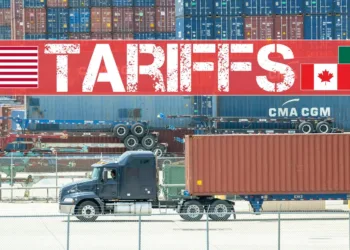
Proposed fees on containerized imports could give President Donald Trump a new lever to raise revenue after the Supreme Court limited his power to implement emergency tariffs.
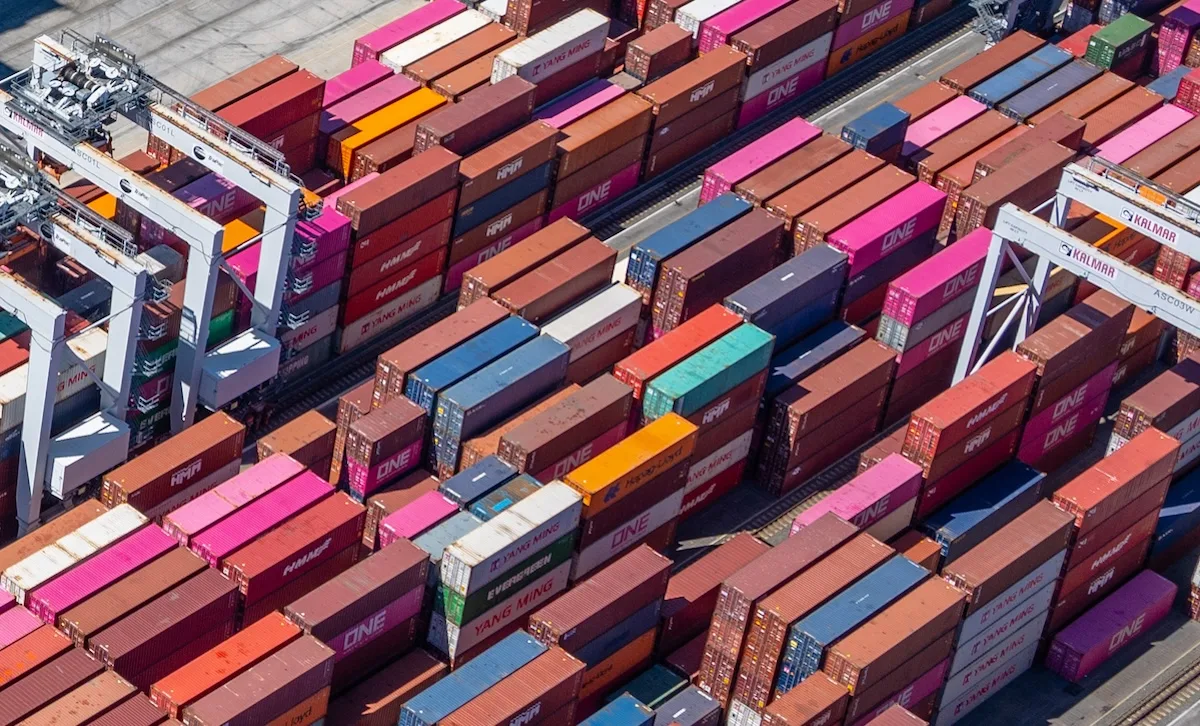
The Maritime Action Plan released by the White House Feb. 13 includes “universal fees” ranging from 1 cent to 25 cents per kilogram on cargo arriving at U.S. ports aboard foreign-built ships. The plans estimates the fees could raise as much as $1.5 trillion over 10 years, or $150 billion per year.
Customs revenue totaled $130 billion to $180 billion in 2025, counting emergency duties or all tariffs.
Trump imposed the tariffs as a way to obtain more favorable terms with trade partners, and to pay for his signature tax cuts in 2025.
Language in the MAP states that the fees “could” be used to fund a new Maritime Trust fund to help rebuild U.S. shipbuilding. But that seems by design to leave open the possibility of Trump deploying the funds for other purposes.
Some observers call the MAP fees a tax on global trade, with rapid downstream effects in the form of higher landed costs, pricing opacity, and uneven impacts across commodities and shippers.
And since they are based on weight, the fees “don’t distinguish between value density, necessity, or strategic importance,” wrote John Krisch, chief executive of Kübox, a manufacturer of paper crates based in Lebanon, Tenn., on LinkedIn. “That risks unintended consequences for exporters, consumers, and even U.S. logistics competitiveness, particularly at a moment when resilience and cost discipline are already strained.”
The tariff ruling also points up the non-stop chaos raking global trade, and the ongoing political risks weighing on container shipping.
As the contract negotiating season gets underway, ocean carriers are wrestling with a demand-capacity imbalance that’s been pushing down rates on key headhaul routes. Whether the tariff ruling gives trade a boost remains to be seen. But if cargo fees are implemented – as Trump did in 2025 with short-lived port fees on Chinese ships – it’s an open question whether container lines will be able to meaningfully raise prices.
Read more articles by Stuart Chirls here.
Related coverage:
Hapag-Lloyd, WiseTech Global in container visibility initiative
Asia-U.S. container rates continue to fall as industry change swirls
EXCLUSIVE: Norfolk Southern, CMA CGM launch new ‘truck-like’ intermodal service
Canadian firm to acquire breakbulk, steel terminal at Mexico’s Port of Altamira
The post Port fees could be the new import tariff after SCOTUS ruling appeared first on FreightWaves.