The 2026 maritime landscape reflects fundamental transformation from efficiency-driven globalization to resilience-focused regionalization, with critical emphasis on translating operational data into strategic decision-making tools.
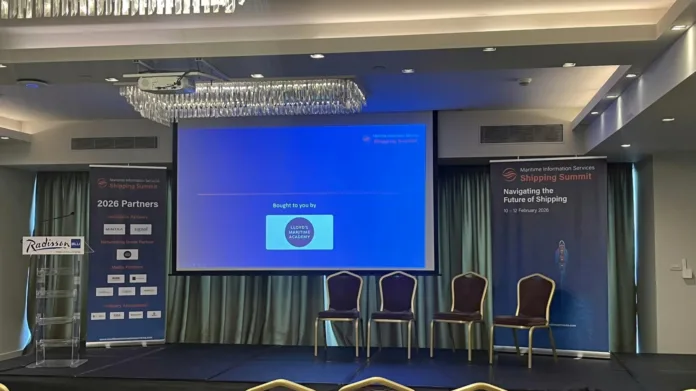
Here are some critical insights Container News gained through its participation in the Shipping Summit that took place in Athens:
From Data Collection to Strategic Action
Industry leaders emphasized shifting from reactive to proactive performance management. The value lies not in collecting more data but in communicating it clearly to decision-makers.
Different business areas require tailored datasets from identical raw data technical teams need granular metrics while management needs strategic narratives. Aligning fuel strategy and performance reporting with boardroom decisions transforms data from technical exercise into commercial advantage.
Digital Transformation’s Dual Reality
Digitization means “quick access to exploitable data” but this clarity cuts both ways.
Quick access creates exploitable vulnerabilities unless cybersecurity investment matches digitization pace. Shadow fleets handling 10-15% of global oil trade demonstrate how regulatory gaps create massive liability exposure.
Digitization without cybersecurity isn’t transformation it’s exposure. Bridge-to-boardroom cyber risk management is existential, not operational.
Workforce Evolution Through Human-Centered Innovation
Talent development requires rethinking traditional approaches. Immersive learning VR, simulators, AI only delivers value when learning design prioritizes psychological safety, enabling experimentation without consequence.
Future-ready workforces need hybrid skills: traditional seamanship plus digital literacy and adaptive thinking.
Leadership discussions centered on mentorship, intergenerational collaboration, and responsible platform use.
Success demands ability to rethink, unlearn, relearn building supportive ecosystems rather than hierarchical structures. Empowering yet empathetic leadership navigates complexity through purpose-driven decision-making.
Transparency as Competitive Advantage
Claims transparency, sea trial honesty, and credible performance reporting build trust with stakeholders, financiers, and regulators.
The US$1.4-3 trillion decarbonization requirement demands financing models treating sustainability as competitive differentiation, not compliance burden.
Strategic Imperatives
Summit consensus revealed: integrate geopolitical risk into route planning; treat cyber resilience as baseline requirement; prioritize workforce adaptability over specialization; transform data into commercial intelligence, not just technical metrics.
Success requires abandoning assumptions about neutral commercial spaces.
Maritime infrastructure functions as statecraft, trade routes reflect political alignment, resilience trumps efficiency.
Industry transformation from globalized network to regionalized clusters accelerates adaptation isn’t optional.
The post MIS Shipping Summit – Strategic recalibration through data-driven leadership appeared first on Container News.