Japan has unveiled an all‑Japan shipping initiative designed to lock in work for its shipyards and tighten cooperation along the domestic maritime value chain, as competition from Chinese and South Korean builders intensifies.
ORIX’s vessel trading arm SOMEC has signed a capital and business alliance with three of Japan’s most influential owner‑builder groups – Shoei Kisen (Imabari group), Kambara Kisen (Tsuneishi group) and Onomichi Dockyard – to form a new joint venture shipowner, Sakura Ocean Corporation.
The JV, described as the first of its kind in Japan to bring together shipowners, a shipbuilder and a marine vessel trader in a single industry‑wide vehicle, will order three new vessels: one each from Imabari Shipbuilding, Tsuneishi Shipbuilding and Onomichi Dockyard. All three ships are to be delivered by 2030 and chartered on time‑charter contracts to Japanese operators.
Shoei Kisen, Kambara Kisen and Onomichi Dockyard will each own 30% of Sakura Ocean, with SOMEC holding the remaining 10%. Santoku Senpaku, an ORIX subsidiary, will handle construction supervision and technical management, while ORIX coordinates planning across shareholders.
Tokyo is positioning the structure as a template for defending Japan’s shipbuilding and maritime base at a time when Chinese and Korean yards dominate global orderbooks. By tying domestic orders, ownership, chartering and management into a single loop, Sakura Ocean is intended to give Japanese yards a more stable pipeline, keep ship finance and asset management onshore, and strengthen the country’s hand in next‑generation tonnage decisions.
ORIX has spent the past two years building out that ecosystem, acquiring Santoku Senpaku in 2024 and SOMEC – spun out of Sojitz’s marine division – in 2025. Shoei Kisen, Kambara Kisen and Onomichi Dockyard are already SOMEC shareholders, making Sakura Ocean an extension of that platform. Sakura means cherry blossom in Japanese.
Today’s news is another sign that Japanese players are moving beyond bilateral yard‑owner ties towards coordinated industrial strategies as they confront an era of aggressive Chinese and Korean shipyard expansion.
Japan once commanded nearly 50% of global shipbuilding output during the 1990s. Today, its market share has plummeted to around 10%, trailing far behind China, which controls 70% of global newbuild capacity and an astounding 90% of repair capacity, and South Korea, its long-time regional rival. Last year, Japan outlined plans to double output by 2030.
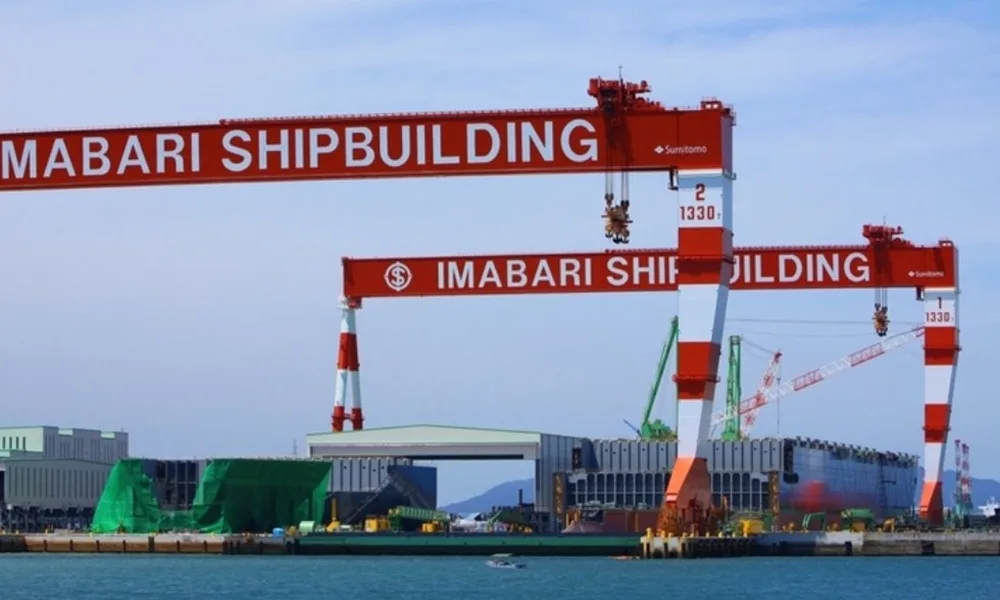
Earlier this year, Imabari Shipbuilding, the nation’s top yard, completed the acquisition of a controlling stake in Japan Marine United (JMU), Japan’s second biggest shipbuilder.
In November last year, Japan’s three major shipping lines — Nippon Yusen Kaisha, Mitsui OSK Lines, and Kawasaki Kisen Kaisha — joined orces with the country’s top shipyards in a push to reinvigorate domestic shipbuilding.The trio have invested in MILES, a Tokyo-based design company jointly owned by Mitsubishi Heavy Industries (51%) and Imabari Shipbuilding (49%).