Japan is pushing deeper into the hydrogen economy with plans to build what will be the world’s largest liquefied hydrogen carrier as it seeks to put a commercial-scale import supply chain in place.
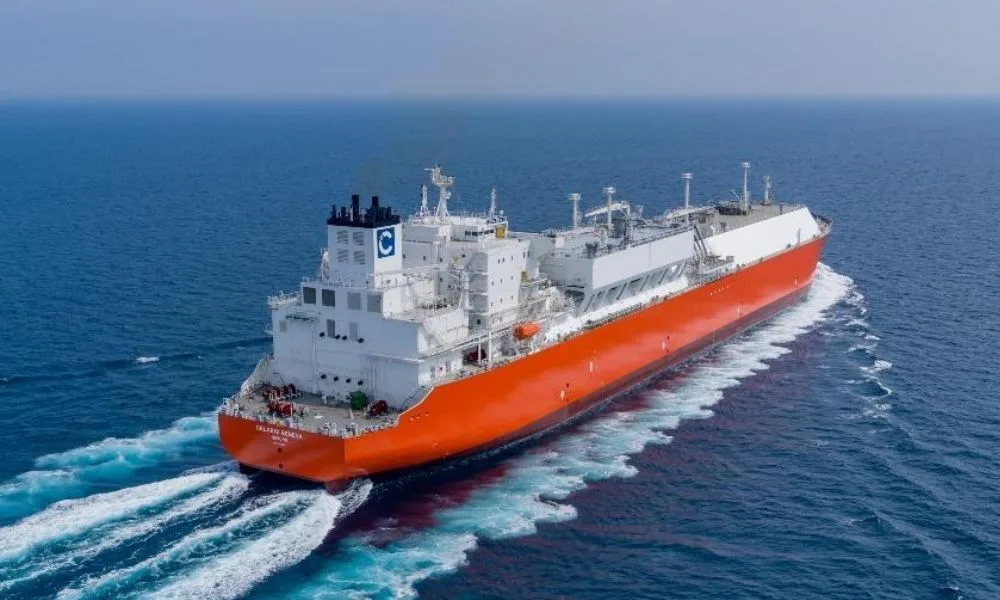
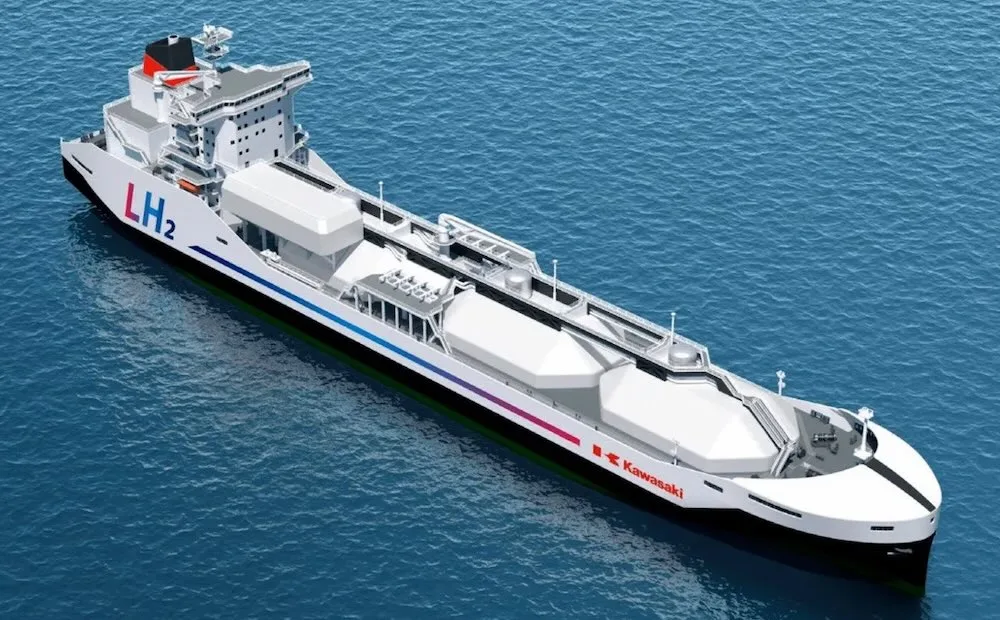
Shipbuilder Kawasaki Heavy Industries (KHI) has teamed up with Japan Suiso Energy (JSE) on a 40,000 cu m LH2 carrier, dwarfing the experimental 1,250 vessel used in earlier trials. The project comes four years after Japan successfully demonstrated the world’s first liquefied hydrogen carrier – the Susio Frontier – and marks a decisive move from proof-of-concept to commercial reality.
The newbuild sits at the heart of the government-backed Green Innovation Fund Project, supported by Japan’s New Energy and Industrial Technology Development Organization (NEDO). With a budget of around $2bn, the programme is designed to demonstrate the full liquefied hydrogen supply chain, from production and storage through to marine transport and delivery.
JSE, established in 2021 specifically to develop Japan’s hydrogen import infrastructure, will lead the project, while KHI will construct the vessel at its Sakaide Works. The ship will measure about 250 m in length, have a service speed of 18 knots and is slated to begin demonstration voyages, including loading and unloading operations, by 2030.
The carrier will feature advanced insulation to minimise boil-off gas, double-wall vacuum-jacketed piping for ultra-low-temperature transfer, and a propulsion system capable of using hydrogen boil-off as fuel. Its hull form and draft have been optimised for the low density of liquefied hydrogen, reducing power demand and boosting efficiency.
Alongside the vessel, the project includes construction of a commercial-scale liquefied hydrogen terminal at Ogishima in Kawasaki City, complete with a 50,000-cbm storage tank. Ground was broken on the facility in November 2025.