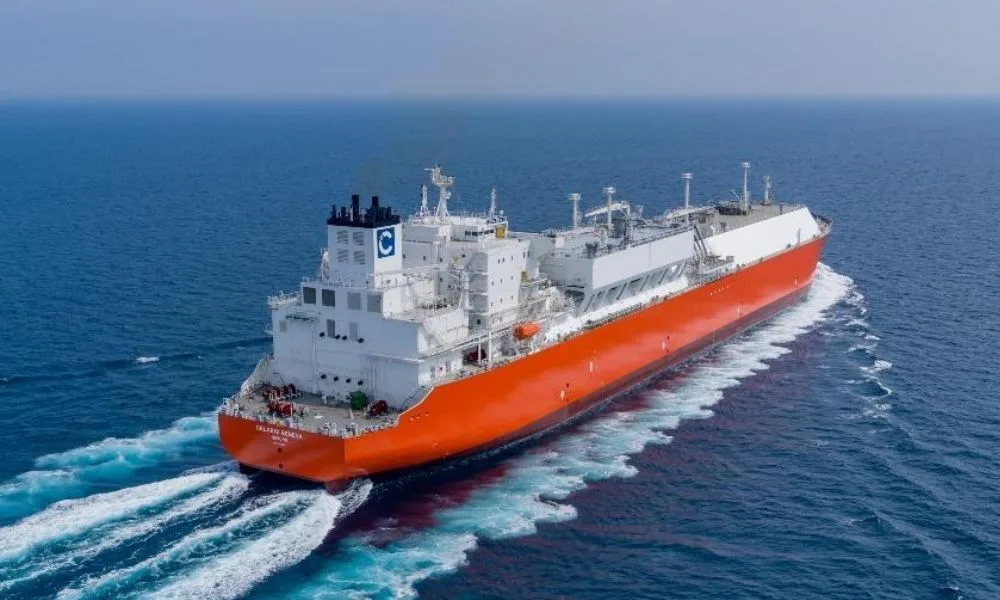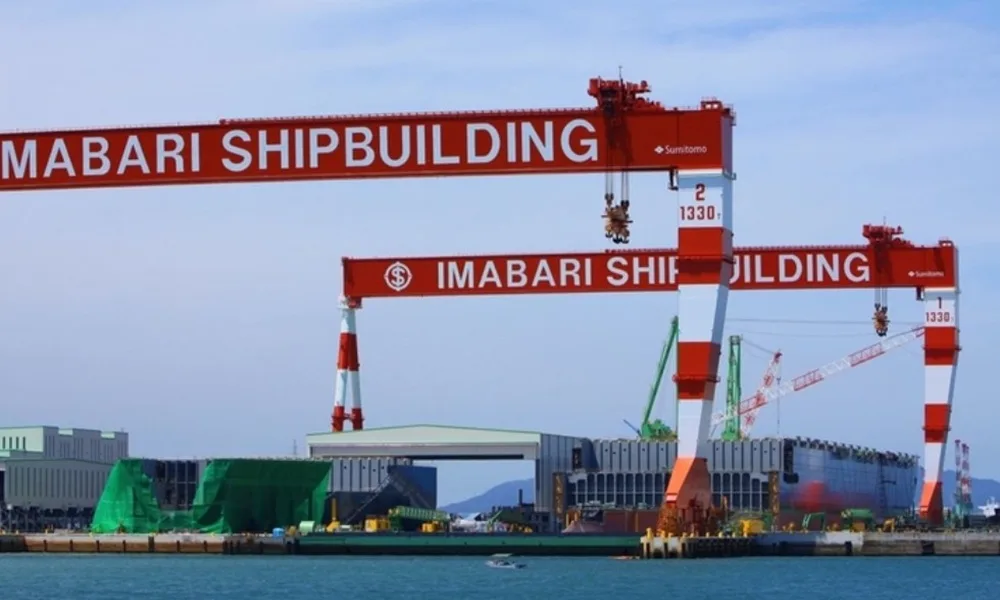
Imabari Shipbuilding has completed the acquisition of a controlling stake in Japan Marine United (JMU), a deal that reshapes Japan’s shipbuilding landscape and aligns closely with Tokyo’s longer-term ambition to consolidate and revitalise the sector in the face of rising Chinese and South Korean competition.
Imabari confirmed it has taken a 60% stake in JMU, making the yard group a subsidiary and creating Japan’s largest shipbuilder by output. The combined group ranks as the world’s fourth-largest shipbuilder by tonnage, significantly boosting Japan’s ability to compete with Asia’s dominant heavyweights.
The two companies have been partners for several years, forming a capital and business alliance in ship design and sales in 2021. Plans for the full acquisition were announced in June 2025, paving the way for deeper integration of operations and strategy.
Speaking at a news conference, Imabari president and CEO Higaki Yukito said the deal was driven by the need to scale up quickly. “The two firms have the common view that to survive we must take on global competitors,” he said. “The acquisition will strengthen our competitive edge and enable swift business decisions.”
JMU president Hirose Takashi framed the transaction in broader national terms, saying he hoped the enlarged group would contribute not only to competitiveness but also to Japan’s economic security and employment base.
The move comes as the Japanese government sharpens its focus on the shipbuilding industry amid intensifying global competition. Policy documents from the transport ministry set out a road map to consolidate the country’s fragmented yard base into one, two or three major shipbuilding groups by the mid-2030s, explicitly aimed at countering China’s growing dominance.
Under the plan, Japan is targeting a doubling of domestic shipbuilding capacity to around 18m gt while cutting construction costs by 10%. Phased investment through 2034 is expected to prioritise automation, yard modernisation and the deployment of AI and robotics to lift productivity and restore what officials describe as “international competitiveness”.