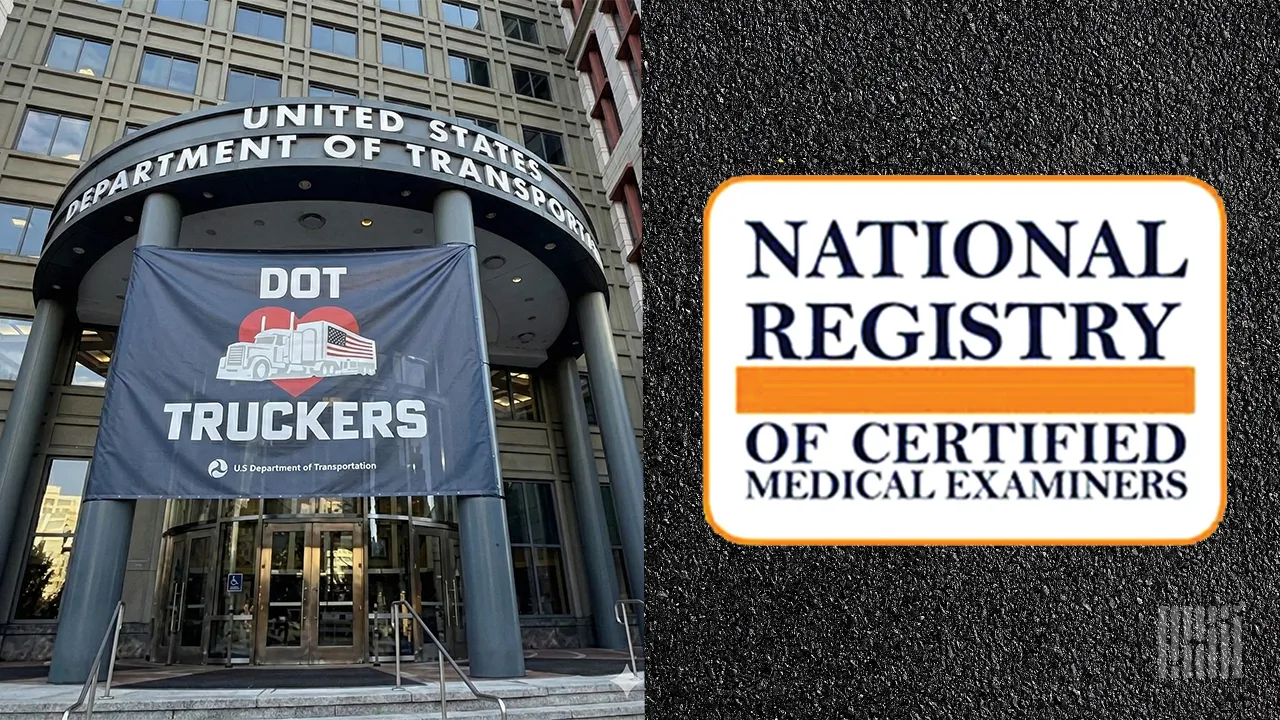
The Federal Motor Carrier Safety Administration has extended its temporary waiver allowing CDL holders to carry paper medical examiner certificates yet again. The new extension runs from Jan. 11 through April 10, 2026. Eight states still haven’t implemented a system that was supposed to be live by June 2018.
This isn’t a technology problem. This is a failure of will. It explains everything about why states like California, Washington and Minnesota feel emboldened to run their own show when it comes to CDL issuance.
A Brief History of NRII
The Medical Examiner’s Certification Integration final rule was published on April 23, 2015. That’s nearly a decade ago.
The concept was simple: eliminate paper medical certificates that are easily forged, create an electronic transmission system in which certified medical examiners submit exam results to FMCSA by midnight of the next calendar day, and have FMCSA push that data to state driver licensing agencies to update the driver’s motor vehicle record.
The original compliance date was June 22, 2018.
It got pushed to June 22, 2021.
Then to June 23, 2025.
The rule finally “went live” on June 23, 2025, but immediately required a 15-day waiver in July. That became a 60-day waiver in August. Extended again in October. And now again through April 2026.
State licensing agencies had a decade to implement what is functionally a paper upload feature for CDL self-certifications. A data feed. An API connection. The kind of thing a competent IT contractor could build in weeks.
The Fraud That Paper Made Possible
The entire point of NRII was to combat fraud. Since the August 2014 onset of the National Registry, there have been dozens of indictments and convictions against medical examiners who issued fraudulent certificates.
In one Georgia case, a doctor routinely signed DOT Medical Examiner’s Certificates without ever examining drivers. In another case, more than 6,000 drivers had to immediately renew their medical certificates because their examiner was running a fraud mill.
A 2019 DOT Office of Inspector General audit found that since August 2014, criminal investigations had resulted in eight indictments and six convictions for fraud in the medical certification process.
By 2020, that number had grown to 33 indictments and 27 convictions. The OIG didn’t mince words: “FMCSA must take steps to identify and prevent CDL fraud” by “monitoring certified medical examiners who conduct physical examinations.”
Paper medical cards are easy to forge. They’re easy to alter. They’re a compliance officer’s nightmare and a fraudster’s dream. We’re still using them in 2026 because eight states couldn’t be bothered to connect to a database.
The Noncompliant Eight
As of Jan. 6, 2026, these states still haven’t implemented NRII: Alaska, California, Kentucky, Louisiana, New Hampshire, New Jersey, New York and Oklahoma.
California with the largest CDL driver population in the country. New York. These aren’t backwater operations struggling with IT resources. These are states with massive DMV budgets that simply didn’t prioritize federal compliance.
The Commercial Vehicle Safety Alliance sent a letter to FMCSA Administrator Derek Barrs on Dec. 5, 2025, asking the agency to provide guidance to enforcement officials that paper medical certificates should be accepted during roadside inspections and safety audits “until all issues associated with integrating the state driver’s license administrations’ systems with the medical examiners’ systems are resolved.”
CVSA noted that even states that have implemented NRII are experiencing “incompatibility and errors” in data transmission. During CVSA’s 2025 International Roadcheck in May, 493 drivers were placed out of service for “No Medical Card.” That represented 15.7% of all driver out-of-service violations. Drivers are getting jammed up because states can’t implement a system that should have been running since 2018.
This Is About Accountability, Not Technology
Here’s where this connects to the broader pattern of state behavior we’ve been documenting.
When the FMCSA issued its interim final rule on non-domiciled CDLs in September 2025, its Annual Program Reviews revealed that California had an error rate exceeding 25% in non-domiciled CDL issuance.
Colorado, Pennsylvania, South Dakota, Texas and Washington all had to pause issuance due to compliance failures. California alone issued approximately 3,820 non-domiciled CDLs and CLPs in June 2025, with roughly one in four improperly issued.
Why do states feel comfortable ignoring federal CDL standards? Because FMCSA has historically been a paper tiger. The agency’s response to state noncompliance has been to issue waivers, extend deadlines and “recommend” that states comply. A decade of delays on NRII sent a clear message: there are no consequences for ignoring federal requirements.
States aren’t stupid. They watched FMCSA push the NRII compliance date three times over seven years. They saw that the agency’s solution to noncompliance was to keep issuing 90-day waivers. They learned that federal CDL regulations are suggestions, not mandates.
What Needs to Happen
FMCSA has tools it hasn’t used. Under 49 CFR 384.401, states that fail to comply substantially with the requirements of 49 CFR Part 384, which includes the NRII requirements, can face decertification of their CDL program.
States found not in substantial compliance must have withheld 4% of Federal-aid highway funds under 23 U.S.C. 104(b) for the first year of noncompliance, increasing to 8% in subsequent years.
Has FMCSA withheld funds from California, New York or any other state for failing to implement NRII by the June 2025 deadline? Not that I’m aware of. Instead, the agency keeps issuing waivers and hoping states will eventually get around to compliance.
The Trump administration’s recent aggressive posture on non-domiciled CDLs suggests a potential shift. Transportation Secretary Sean Duffy called California’s conduct “frankly disgusting” and threatened to pull millions in funding over CDL issuance failures. That’s the right tone, but it needs to be backed by action across all areas of CDL compliance, not just the politically convenient ones.
The paper medical card waiver extension is a symptom, not the disease. The disease is a federal agency that has spent a decade demonstrating to states that compliance is optional. When FMCSA lets eight states ignore a 2015 rule in 2026, it tells every state that federal CDL requirements are negotiable. Motor carriers and drivers pay the price.
They’re stuck navigating a patchwork of state systems, carrying paper cards that may or may not be accepted at roadside, and watching medically unqualified drivers slip through a certification system riddled with fraud vulnerabilities. If you’re a driver licensed in a noncompliant state, keep carrying your paper medical card. Make sure your carrier has a copy, and hope the state eventually implements a system that should have been running before some of your current drivers were old enough to hold a CDL.
The waiver expires April 10, 2026. Want to bet on whether we’ll see another extension? I wouldn’t take those odds.
The post FMCSA Extends Paper Med Card Waiver and What’s Behind The Endless Extensions appeared first on FreightWaves.