Maritime and Logistics News
  • Maritime & Ocean News
    • Container Shipping News
    • Dry Bulk Shipping News
    • Breakbulk Shipping News
    • Chemical Shipping News
    • Crude Oil Shipping News
    • Cruise Shipping News
    • Fishing News
    • Freight Forwarders News
    • LNG & LPG Shipping News
    • Multimodal Transport News
    • Railway News
    • Straits News
    • Trucking News
  • Global Ports News
    • Port Accidents News
    • Port Congestion News
    • Port Infrastructure News
    • Port Strike News
    • Schedules News
  • Air Cargo News
    • Air Cargo Carriers News
    • Air Freight Forwarder News
    • Airports News
  • Logistics News
    • Supply Chain News
    • Warehousing News
    • Cold Storage News
    • Logistics Parks News
  • Vessels News
    • Bunkering News
    • Incidents News
    • Offshore News
    • Pilotage News
    • Piracy News
    • Services News
    • Ship Breaking News
    • Shipbuilding News
  • Tech. & Sustainability News
    • Green Logistics News
    • Responsibility Projects News
    • Useful Maritime Associations News
  • English
    • English
    • Deutsch
Monday, December 1, 2025
Advertisement
No Result
View All Result
No Result
View All Result
No Result
View All Result
Home Bunkering News

Fix your propulsion course even in uncertain waters

October 9, 2025
in Bunkering News
Fix your propulsion course even in uncertain waters
0
SHARES
1
VIEWS
Share on FacebookShare on Twitter
Emmanuel Schalit, CEO of OceanWings, discusses some of the ramifications from the upcoming MEPC83 meeting, whether new amendments are adopted or not.
The International Maritime Organization (IMO) could formalise its Net-Zero Framework, a new regulatory chapter in global shipping next week. If adopted at MEPC Extraordinary Session 2 (ES.2), this set of amendments to MARPOL Annex VI will hardwire decarbonisation targets into international maritime law, setting well-to-wake GHG fuel intensity (GFI) standards and compliance mechanisms that begin to take effect in 2027.
Shipowners could be required not only to report emissions more comprehensively but also to remain within strict fuel intensity thresholds or face financial penalties. The framework includes a system of compliance units, potentially tradeable, with overperformers earning credits and underperformers having to compensate. Renewable energy sources, including wind and solar, are explicitly recognised as contributors to reducing GFI.
For owners and operators, there is the potential for a material shift from best-effort, self-set efficiency targets to tangible economic pressure. In practice, this means that the propulsion strategy of every vessel, newbuilds and retrofits, will increasingly come under scrutiny, not only for technical performance but also for its compliance profile and exposure to fuel and emissions pricing, taxes, and fines. In short, the total cost of propulsion (fuel + penalties) for every vessel, which is often the number one expense for shipowners, is bound to go up materially in the next 5 years.
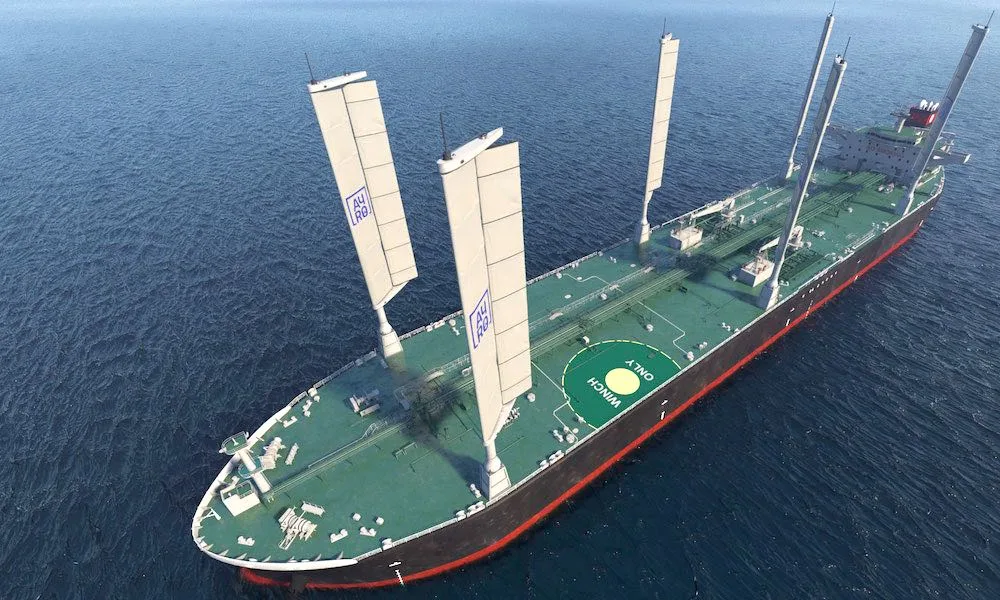
Against this backdrop, wind-assisted propulsion systems (WAPS) enter the frame not as a silver bullet, but as a contributor in a diversified strategy. WAPS are maturing fast, in terms of deployment, seaworthiness and the quality of performance data. While fuel cells, synthetic fuels, and carbon capture attract many headlines, these options remain constrained by availability, infrastructure, and long-term cost uncertainties. WAPS, by contrast, operates on a known and free energy source. The primary challenge then, has been consistent integration and robust performance measurement.
The industry has made progress in addressing this. Methodologies such as those developed under the International Towing Tank Conference (ITTC) protocols aim to standardise how wind contribution is quantified, potentially smoothing the path to broader acceptance under regulatory schemes. Still, hurdles remain, ranging from the physical complexity and off-hire costs of retrofitting vessels, to alignment with class society requirements, to the variability of performance by route and vessel type.
The upcoming MEPC83 ES.2 meeting will be pivotal in shaping how wind technologies are treated under the compliance calculus. Clarity on methodology, crediting mechanisms, and verification processes will influence whether more owners choose to adopt wind as a compliance hedge. A clear, fair, and science-based framework will accelerate deployment; ambiguity will continue to stifle investment.
While there is still technological uncertainty, strategic direction should be forged at the earliest opportunity. Tens of thousands of vessels will likely require currently unplanned retrofits in the coming years, whether to install engines, fuel systems, digital tools, or wind-assisted technologies, in order to reduce their exposure to emissions costs. Manufacturing and installation capacity across many of these solution areas remains limited, and shipyard capacity is finite, meaning delayed action could eventually be more costly than moving early. Some operators are already taking the view that adopting emissions reduction measures now, especially creating a WAPS strategy, positions them more favourably for the regulatory landscape ahead.
There is no one-size-fits-all in the decarbonisation of shipping and over time many ships will operate on new, cleaner fuels and complimentary approaches like wind power. Each vessel type, trade lane, and operating profile presents a unique puzzle and as regulation begins to price emissions more directly, and as tools to quantify renewable energy sources’ contribution become more robust, wind-assisted propulsion is looking ready for the potential rush.
Whether or not the MEPC83 amendments become reality will be known soon. But even if the decarbonisation of shipping doesn’t get fully locked into the regulatory framework, it will at some point. So regardless of the outcome this month, the question for shipowners now is less whether to consider a formal strategy, and more whether they can afford not to move of their own accord.

Tags: AndForFuelTheWill

Related Posts

DHS launches sweeping I-9 audits on California truck fleets
Air Cargo Carriers News

DHS launches sweeping I-9 audits on California truck fleets

December 1, 2025
The Feds drop the hammer on illegal immigration
Air Cargo Carriers News

The Feds drop the hammer on illegal immigration

November 29, 2025
Misclassification lawsuit: New Jersey truck school’s costly settlement
Air Cargo Carriers News

Misclassification lawsuit: New Jersey truck school’s costly settlement

November 28, 2025
Waiting for the perfect alternative fuel isn’t an option
Bunkering News

Waiting for the perfect alternative fuel isn’t an option

November 28, 2025
‘Tis the season for the annual capacity purge
Air Cargo Carriers News

‘Tis the season for the annual capacity purge

November 27, 2025
Fortress buy of Wheeling & Lake Erie approved
Air Cargo Carriers News

Fortress buy of Wheeling & Lake Erie approved

November 27, 2025
  • Trending
  • Comments
  • Latest
Trump to name Fox TV host Sean Duffy to head DOT

Trump to name Fox TV host Sean Duffy to head DOT

November 19, 2024
FedEx sends specialists to streamline European operations

FedEx sends specialists to streamline European operations

August 21, 2025
Vintage VLCC prices firm up

Vintage VLCC prices firm up

February 25, 2025
At RailTrends, CPKC and UP CEOs talk about higher levels of rail service

At RailTrends, CPKC and UP CEOs talk about higher levels of rail service

November 18, 2024
PUMA Chooses Maersk Warehouse,

PUMA Chooses Maersk Warehouse

0
Cape Rates Soar to $40,000 Per Day, Surging Twofold Within One Week

Cape Rates Soar to $40,000 Per Day, Surging Twofold Within One Week

0
Allelys Successfully Navigates Challenges in Transporting Cargo to Rothienorman Substation

Allelys Successfully Navigates Challenges in Transporting Cargo to Rothienorman Substation

0
Hanwha Ocean secures a contract for an ultra-large ammonia carrier

Hanwha Ocean secures a contract for an ultra-large ammonia carrier

0
Why improving Red Sea security could threaten container shipping’s fragile equilibrium

Why improving Red Sea security could threaten container shipping’s fragile equilibrium

December 1, 2025
CJC opens Genoa office to expand maritime market presence

CJC opens Genoa office to expand maritime market presence

December 1, 2025
CEVA Logistics and CooperVision open new regional service center in Singapore

CEVA Logistics and CooperVision open new regional service center in Singapore

December 1, 2025
DNV releases new edition of 3D printing standard

DNV releases new edition of 3D printing standard

December 1, 2025

Recent News

Why improving Red Sea security could threaten container shipping’s fragile equilibrium

Why improving Red Sea security could threaten container shipping’s fragile equilibrium

December 1, 2025
CJC opens Genoa office to expand maritime market presence

CJC opens Genoa office to expand maritime market presence

December 1, 2025
CEVA Logistics and CooperVision open new regional service center in Singapore

CEVA Logistics and CooperVision open new regional service center in Singapore

December 1, 2025
DNV releases new edition of 3D printing standard

DNV releases new edition of 3D printing standard

December 1, 2025

Stay ahead in the dynamic world of maritime and logistics with our comprehensive news coverage. Explore the latest industry trends, breaking news, and insightful analyses. Your gateway to informed decision-making in shipping, trade, and logistics awaits.

Follow Us

Our Partners

shipstrack.com
E-tracking
  • About
  • Advertise
  • Privacy & Policy
  • Contact

© 2020-2024 SeasNews - Shipping News & Magazine.

No Result
View All Result

© 2020-2024 SeasNews - Shipping News & Magazine.