The Federal Railroad Administration on Monday approved a five-year waiver allowing expanded use of automatic track inspection, ending a long period when the agency had not acted on requests regarding the technology.
In a letter to the Association of American Railroads, Karl Alexy, the FRA’s chief safety officer, said the FRA’s Railroad Safety Board — which acts on waiver petitions — had determined that “expanding the scope to include more railroads will allow the demonstration of the effectiveness of expanded TGMS [track geometry measurement system] testing in conjunction with a uniform level of reduced visual inspection.”
Alexy said the decision was in the public interest and consistent with railroad safety.
Waivers will be granted subject to a dozen conditions, according to the letter. Among them are 30 days’ advance notice; identification of subdivisions to be included, which cannot be changed for one year; automated inspection of all main tracks and sidings in those subdivisions at least once a month; the ability to reduce visual inspections from twice to once weekly; monthly and annual reports on testing results; and a requirement to report within 24 hours any derailment in track covered by the waiver.
“This waiver will provide the industry with an opportunity to demonstrate the potential of automated track inspection technology to enhance rail safety and improve efficiency,” FRA Administrator David Fink said in a release. “ATI technology is designed to enhance already effective visual inspections by catching things that human eyes miss.”
Transportation Secretary Sean Duffy said the waiver “will allow U.S. railroads to complement visual track inspections with innovative technology that will identify issues on our rail [network] before they become a serious safety threat for rail passengers and crew.”
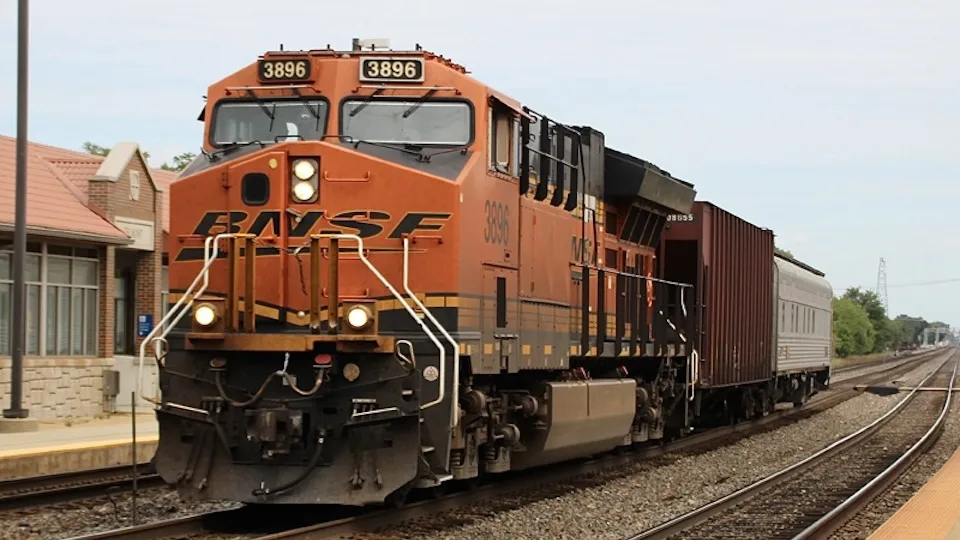
FRA action on the track inspection and other waivers stalled under Administrator Amit Bose. The FRA turned down requests by BNSF Railway (NYSE: BRK-B), Union Pacific (NYSE: UNP) and Norfolk Southern (NYSE: NSC) to expand existing inspection programs while failing to act on other waiver requests. It eventually proposed a rule that would require railroads to ensure automated inspections would not eliminate jobs.
The AAR had requested a waiver from some track inspection regulations in April, 2025, asking that railroads be allowed to use a combination of automated and visual inspections.
“FRA has acted on the industry’s waiver request, representing a step forward,” the AAR said in a statement. “Our team is reviewing the technical details to fully understand the scope and conditions of the decision. Automated Track Inspection is a proven safety technology, and expanding its use will strengthen safety and reliability across the nation’s rail network.”
The International Association of Sheet Metal, Air, Rail and Transportation Workers-Transportation Division was one of several unions to file comments with the FRA opposing the AAR request. In a statement issued Saturday, Jared Cassity, SMART-TD’s national safety and legislative director, said the waiver “does nothing to improve safety.”
Cassity said “nothing was preventing America’s Class I railroads from expending the use of ATI in the first place, meaning the reality is that prioritizing the safest course is not the ultimate goal. Instead, it is to reduce the number of visual inspections (or manpower) to improve the operating ratio in their never-ending pursuit to appear attractive to their shareholders on Wall Street. It is a business decision that could have devastating consequences to the infrastructure, the environment, the track-side communities, and the men and women we represent.”
The decision comes just days after a Washington Post editorial took the Trump administration to task over its failure to act on the AAR request.
Subscribe to FreightWaves’ Rail e-newsletter and get the latest insights on rail freight right in your inbox.
Related coverage:
Ahead of mega-merger, railroads say they steady economy, supply chain
Union Pacific delays rail merger filing
Ports warn intermodal in the crosshairs of rail merger
Rail freight stays ahead of year-ago traffic
The post Feds OK automation, say railroads can make fewer visual track safety checks appeared first on FreightWaves.