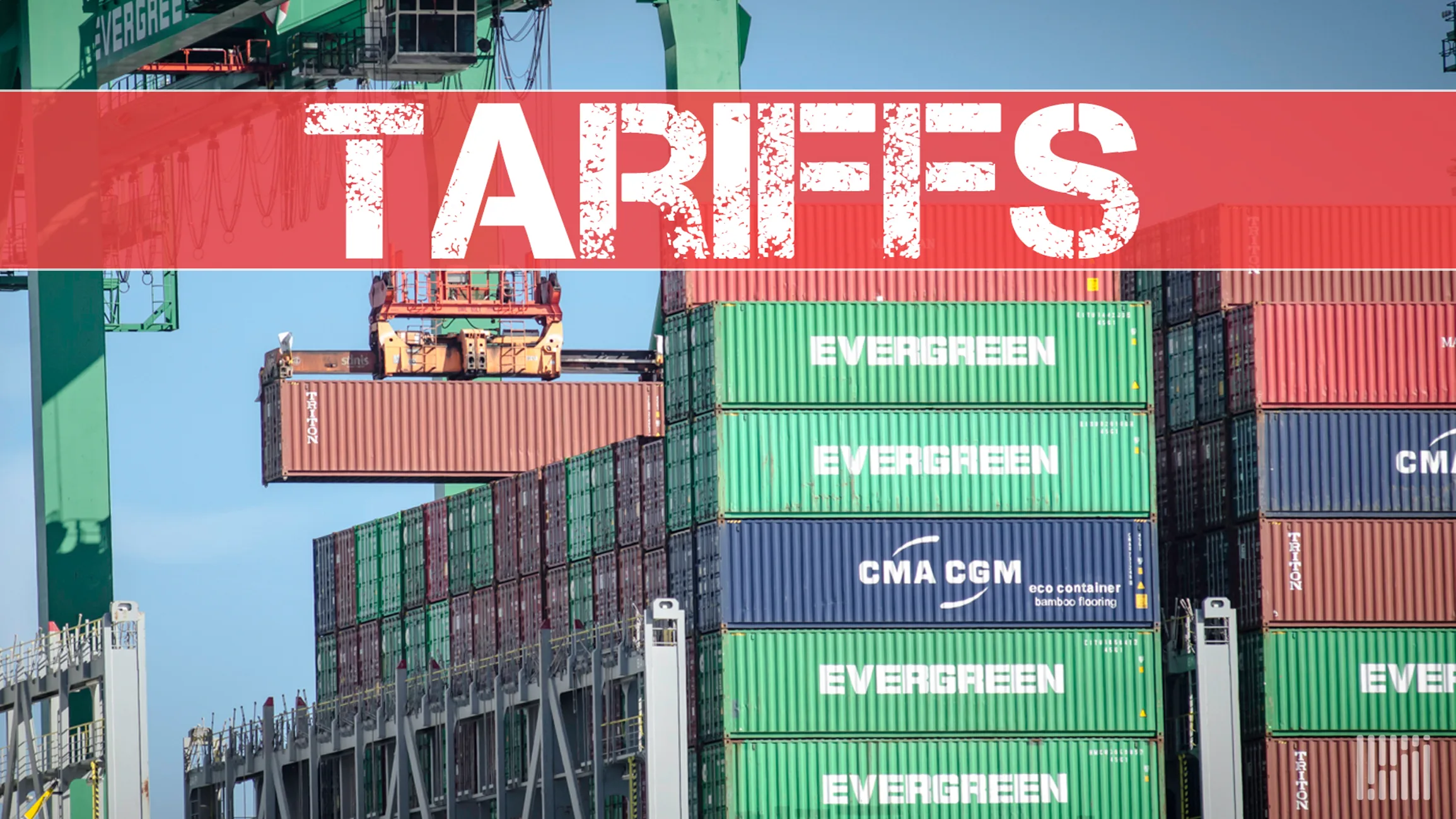
Borderlands Mexico is a weekly rundown of developments in the world of United States-Mexico cross-border trucking and trade. This week in Borderlands Mexico: Tariff noise to stay loud in 2026, Flexport warns importers; Echo Global Logistics launches EchoXBorder; and LS Cable & System USA opens logistics hub near Port Houston.
Tariff noise to stay loud in 2026, Flexport warns importers
Global logistics provider Flexport expects trade policy volatility to persist in 2026, but warned importers not to equate aggressive tariff announcements with the actual duties they will pay.
During a recent “Tariff Trends 2026” webinar on Thursday, Flexport executives said the Trump administration has repeatedly paired headline-grabbing tariff proposals with delays, carve-outs and exemptions that soften their impact on consumer prices and supply chains.
“I think tariffs will continue, but I think … they’re going to be restrained compared to the rhetoric [from the Trump administration],” said Marcus Eeman, Flexport’s director of customs.
Flexport highlighted several 2025 examples where proposed tariff hikes were scaled back or paused, including delayed Section 232 increases on furniture, expanded exemptions under reciprocal tariffs, and sharp reductions in anti-dumping duties on Italian pasta.
Eeman said trade policy decisions increasingly reflect sensitivity around food, fuel, housing and healthcare — areas he described as political red lines for the administration.
“They don’t want to see a very common staple food in every household in America, all of a sudden having to go up in price,” Eeman said. “Another area we’re seeing there’s a Section 301 [tariffs] finding on Chinese semiconductors that would have increased it above the existing 50% rate, but the Trump Administration delayed tariffs for 18 months on that.”
That restraint has also been visible in North American trade. As of late summer, roughly 85% of U.S. imports from Mexico and Canada entered duty-free under USMCA, according to Flexport — though claims are drawing heavier scrutiny from customs auditors.
A central risk for 2026 is the pending Supreme Court decision on tariffs imposed under the International Emergency Economic Powers Act (IEEPA).
On Friday, the U.S. Supreme Court deferred its ruling on whether President Donald Trump overstepped legal authority by using IEEPA to levy sweeping import duties on more than 90 global trade partners.
Jenn Park, Flexport’s director of trade advisory, outlined scenarios ranging from full validation of the tariffs to retroactive refunds.
“If retroactive relief is allowed, importers need to be prepared before a ruling comes down,” Park said.
Flexport urged companies to identify IEPA-affected entries, monitor liquidation timelines and ensure entry data is accurate — noting that missed deadlines could permanently eliminate refund opportunities.
Even if some tariffs are struck down, Flexport said enforcement by U.S. Customs and Border Protection is accelerating. CBP has hired more auditors and increased scrutiny of valuation, tariff stacking and USMCA claims.
Eeman also cautioned against switching to Delivered Duty Paid (DDP) terms as a way to blunt tariffs.
“The only way DDP actually ‘saves’ money is if something improper is happening,” he said, warning that undervaluation and misclassification are now priority targets for enforcement.
Eeman and Park said they expect tariffs to remain a central trade tool in 2026, even if IEEPA authority is narrowed, as other mechanisms — including Sections 232 and 301 — remain available.
The company’s message to importers: expect continued volatility, tighter compliance oversight and fewer shortcuts.
“Tariffs aren’t going away,” Eeman said. “The final thing you should continue to expect is CBP enforcement is going to increase. We know that CBP officers all across the ports of entry have hired more auditors. As far as I know, every single port of entry has more CBP auditing officers in desks.”
Echo Global Logistics launches EchoXBorder
Echo Global Logistics has launched EchoXBorder, a cross-border customs brokerage offering designed to support freight moving between the U.S. and Mexico.
The service expands Echo’s decade-long cross-border operations and follows recent growth in Mexico, including offices in Mexico City and Monterrey. EchoXBorder integrates customs brokerage with Echo’s existing freight network, offering clearance at major land ports, airports and seaports across both countries.
Echo said the platform is aimed at reducing delays and improving visibility for shippers navigating increasingly complex trade and compliance requirements. The service includes consolidation and deconsolidation at the border, inventory control, and end-to-end customs and freight management, supported by bilingual compliance specialists and real-time shipment tracking.
Echo Global Logistics is a Chicago-based third party logistics provider with cross-border facilities in Mexico City, Monterrey and Guadalajara, Mexico; along with a major site in Laredo, Texas.
LS Cable & System USA opens logistics hub near Port Houston
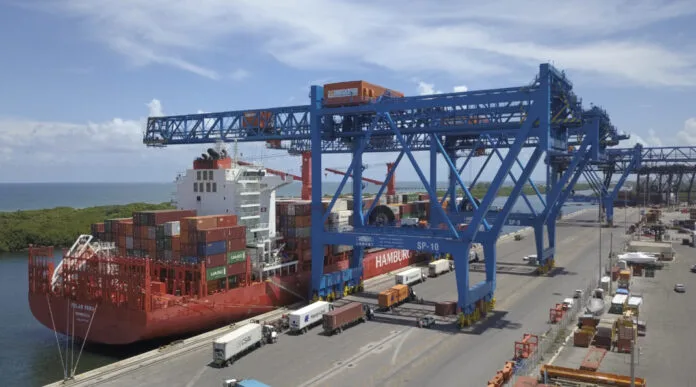
LS Cable & System USA has opened a logistics hub in La Porte, Texas, near Houston, expanding its U.S. distribution footprint to support rising demand for high-capacity electrical infrastructure, according to a news release.
The facility, located within the Port Crossing Commerce Center near Port Houston, is designed to enhance distribution capacity and shorten lead times for LS Cable’s rapidly growing bus duct business, serving data centers, industrial facilities and large commercial projects.
Company executives said the site’s proximity to major transportation corridors and port infrastructure will improve inventory management and customer responsiveness as demand accelerates from data center expansion tied to artificial intelligence and cloud computing.
The post Borderlands Mexico: Tariff noise to stay loud in 2026, Flexport warns importers appeared first on FreightWaves.