Another one’s coming.
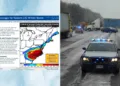
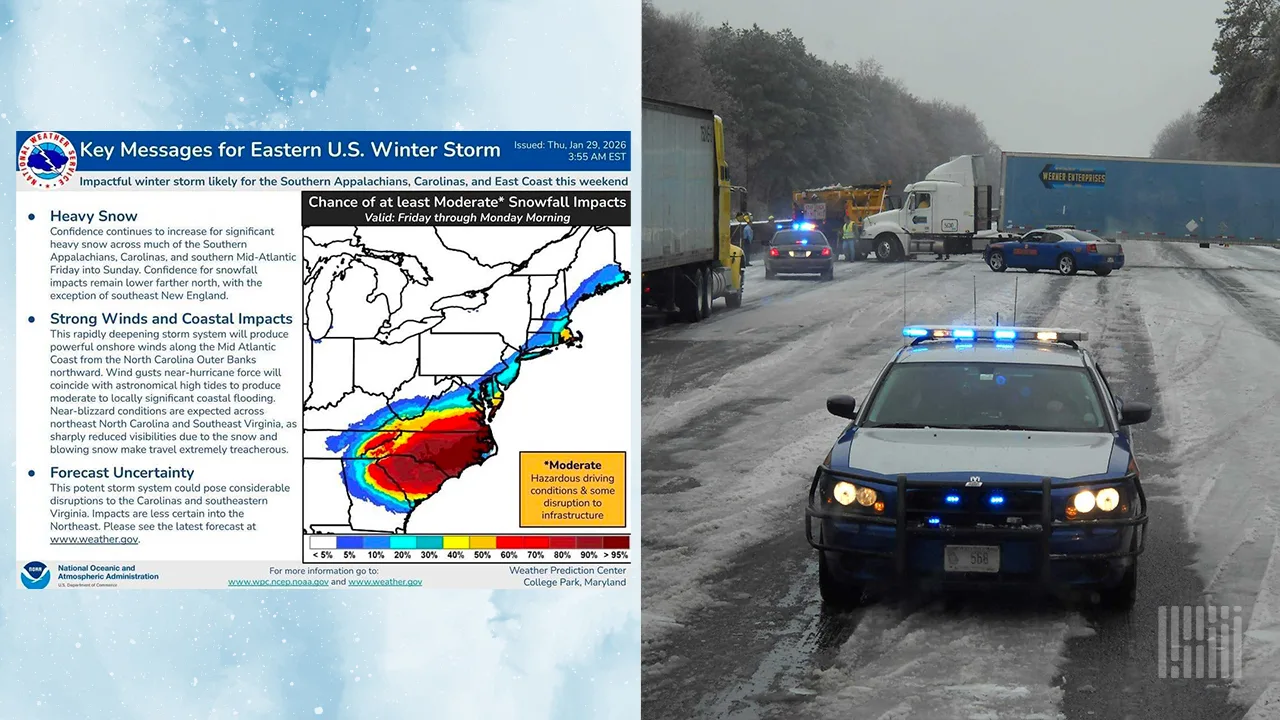
The National Weather Service is now forecasting what they’re calling a “significant East Coast winter storm threat” for this weekend, with a coastal low forming over the Gulf Coast on Friday and rapidly intensifying into a bomb cyclone as it tracks up the Eastern Seaboard. If you’re running freight anywhere from the Carolinas to Boston over the next five days, you need to pay attention right now.
The Weather Prediction Center isn’t mincing words. Their latest guidance shows snowfall beginning in parts of the Mid-South and Southern Mid-Atlantic on Friday morning, persisting through at least the weekend, with the heaviest impacts expected in the coastal regions of the Carolinas, Virginia, and points north. Both the European and American forecast models agree that this thing is going to blow up off the Carolina coast Saturday night. What they can’t agree on is exactly where it tracks from there, and that uncertainty is the whole ballgame for the I-95 corridor.
If this storm hugs the coast, we’re talking potentially feet of snow from the eastern Carolinas through Washington, Philadelphia, New York, and into New England. If it stays offshore, the Northeast catches some wind and coastal impacts but dodges the worst of it. A shift of just 100 to 200 miles in either direction determines whether this is an inconvenience or a catastrophe.
The East Coast is already buried. Last weekend’s storm dumped over 20 inches in parts of Pennsylvania, Massachusetts, and New York’s Hudson Valley. Philadelphia saw 9.1 inches, its largest total since the January 2016 blizzard. Central Park hit a daily record at 11.4 inches; none of that has melted because temperatures across the eastern two-thirds of the country remain dangerously cold, with the Arctic Oscillation sitting at around negative five standard deviations. Translation: this cold isn’t going anywhere, and another blast is forecast for early February.
That means whatever falls this weekend sits on top of what’s already there. Black ice. Refreezing. Reduced visibility. Trucks that were barely getting through last week are now facing round two.
We Just Watched This Play Out in Louisiana
If you want to see what happens when winter weather hits regions that aren’t built for it, look no further than Interstate 20 through north Louisiana this past week.
Hundreds of truckers found themselves parked like sardines across a 30-mile stretch from Minden to the Monroe-West Monroe area, some stuck for more than 30 hours in temperatures that had no business being that cold that far south. The Louisiana National Guard had to bring in heavy-duty wreckers from Pineville just to start pushing disabled rigs off the roadway. State troopers went from cab to cab waking up drivers who’d given up and gone to sleep. At one point, officials estimated roughly 99 percent of I-20 was blocked by stalled trucks. Ninety-nine percent.
The Louisiana Department of Transportation says they brined and salted ahead of the storm, but once you’re dealing with several inches of ice accumulation and temps in the low 20s, pre-treatment loses effectiveness fast. And 18-wheelers don’t negotiate ice. They either stall or they get stuck. There’s no in-between.
Eight people are dead across Louisiana from this weather event. Truckers were stranded without food, without fuel, some for days. Local residents personally delivered meals and gas to stranded motorists because that’s what you do when the system breaks down.
The South Keeps Making the Same Mistakes
I was in Atlanta during its January 2011 ice storm and watched the city come apart at the seams. About four inches of snow fell, and suddenly, 15 miles of I-285 shut down. Truckers slept in their cabs. Police stopped responding to non-injury accidents because there were simply too many to count.
Then Atlanta did it again in 2014. Schools, businesses, and government offices all closed at the same time when the snow started. Complete gridlock. Tractor-trailers got stuck on the Perimeter, essentially closing the bypass around the city. Kids spent the night on school buses. The National Guard deployed Humvees to deliver food and water.
The governor called it “unexpected.” Weather forecasters begged to differ; they’d issued warnings more than 20 hours before it started.
Now look at what’s coming this weekend. Georgia has already declared a state of emergency. Governor Kemp called up 500 National Guard soldiers on standby. Twelve states have issued emergency declarations. Nine have activated Guard troops. Airlines are already waiving change fees at 30-plus airports because they know what’s about to happen.
The infrastructure in the South and much of the Mid-Atlantic simply isn’t built for this. The equipment isn’t there. The institutional knowledge isn’t there. And this time, they’re getting hit while still digging out from last week.
Your Rights When Dispatch Pushes Back
All of this brings me back to Alphonse Maddin.
In January 2009, Maddin was hauling temperature-controlled freight through Illinois for TransAm Trucking when his trailer brakes froze in subzero temperatures. He called dispatch. He waited hours for a repair truck. His fuel was running low, his heater was struggling, and he was losing feeling in his extremities.
TransAm gave him two options: drag the trailer to its destination, illegal and dangerous, or sit and wait. Potentially deadly. Maddin chose neither. He unhooked the trailer and drove his tractor to a gas station to warm up and refuel.
TransAm fired him for abandoning the trailer.
That case wound its way to the Tenth Circuit Court of Appeals and became famous during Neil Gorsuch’s Supreme Court confirmation hearings. The majority ruled in Maddin’s favor, applying what they called “a dollop of common sense.”
When you’re sitting in that cab watching ice form on your mirrors with dispatch telling you to keep moving, you need to understand your rights. Under 49 CFR 390.6(a)(2), a carrier cannot coerce a driver to operate a commercial motor vehicle in violation of Federal Motor Carrier Safety Regulations. You have 90 days to file a coercion complaint with FMCSA. Document everything. Screenshot those Qualcomm messages. Save those texts.
Your CDL is yours. Your life is yours. No load is worth dying for.
The Numbers Behind the Risk
According to NHTSA data, there were an estimated 101,390 police-reported crashes linked to wintry weather in 2023, including 22,293 injuries and 320 fatalities. The Federal Highway Administration says approximately 24 percent of all weather-related crashes occur on icy, snowy, or slushy pavement.
Icy road fatalities account for more deaths than all other weather hazards combined, more than tornadoes, hurricanes, floods, and heat combined.
The FHWA reports that on-fatal-injury and property-damage incidents increase significantly when it snows, but fatal crashes decline. Why? Because most people slow down. They reduce speed by 30 to 40 percent on snowy pavement. The ones who don’t adjust are the ones making the news.
What Drivers and Fleets Need to Do Right Now
For drivers currently out there or planning routes through the Mid-Atlantic and Northeast this weekend:
Check your equipment before you roll. Make sure your brakes aren’t sticking, your fuel tank is topped off, and your battery can handle cold starts. Diesel gels in extreme cold. Treat it. Carry extra fuel treatment.
Stock your cab like you might be living in it. Because you might. Blankets, non-perishable food, water, a phone charger, warm clothes, and a flashlight. We just watched drivers survive 30-hour shutdowns because they were prepared. We watched others suffer because they weren’t.
Know your route and have alternates. If I-95 shuts down, what’s Plan B? If the Jersey Turnpike becomes a parking lot, where’s your bailout? Think it through before you need it.
Monitor the forecast obsessively between now and Friday. That 100-mile track difference I mentioned earlier? It could shift. The models will tighten up. Pay attention.
If you feel unsafe, document and refuse. Coercion is illegal. Your dispatcher can push all they want, but they’re not the ones sitting in that cab watching ice form on the windshield. Screenshot every message. Note every phone call with time and date.
For fleet managers and safety directors:
Build flexibility into your schedules now. Pushing drivers into known winter weather to make a delivery window is how people get killed and how companies get sued.
Communicate proactively. Don’t wait for drivers to call you from a ditch. Monitor conditions, adjust routes, and give your drivers explicit permission to shut down if conditions deteriorate.
Review your policies today. If your policy states drivers must deliver regardless, update it before this weekend. That policy is a lawsuit waiting to happen.
The Weather Prediction Center’s extended forecast discussion uses language you don’t see every day: “significant Eastern Seaboard Coastal Winter storm forecast to rapidly deepen while lifting over the Western Atlantic.” The consensus indicates heavy snow potential across the eastern Carolinas and the coastal Mid-Atlantic, and along the southern and eastern coasts of New England. High winds. Coastal flooding. And all of it landing on top of what’s already out there.
If you’re dispatching freight into the I-95 corridor this weekend, think hard about timing. If you’re a driver being pressured to operate under deteriorating conditions, know your rights and document everything. And if you’re sitting at a shipper waiting to get loaded Friday afternoon with 400 miles of potential blizzard between you and your destination, maybe that load waits until Monday.
You can always reschedule a delivery.
The post Bomb Cyclone Bearing Down on Mid-Atlantic and New England: What Drivers and Fleets Need to Know appeared first on FreightWaves.