Beyond Flowers Foods itself, there may not be a company with as much at stake in the commercial baker’s case before the Supreme Court than Amazon.
That’s why the logistics and online retailer’s amicus brief in the Flowers Foods case, submitted earlier this month, stands out among several other filings in support of the core of Flowers Foods’ argument: that final mile workers fall under the jurisdiction of the Federal Arbitration Act (FAA) because the FAA’s exemption for transportation workers involved in interstate commerce should not apply to workers who never cross states lines in their activities.
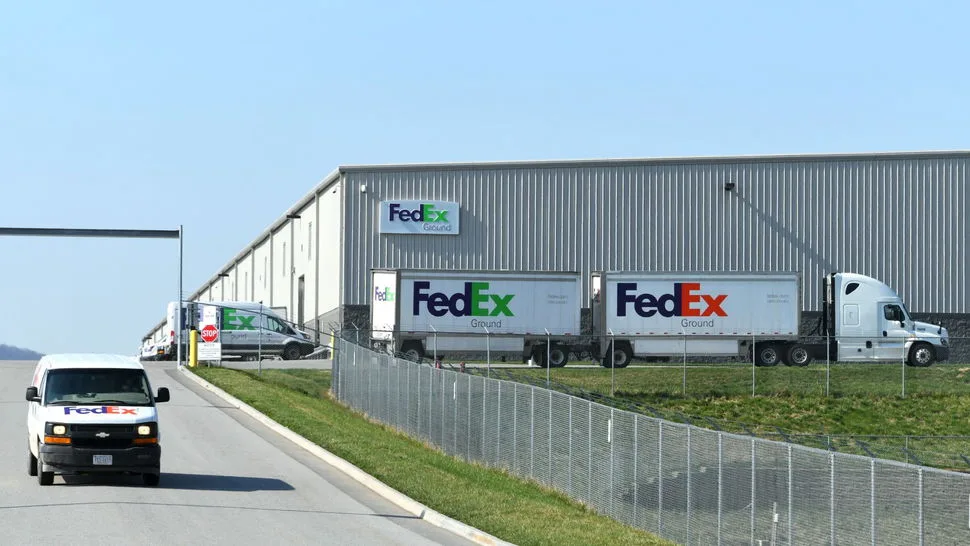
The opposite of that finding was handed down by the 10th Circuit in the case of Brock vs. Flowers Foods. In that case, delivery drivers who transport such Flowers Foods products as Tastykakes and Wonder Bread were found by that circuit to be at the tail end of an interstate commerce supply chain and therefore fell under the exemption. That gives them the right to have their grievances aired in the legal system instead of an arbitration process.
Employers almost always favor arbitration; employees the opposite.
Conflicts in the circuits
But there are decisions in the federal circuit courts that have ruled differently than the 10th Circuit, leading the Supreme Court to accept Flowers Foods’ petition for certiorari, presumably with the aim of straightening out the confusion.
Amicus briefs filed in support of Flowers Foods’ (NYSE: FLO) argument featured several significant names besides Amazon (NASDAQ: AMZN). Among the filers in support of Flowers Foods were the U.S. Chamber of Commerce, the Independent Bakers Association and five states that jointly filed an amicus brief: Missouri, Arkansas, Texas, Montana and Alaska.
The transportation exemption in the FAA says the act does not apply to “contracts of employment of seamen, railroad employees, or any other class of workers engaged in foreign or interstate commerce.” Although it does not say “transportation” in the final clause, courts have interpreted it as a transportation exemption.
Flowers Foods already has been before the Supreme Court on the question of its bakery drivers’ legal status under the FAA. Last year, the Court rejected Flower Foods’ argument in a case known as Bisonette that its delivery drivers were actually bakery workers rather than transportation workers. If they were found to be bakery workers, the FAA would have applied in settling disputes. But the unanimous decision held that they were transportation workers.
The current case before the Supreme Court–the original named plaintiff was Angelo Brock, who was an independent contractor operating a route for Flowers Foods–is essentially part two of this dispute. Since the court already determined that bakery drivers are transportation employees and not bakery workers, the question is whether the FAA transportation exemption applies if the transportation workers never cross state lines.
What is the real definition of interstate?
In the opening paragraph of its brief, Amazon said that its local delivery services “characteristically take place wholly within a state.” It also notes that its various independently-owned delivery companies, like the Delivery Service Partners (DSPs) who ply the nation’s roads in their grey vehicles, or their Amazon Flex companies that often drive anything down to a car that could be 20 years old, pick up those goods for delivery at the end of a supply chain that in most cases did cross state lines at some point.
Amazon comes down on the side that Brock and his co-plaintiffs are not engaged in interstate commerce and therefore not covered by the exception.
“Congress designed a much simpler inquiry for the FAA exemption, and it is the inquiry this Court has identified: Does the relevant class of workers actively and directly engage in the transportation of goods across national or state borders, like seamen and railroad employees?” Amazon writes in its brief. “For local delivery drivers like Mr. Brock, who neither transport goods across borders nor interact with the vehicles and distinct classes of workers that actually do, the answer to that question is no.”
Brock and the plaintiff’s supporters, Amazon writes, “fixate on the company’s objectives, like goods across state lines or completing transactions with customers in different states. But neither the transit history of the delivered goods nor the geographic scope of the company’s transactions affects what Mr. Brock and similar delivery drivers actually do.”
A continuous journey
A phrase from earlier decisions is whether the final mile is part of a “continuous interstate journey.” The 10th Circuit decision now before the Supreme Court said it was “convinced that Brock serves as the last-mile driver for Flowers, such that he is directly engaged in interstate commerce. Brock’s intrastate delivery route forms the last leg of the products’ continuous interstate route.”
In Amazon’s view, the courts that have made such a finding set a precedent that has “seen endless litigation and generated a massive body of decisions that reach arbitrary and inconsistent results.”
There are frequent references in the Amazon brief, and in others, to two cases that touch on the question of worker status under FAA. One is Bisonette, which after finding the bakery route drivers were in the transportation business and not the bakery business gave them the right to pursue grievances in court rather than arbitration.
The other is Southwest Airlines vs. Saxon. That 2022 Supreme Court decision found that a group of airline ground employees fell under the transportation exemption in the FAA even though all their work was done at one site.
But even as Amazon made references to those cases, it found differences between the workers in Bisonette and Saxon and the final mile delivery drivers in Brock. “The Saxon test requires more than merely playing a role in the sale and disposition of such products,” the Amazon brief said, citing precedents that dismissed the idea that pet shop employees or grocery store clerks “who move products onto and off of shelves, bag up customers’ purchases, and even wheel shopping carts out to their cars” could be considered part of an interstate commerce supply chain.
“Helping interstate goods reach their ultimate destination does not make a class of workers actively engaged in those goods’ transportation across borders,” the Amazon brief says, again citing language in precedents.
The Saxon decision, Amazon says, “squarely rejected an employer-centered analysis,” that just because the employer is involved in interstate commerce that status cascades down the line to other economic activities conducted by the employer.
“It is especially inappropriate to graft a transaction-based standard onto the FAA exemption when Congress made no mention of transactions in that provision,” the Amazon brief says.
Not surprisingly, Amazon has particular disdain for the phrase “continuous interstate journey.” The brief reviews the many steps needed to get a product into a customer’s hands, including the very real possibility that it originated in a different state from the final delivery point.
Even if that is the case, when the final delivery is made by an Amazon delivery service provider or Amazon Flex worker, the “transportation happened several steps, several different vehicles, and several classes of workers earlier. The local delivery work is the same regardless of the package’s place of origin.”
“Under a ‘continuous interstate journey’ standard, however, the location of the original warehouse at the time the customer clicks ‘Buy Now’ may make all the difference,” the Amazon brief says. “If the customer’s item is in the same state as the customer, the Delivery Partner’s in-state delivery should not trigger the exemption. If the item is in a different state, it might.”
Amazon wraps up its brief by saying that “the guiding consideration is what the relevant class of workers is doing, not what the business is doing. When workers neither transport goods across state lines nor interact with the vehicles that do so, they have no direct and active role in the cross-border transportation within the meaning of (the FAA).”
FAA was at issue in New Prime case
The question of status under the FAA led to a significant decision impacting long-haul trucking: New Prime vs. Oliveira in 2019. In that case, the Supreme Court found that just because a truck driver is an independent contractor, he or she still is covered by the FAA in determining whether a dispute needs to go to arbitration or can be litigated in court. Arbitration in that case could not be forced under the terms of the FAA because the driver was engaged in interstate commerce. The independent contractor status did not negate the driver’s standing under the FAA.
The attorney who filed the brief for Amazon is Michael Kenneally. He had been a law clerk for Neil Gorsuch on the 10th Circuit (the same circuit as the Flowers Foods decision) and a Supreme Court clerk for Samuel Alito as well as the late Antonin Scalia.
Both Alito and Gorsuch will be hearing the Flowers Foods case though Kenneally will not be arguing it, having only filed an amicus brief.
More articles by John Kingston
Love’s factoring business gets bigger, buying trio of companies
New York City bill that targeted Amazon won’t get taken up in 2025
Benesch panelists: Why 2026 could be a strong year for logistics M&A
The post Amazon backs Flowers Foods at SCOTUS on delivery driver legal status appeared first on FreightWaves.