By Chase Gunnoe
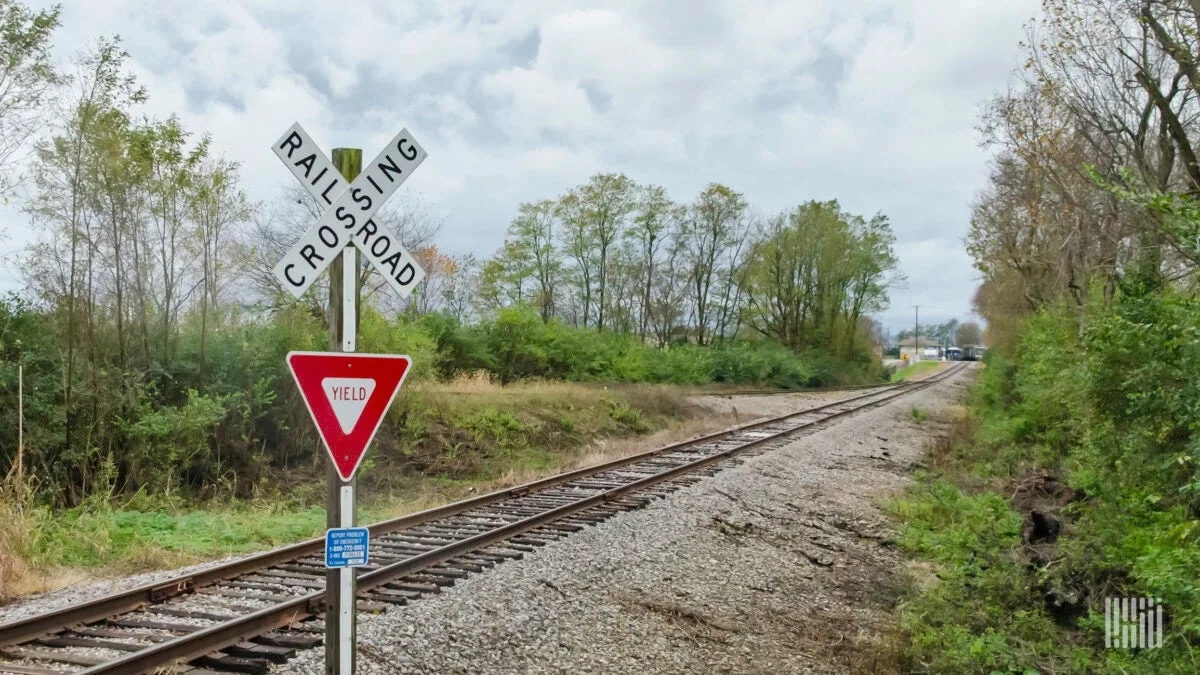
WASHINGTON — Thousands of miles of railroad right-of-way have been upgraded, new rail has been built, and emerging technologies have been explored since the Federal Railroad Administration’s Consolidated Rail Infrastructure and Safety Improvement (CRISI) grant program began injecting federal dollars into the rail industry seven years ago.
CRISI has awarded more than $5.2 billion to the industry since fiscal 2017. Among the largest benefactors are first- and final-mile shortline and regional railroads. Smaller railroads have received $2.6 billion for more than 220 projects — more than 50% of the program’s total appropriations since its inception. This year, the overall program awarded $2.4 billion. Some $1.29 billion of that went to 81 shortline projects in 36 states.
Small, family-owned railroads have rebuilt aging bridges that would otherwise have taken years to fund or been impossible due to insufficient cash flow. Large shortline holding companies that leverage their experience and resources to make low-density railroads successful can focus a little more on growth with the security of public infrastructure support dollars.
Shortline railroading is unique. It thrives at attracting business and serving customers, but its infrastructure sometimes creates limitations. You cannot attract more carloads without sufficient infrastructure, and you cannot fund the infrastructure without sufficient carloads. CRISI allows railroads to break out of this dilemma, work through their ever-growing list of projects and increase their competitiveness in the marketplace.
Trains News Wire recently talked with American Short Line and Regional Railroad Association President Chuck Baker to understand the association’s all-encompassing perspective on CRISI’s significance.
“[Short lines] hustle their tail off,” Baker says. “They do everything possible to get every new customer they can. They’ll set up transloading to get new customers and bend over backward to serve current customers to get every percent of transportation freight share possible.
“Nevertheless, shortline railroads are still financially challenged to find dollars to invest in and rehabilitate their infrastructure, which frequently has huge, deferred needs. They use private money generated from the railroad when possible, and they get some state and local money when those programs are available.
“The 45G tax credit is also a huge help for basic maintenance and upgrade needs. But when you are talking about big rehab projects — fixing a $10 million bridge, or re-laying 10 miles of rail with modern welded rail, or replacing 20,000 ties over a long section of track, or changing out four 50-year-old locomotives for four modern Tier 4 locomotives — you’re just talking about an amount of funds that is not realistically achievable for most short lines in a normal course of business, no matter how great of a success story it is. That’s where CRISI has been a real godsend.”
Baker says policymakers on Capitol Hill understand the importance of this program and have made a sincere commitment to getting it funded each year. It started off with $65 million in fiscal 2017 but quickly expanded to an annual commitment in the $200 million to $300 million range from 2018 through 2021, including throughout the pandemic.
Short lines have historically received 30% to 50% of that allotment each year. At those pandemic-era levels, Baker says many considered the program a success even before the government’s game-changing infrastructure bill.
But in November 2021, when Congress passed and President Joe Biden signed the Bipartisan Infrastructure Law, also known as the Infrastructure Investment and Jobs Act (IJJA), the program’s impact reached a new level.
“It was a transformational bill for a lot of programs for the amount and the predictability of how much would be invested in infrastructure,” says Baker. “But for CRISI — it was a real shock in a great way. There’s $1 billion per year guaranteed through advanced appropriations, plus an authorization for another $1 billion per year.”
Baker says the association is one of the loudest voices in advocating for robust CRISI funding because of the program’s importance to its members. It has been a supporter of the program since Day 1.
“The FRA has done a really nice job with CRISI. … The original construct of CRISI has held up nicely,” he says. “Frankly, this program still looks today a lot like how it was created on Day 1 as far as flexibility for types of applicants and types of awards.”
Congress deserves its kudos, as well, says Baker, with policymakers and appropriators standing by the program for many years.
Baker describes CRISI as a fulfilling virtuous cycle. Lawmakers support the program and understand its value, and then short lines are able to win awards and execute on projects that benefit their customers and the communities they serve.
He says dozens of projects have been announced, awarded, executed and closed out, and now trains are rolling across upgraded lines because of these dollars, and to the satisfaction of all stakeholders — regulators, lawmakers, shippers, railroads and communities.
“In a world where a lot of things don’t work very well, we’ve found something that works exceptionally well,” Baker says. “Everyone’s happy with the results from start to finish; it delivers on its intended objectives, and it has delivered a lot of success stories across the country.”
He says the fact that projects are easy to understand across stakeholders helps as well, as project descriptions are straightforward and easily spell out how funds are used.
Amy Krouse, the association’s vice president of communications, says that communities physically see the results as well, making it easier to understand the program’s benefits.
“These [projects] are in a lot of very small towns in rural America, and it gets the community excited when they see their railroad being reinvigorated and therefore bringing railcars and business in and out of town,” she says.
Baker says the association conveyed the importance of the program to lawmakers in the recent fiscal year and prepared a congressional sign-on letter for leaders in the House and Senate, which generated more than 100 signers in the House and nearly 30 in the Senate.
Moving forward, the association will continue its efforts again for fiscal 2025 as newly elected lawmakers travel to Washington. Baker anticipates similar success.
The bipartisan infrastructure bill, which supports CRISI, is mostly already funded through fiscal 2025 and 2026, but Baker says fiscal 2027 and beyond becomes a big question mark.
“As soon as the new Congress convenes in January here, there’s going to start to be real conversations about what does the next surface transportation reauthorization bill look like,” he says, “and I can tell you … for short lines, robust CRISI funding will be right at the top of the list of things we push for.”
The post ASLRRA head calls federal grant program ‘godsend’ to short lines appeared first on FreightWaves.