Anaïs Rios, senior shipping policy officer at Seas At Risk, writes for Splash today on what is shaping up to be a pivotal year for shipping’s decarbonisation pathways.
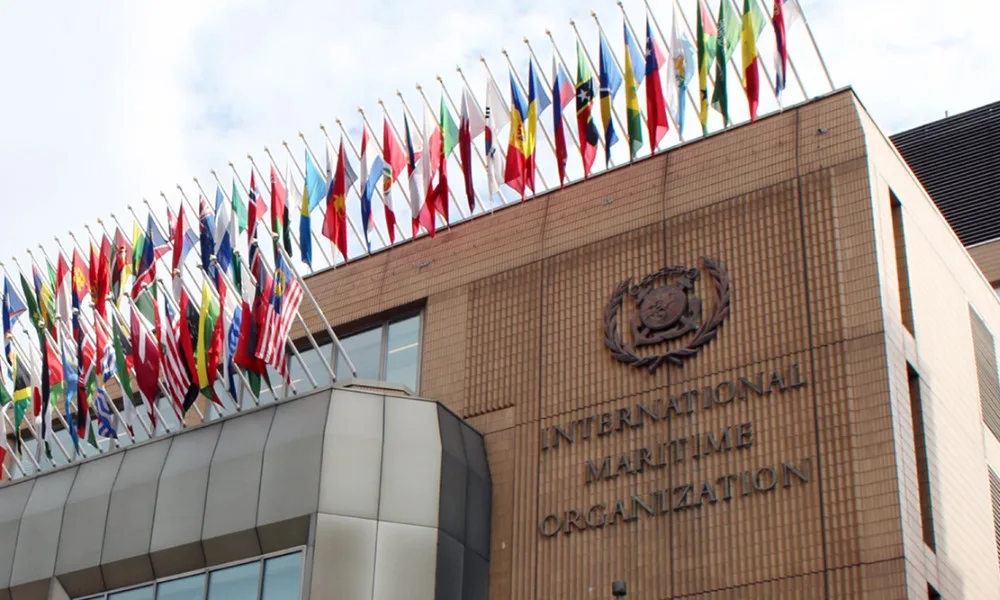
At the last International Maritime Organization (IMO) meeting, I sat in the plenary room, watching what felt like a telenovela. Full of twists, surprise interventions, sharp turns, and raised eyebrows. Delegates waited for the unexpected, and the week ended with a cliffhanger.
At the start, we imagined that talks would focus on strengthening the Net Zero Framework (NZF). By the end of the week, hopes had been lowered to something more basic: that the framework would survive. From the back row of the plenary, I witnessed the USA, Russia and Saudi Arabia a few others, los villanos (the villains), succeeding in blocking its adoption, and in turn, blocking any progress toward reducing climate change.
One year earlier, the IMO had surprised many by stepping into the role of climate frontrunner. Its greenhouse gas strategy committed international shipping to net zero emissions by 2050, and after many discussions, the Net Zero Framework was designed to turn ambition into reality. Yet political pressure from a handful of states forced postponement. Some now suggest that the NZF is beyond resurrection. This conclusion is premature.
The second episode starts now. Member states and governments must not lose sight of what is really at stake: the planet and its people are still bearing the colossal weight and cost of human activities, and there is a limit to how much it can take, regardless of the political mood in Washington, Brussels or Beijing. The undeniable truth is that global shipping, and everything it touches, is a major driver of climate impacts.
The Net Zero Framework remains the only multilateral tool on the table realistically capable of putting shipping on the path to decarbonisation, and according to the industry, does so in a cost-effective way. Early in 2025, a majority of countries voted in favour of it. The adoption of the NZF was delayed by a narrow margin of only eight votes, not rejected outright.
Like any good telenovela, storylines believed to be over can return, and sometimes stronger than before. Procedural obstruction should not determine the future of global climate action. A short delay does not define the final outcome of shipping’s contribution to the climate crisis.
Shipping is a climate polluter and if it were a country, its emissions would rank as the world’s sixth largest, similar to emissions from major economies such as Germany. Without action, this number will continue to rise.
We know that the Net Zero Framework alone won’t fully reduce shipping’s emissions. In its current form, research shows that it would reduce emissions by 8-10% by 2030, a figure that reflects how much ambition has already been stripped out. But it still remains historic. It shows that pollution has a price, incentivises long-term energy solutions and could generate up to $15bn a year from 2030 to support the transition.
Research commissioned by CMA CGM also shows that the costs of implementing the NZF are lower than that of inaction, with minimal impacts on end consumers.
If the Net Zero Framework is reopened, ambition can and should be restored. World leading economists, including at UNCTAD made it clear that a flat levy on shipping emissions is the most cost-effective way to decarbonise the sector. Revenues gained can be reinvested in clean innovation and technology, such as wind propulsion, while supporting those countries most exposed to climate and transition risks. It is a self-funding transition.
It’s also worth reminding that, back in 2025, over 100 countries attending the IMO favoured a levy, before the NZF emerged as a compromise to appease a few powerful.
I use the telenovela metaphor because the situation feels surreal. But this is not fiction. These decisions affect real economies, real communities and a real climate system under strain. The Ne Zero Framework – strengthened with a levy and not abandoned – remains the clearest way forward.
The next episode is still being written.