The trucking industry faces a confluence of challenges that have intensified in recent years. Small and mid-sized carriers struggle to compete with larger fleets that can negotiate better rates on fuel, factoring, and other essential services. Finding qualified dispatchers and operations staff has become increasingly difficult, and many companies have long been understaffed during critical overnight shifts. Breakdowns and service issues don’t stop just because the office is closed. Safety compliance and maintenance scheduling often fall through the cracks when human oversight is the only safeguard, and scheduled PMs get delayed until they become emergency repairs. Through it all, carriers are expected to maintain profitability in a volatile freight market that can shift from boom to bust without warning.
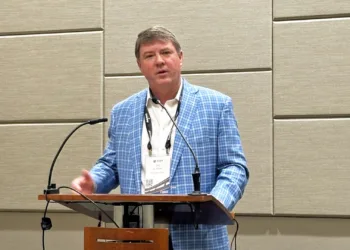
Fleet Owl is leveraging AI automation and collective buying power to help carriers compete in an increasingly challenging market. In the January 30 episode of What The Truck?!?, Chief Revenue Officer Dan Brink laid out the company’s vision for reshaping fleet management while addressing some of the industry’s most pressing concerns.
Fleet Owl is a TMS provider that serves a diverse clientele across multiple transportation segments, from traditional trucking operations to specialized sectors. According to Brink, Fleet Owl is TMS for the small- to mid-sized company looking to grow.
Perhaps the most significant development at Fleet Owl has been its investment in AI-powered dispatch capabilities. Fleet Owl’s AI Dispatch, Brink says, is already proving invaluable for overnight and off-hours operations.
“For your second and third shift dispatcher that’s making check calls or taking care of service issues, we have push button towing in the system for any load,” Brink said.
The platform’s automation extends to routine monitoring tasks that traditionally require constant human attention. The system handles check calls and on-time tracking through geofencing technology.
“That maintenance dispatcher on second or third shift just has to track the drivers that are running overnight, and AI Dispatch takes care of everything for you,” Brink said.
For mid-sized fleets with limited personnel, Fleet Owl makes those understaffed times much more efficient.
“If you get caught up in a breakdown, you’re going to miss a few of your calls,” Brink said. “But our system can make a hundred phone calls at once and make sure all one-hundred drivers are on track while you’re dealing with a more severe issue.”
One of Fleet Owl’s most distinctive approaches to AI development involves on-the-ground learning from experienced operators across different transportation segments. Brink, who brings nearly three decades of logistics experience to his role, understands that tribal knowledge and operational expertise can’t be learned from textbooks.
This understanding has shaped Fleet Owl’s strategy for developing AI that truly serves carriers in specialized segments. Rather than building a one-size-fits-all solution, the company is working directly with carriers in specific markets to understand the nuances of their operations.
The approach acknowledges that trucking operations vary significantly not just by mode, but by geography. What works at one port may not translate to another.
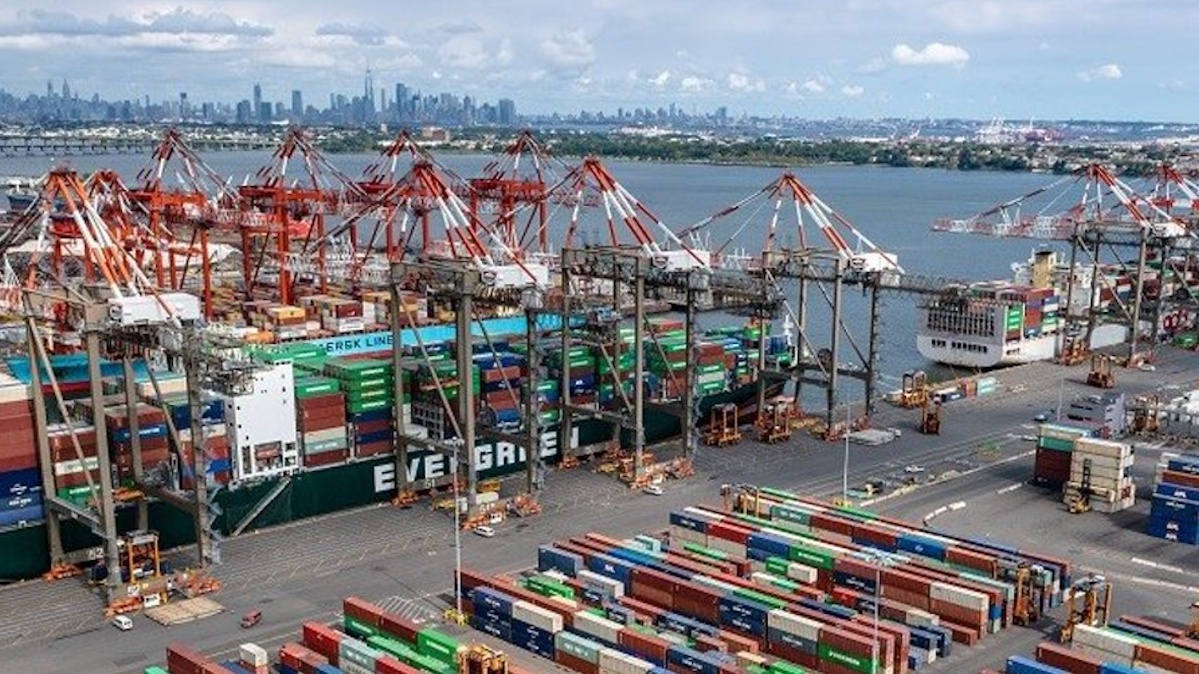
“We’re partnering with oil and gas carriers, drayage carriers, and carriers in all different markets because drayage in New York is not the same as it is in Fort Lauderdale,” Brink said. “We iron out all those little things that each port or terminal needs, as well as the things an oil and gas carrier has to do that a dry van carrier does not.”
The goal, according to Brink, is to minimize the customization required when carriers adopt the platform.
“If we’re going teach the AI, let’s do the legwork to teach it everything and be able to give as much of an off-the-shelf product as we possibly can with little customization after the fact,” Brink said.
With approximately 4,000 trucks now operating on the Fleet Owl platform across more than 100 transportation companies, the company has accumulated significant buying power, and it’s now passing those benefits along to customers.
“We have the power to negotiate deals on things like fuel and factoring, so anybody that uses our platform is automatically built in and can get those discounts,” Brink said.
Fleet Owl has launched its own fuel card program, specifically designed to extend enterprise-level discounts to smaller operators who typically lack the volume to negotiate such rates independently.
This mission-driven approach to serving smaller carriers is central to Fleet Owl’s identity.
“We genuinely care about the trucker,” Brink said. “It’s the trucker’s TMS – that’s what we call it around here. It’s for that small to mid-sized fleet that’s just trying to grow. And it’s working.”
The proof appears to be in the numbers. According to Brink, 80% of the carriers on Fleet Owl’s platform have added trucks in the last two years.
The current freight market has been challenging for carriers of all sizes, and Fleet Owl has structured its pricing model to accommodate the industry’s cyclical nature. Rather than locking customers into large upfront investments or fixed monthly fees, the company uses a per-truck pricing model that scales with fleet size.
“We keep it at a low cost entry fee,” Brink said. “If you’re having a great year and you add five trucks, your price might increase some, but if times are tough and you have to scale back, your software bill goes down.”
This flexibility acknowledges the reality facing many carriers today and keeps smaller companies from being stuck with massive bills for services they can’t make the most of during tough seasons.
Beyond dispatch and load management, Fleet Owl has developed AI-powered tools to help carriers maintain safety and compliance standards. The platform includes an inspection process that guides drivers through pre-trip and post-trip requirements.
The maintenance management features address a common problem in fleet operations: scheduled maintenance that falls through the cracks due to human oversight. Fleet Owl’s system automates the entire workflow.
“There’s no human who has to say, ‘hey, bring it to the shop,’” Brink said.
One of the most pressing issues facing the trucking industry today is fraud, and Brink says that Fleet Owl is taking the issue very seriously.
“We partner with all the established verification services to give customers the best tools to protect themselves,” Brink said.
However, he believes the industry needs more systematic solutions. “We need the DOT to step in and we need a unified carrier verification process, because the fraud is happening at the point of attack,” Brink said.
The sophistication of fraud schemes continues to escalate. “Criminals are using magnets to change MC numbers on the side of trucks,” Brink said.
Having witnessed the industry’s technological evolution firsthand, Brink understands that technology can sometimes create as many problems as it solves, but Fleet Owl is working to ensure the safety and security of its partners through proactive initiatives.
Click here to learn more about Fleet Owl.
The post AI Dispatch, Fraud Prevention, and Building “The Trucker’s TMS” appeared first on FreightWaves.