Maritime and Logistics News
  • Maritime & Ocean News
    • Container Shipping News
    • Dry Bulk Shipping News
    • Breakbulk Shipping News
    • Chemical Shipping News
    • Crude Oil Shipping News
    • Cruise Shipping News
    • Fishing News
    • Freight Forwarders News
    • LNG & LPG Shipping News
    • Multimodal Transport News
    • Railway News
    • Straits News
    • Trucking News
  • Global Ports News
    • Port Accidents News
    • Port Congestion News
    • Port Infrastructure News
    • Port Strike News
    • Schedules News
  • Air Cargo News
    • Air Cargo Carriers News
    • Air Freight Forwarder News
    • Airports News
  • Logistics News
    • Supply Chain News
    • Warehousing News
    • Cold Storage News
    • Logistics Parks News
  • Vessels News
    • Bunkering News
    • Incidents News
    • Offshore News
    • Pilotage News
    • Piracy News
    • Services News
    • Ship Breaking News
    • Shipbuilding News
  • Tech. & Sustainability News
    • Green Logistics News
    • Responsibility Projects News
    • Useful Maritime Associations News
  • Languages
Friday, February 6, 2026
Advertisement
No Result
View All Result
No Result
View All Result
No Result
View All Result
Home Container Shipping News

Are index-based shipping contracts a trap for BCOs?

February 6, 2026
in Container Shipping News
Are index-based shipping contracts a trap for BCOs?
0
SHARES
6
VIEWS
Share on FacebookShare on Twitter
Dr Raymon Krishnan, president of Singapore’s Logistics & Supply Chain Management Society, ponders the risks of index-based freight contracts.
For many beneficial cargo owners (BCOs), index-based freight contracts are increasingly positioned as the modern, data-driven answer to volatile shipping markets. On paper, they promise transparency, fairness, and alignment with prevailing market conditions.
In practice, however, many shippers are discovering that index-linked pricing can quietly transfer risk rather than create value. As supply chain volatility becomes structural, we must ask: are these contracts serving BCO interests, or are they simply convenient mechanisms for carriers to offload uncertainty?
The shift toward indexing was the logical outcome of structural changes over the last 20 years. In the 1990s, annual fixed-rate contracts were workable because rates moved within predictable bands. That changed dramatically due to the Global Financial Crisis, carrier consolidations, and pandemic-era shocks. For shippers, spot exposure became commercially unmanageable, while carriers learned that long-term fixed rates were financially dangerous. Indexing emerged as a compromise to float pricing with the market and pass the risks to BCOs.
Consolidation and the power shift
Industry consolidation fundamentally altered contract dynamics. By the late 2010s, the top 10 carriers controlled approximately 85% of global capacity. This concentration allowed carriers to push back on fixed pricing and introduce index-linked models as a condition of capacity access. Indexing was not just a pricing innovation; it was a power shift that many logistics managers were not equipped to counter.
This was supported by the explosion of freight indexes like the SCFI and Xeneta, which provided data that looked objective and defensible. Procurement teams liked indexes because they provided auditability and benchmarks, helping to disguise perceived incompetence. Carriers liked them because spot market volatility could be passed through contractually, shifting revenue risk downstream to the customer.
The illusion of transparency
Indexes are marketed as objective reflections of reality, yet most are built on spot market data—the most volatile segment of the market. This creates an inherent mismatch for BCOs who operate on annual budgets and long-term planning horizons. When rates spike, index-linked contracts adjust almost immediately. When markets soften, relief is often slower or diluted through averaging mechanisms. Transparency without balance is not partnership; it is exposure.
The loss of commercial leverage
A critical weakness lies in how risk is allocated. While carriers benefit from pass-through pricing during disruptions, BCOs absorb cost volatility without equivalent protection on service levels. Cargo rollovers and blank sailings rarely trigger contractual consequences; the index moves, the invoice adjusts, and the shipper pays.
Furthermore, when pricing becomes automated, shippers lose the ability to leverage volume commitments or long-term loyalty. What was once a strategic procurement discussion becomes an administrative exercise. BCOs may find themselves paying rates reflecting volatility they did not create, while losing influence over service outcomes they critically depend on.
The strategic path forward
Indexing itself is not the enemy—it is a tool, not a strategy. These structures can make sense in tactical lanes or short-term commitments, provided they include governance mechanisms like rate ceilings, floors, and service-linked adjustments. The problem arises when indexing becomes the default rather than the exception.
In today’s environment, the most important question is no longer “What is the market rate?” but rather “Does this contract give us control, predictability, and accountability?”. True resilience is built through contracts that align incentives and recognise that volatility is now a permanent feature of global trade.
As we move toward 2026, the next evolution will not be about better indexes, but about smarter contract architecture. This includes hybrid pricing, risk-sharing mechanisms, and true partnership models. In a structurally volatile world, pricing formulas alone are not a strategy.

Tags: AndIndexMarketNotThe

Related Posts

Hydrogen network in the North Sea Canal area has been completed
Container Shipping News

Hydrogen network in the North Sea Canal area has been completed

February 6, 2026
Container Shipping News

NX Taiwan opens Tainan NEXT11 warehouse as southern logistics hub

February 5, 2026
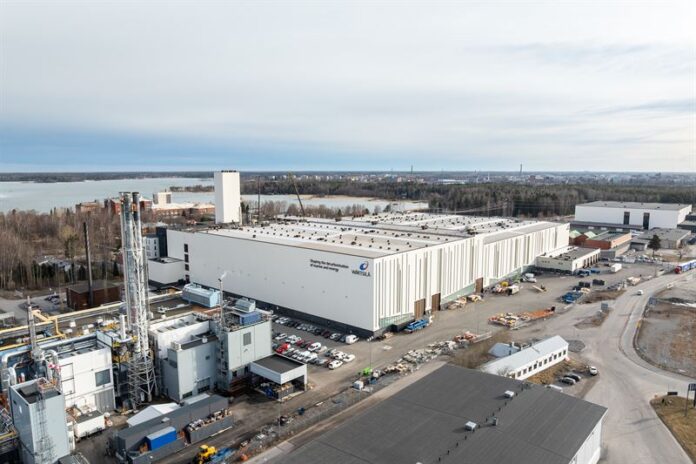
Wärtsilä to expand production capacity in Finland by 35%
Container Shipping News

Wärtsilä to expand production capacity in Finland by 35%

February 5, 2026
GOP members to STB: Find ‘real’ benefits or reject rail merger
Air Cargo Carriers News

GOP members to STB: Find ‘real’ benefits or reject rail merger

February 5, 2026
U.S. rail freight loses ground in latest data
Air Cargo Carriers News

U.S. rail freight loses ground in latest data

February 5, 2026
Yusen Logistics and AGL launch “Yusen Africa” in Kenya
Container Shipping News

Yusen Logistics and AGL launch “Yusen Africa” in Kenya

February 5, 2026
  • Trending
  • Comments
  • Latest
Trump to name Fox TV host Sean Duffy to head DOT

Trump to name Fox TV host Sean Duffy to head DOT

November 19, 2024
FedEx sends specialists to streamline European operations

FedEx sends specialists to streamline European operations

August 21, 2025
Vintage VLCC prices firm up

Vintage VLCC prices firm up

February 25, 2025
At RailTrends, CPKC and UP CEOs talk about higher levels of rail service

At RailTrends, CPKC and UP CEOs talk about higher levels of rail service

November 18, 2024
PUMA Chooses Maersk Warehouse,

PUMA Chooses Maersk Warehouse

0
Cape Rates Soar to $40,000 Per Day, Surging Twofold Within One Week

Cape Rates Soar to $40,000 Per Day, Surging Twofold Within One Week

0
Allelys Successfully Navigates Challenges in Transporting Cargo to Rothienorman Substation

Allelys Successfully Navigates Challenges in Transporting Cargo to Rothienorman Substation

0
Hanwha Ocean secures a contract for an ultra-large ammonia carrier

Hanwha Ocean secures a contract for an ultra-large ammonia carrier

0
Keyfield orders anchor handler from Chinese shipbuilder

Keyfield orders anchor handler from Chinese shipbuilder

February 6, 2026
Are index-based shipping contracts a trap for BCOs?

Are index-based shipping contracts a trap for BCOs?

February 6, 2026
Hydrogen network in the North Sea Canal area has been completed

Hydrogen network in the North Sea Canal area has been completed

February 6, 2026

NX Taiwan opens Tainan NEXT11 warehouse as southern logistics hub

February 5, 2026

Recent News

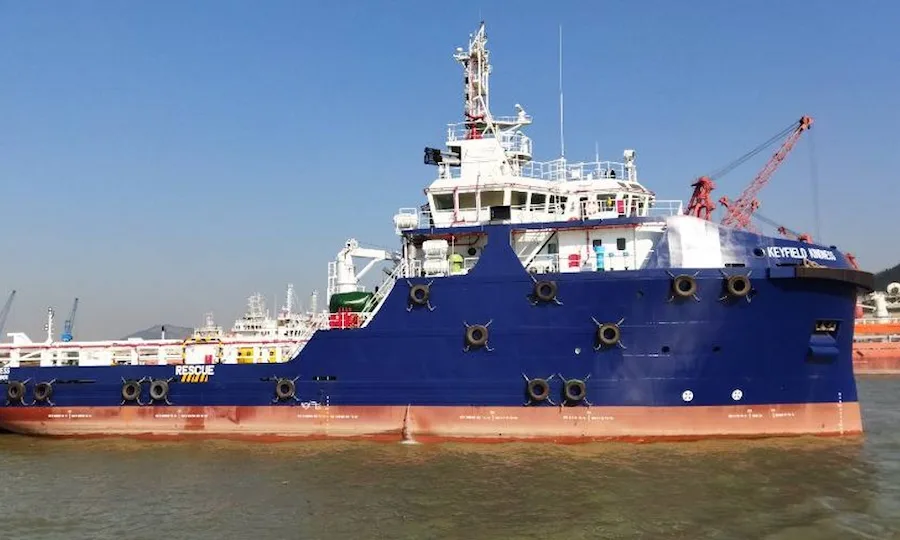
Keyfield orders anchor handler from Chinese shipbuilder

Keyfield orders anchor handler from Chinese shipbuilder

February 6, 2026
Are index-based shipping contracts a trap for BCOs?

Are index-based shipping contracts a trap for BCOs?

February 6, 2026
Hydrogen network in the North Sea Canal area has been completed

Hydrogen network in the North Sea Canal area has been completed

February 6, 2026

NX Taiwan opens Tainan NEXT11 warehouse as southern logistics hub

February 5, 2026

Stay ahead in the dynamic world of maritime and logistics with our comprehensive news coverage. Explore the latest industry trends, breaking news, and insightful analyses. Your gateway to informed decision-making in shipping, trade, and logistics awaits.

Follow Us

Our Partners

shipstrack.com
E-tracking
  • About
  • Advertise
  • Privacy & Policy
  • Contact

© 2020-2024 SeasNews - Shipping News & Magazine.

No Result
View All Result

© 2020-2024 SeasNews - Shipping News & Magazine.