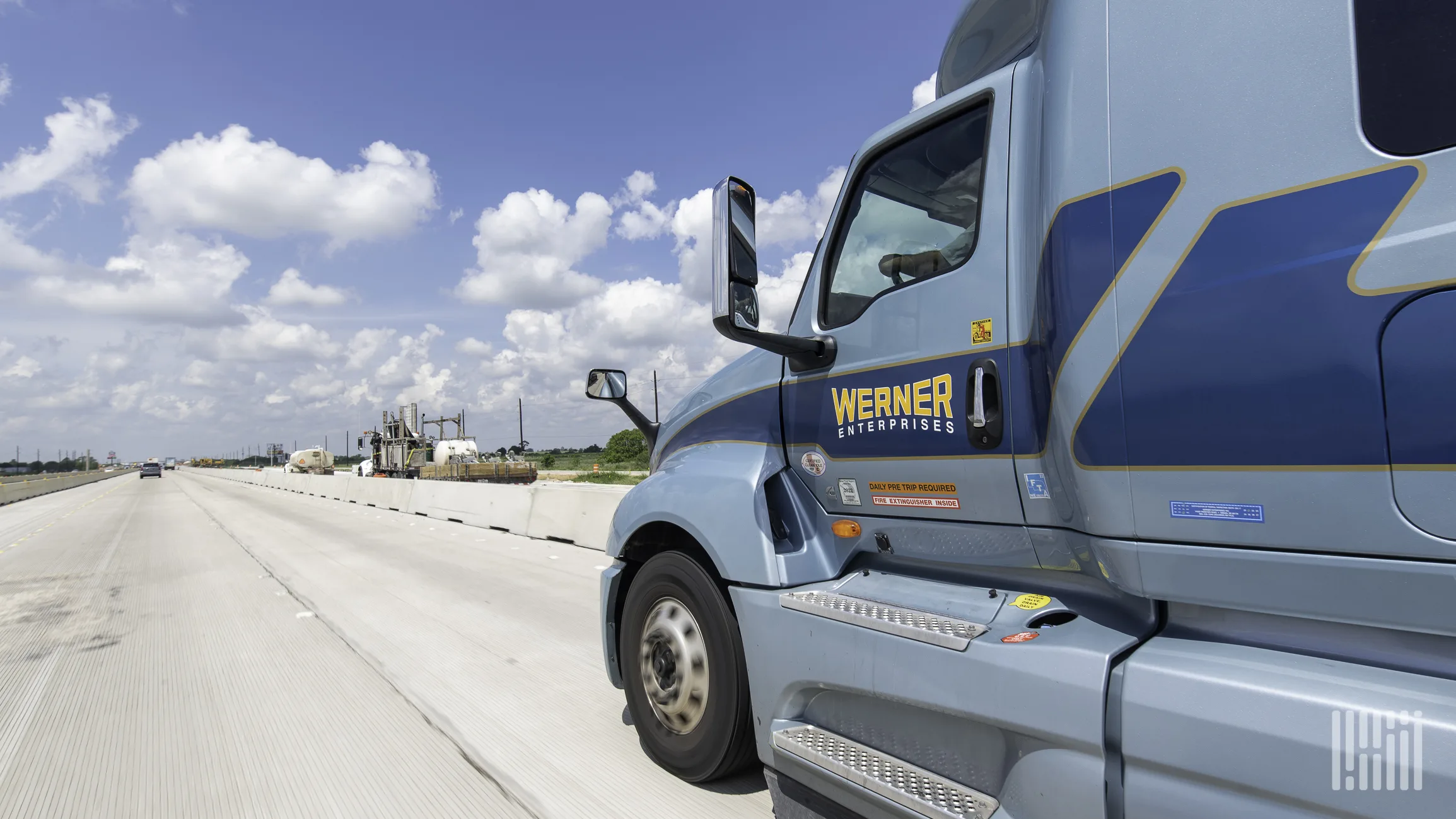
Eleven years after the lawsuit was first filed, the details of an $18 million settlement between Werner Enterprises and roughly 100,000 drivers have been disclosed.
The settlement now awaits final approval by the U.S. District Court for Nebraska. While the specifics of the deal are now being disclosed for the first time, the agreement between Werner and a class of drivers was first disclosed in court filings in October, just as the lengthy case was about to go to trial.
The original California state lawsuit filed in 2014 before moving to federal court had a laundry list of violations it believed the drivers had been subject to by Werner. The charges were fairly standard for a drivers’ lawsuit that involves allegations of minimum wage and Hours of Service violations.
“Werner has wrongly failed to pay wages for all compensable work time (whether calculated at statutory minimum wage rate or at the regular rate of pay), failed to provide duty free meal/rest periods or in their absence pay added wages, made unlawful deductions from wages earned in California, failed to provide properly itemized pay statements, failed to maintain proper time/pay records, and failed to pay all accrued wages on termination of employment to or for Plaintiffs and other of its former and current truck drivers whom it employed to work in California after their completion of training,” the lawsuit says.
Thirteen-year span for eligibility
Under the terms of the agreement, the settlement sets up the $18 million fund for two classes. One of those classes is for California drivers who resided in that state and picked up or delivered at least one load for Werner (NASDAQ: WERN) in the Golden State between June 4, 2010 and July 14, 2023.
The second class is referred to as the Nebraska Class (Werner is based in Omaha). To qualify for that, a driver needs to have carried at least one load between the same dates as the California Class, anywhere else in the country.
“The settlement resolves (the drivers’) claims that Werner’s compensation system failed to pay minimum wages for non-driving work time, including time spent in sleeper berths, waiting for loads, performing pre-trip and post-trip inspections, and attending to cargo security,” according to the brief filed by the plaintiffs in support of the settlement.
The brief acknowledges that the claims by the drivers “presented novel legal questions at the intersection of federal hours-of-service regulations and state wage-and-hour laws, questions that courts across the country have only recently begun to address.”
Werner declined comment on the settlement.
The supportive brief acknowledges that reaching a settlement was “neither short nor easy.”
The case originally had been filed in California’s Alameda County Superior Court in August 2014, but was moved to federal court that same year, first in California and then to Nebraska. It was certified as a class action in 2017.
Starts with $20 or $40
Under the plan, there will be a base payout of $20 for each Nebraska Settlement member that is contacted and does not opt out of the agreement. That base payout rises to $40 for the California Settlement members.
Members of the certified class who wish to opt out and pursue their own action may do so.
Attorney’s fees are 33.33%, which is standard. But the attorneys for the class will also seek reimbursement of litigation costs, with a cap of $2.25 million on that figure.
After that, what remains in the fund will be distributed on a pro rated basis based on the duration the drivers worked for Werner during the roughly 13 years accounted for in the settlement.
“This approach ensures that drivers who were employed longer–and thus subjected to the challenged compensation practices for more time–receive proportionally greater compensation,” the plaintiffs’ supportive brief says.
The seven “named plaintiffs” in the case–who were the sole plaintiffs before the class certification–could receive separate payments of as much as $15,000 per person, pending final resolution of the settlement.
Handling the settlement payouts will be Atticus Administration, a company described as a “qualified third-party settlement administrator.” The administrator will seek to contact members of the class over the next month.
The October settlement was reached just one day before the case was to go to trial. “By the time the parties reached settlement, they had completed full trial preparation,” the plaintiffs’ brief said.
It’s all even
The “clarity” provided by those pre-trial preparations “informed the negotiation that produced this settlement. Plaintiffs achieved significant victories during the course of litigation and Plaintiffs recognize Werner also achieved significant victories during the course of the litigation.”
The settlement “represents a fair resolution of claims that carried meaningful risk for both sides,” the supportive brief said.
More articles by John Kingston
FedEx Freight will begin life as an investment-grade credit
Amazon’s LTL offering reaching out to shippers as possible customers: report
NFI’s Brown, others win another round in dismissed New Jersey indictment
The post Werner settlement ready to go in drivers’ lawsuit that dates to 2014 appeared first on FreightWaves.