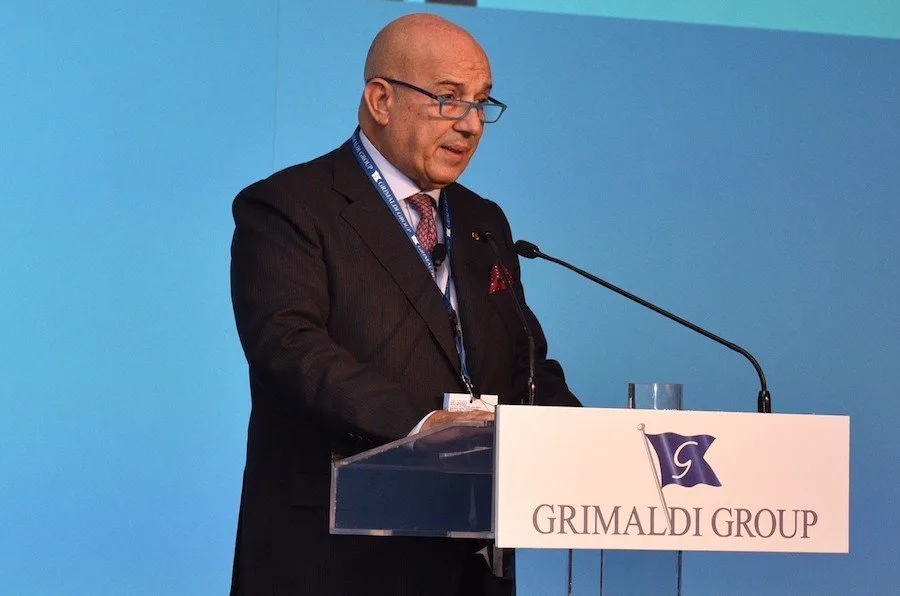
Emanuele Grimaldi, chairman of the International Chamber of Shipping, writes exclusively for Splash today, detailing the evolving geopolitical and regulatory pressures facing our industry.
Our sector is operating in a world where geopolitical and business volatility is becoming the rule rather than the exception, hampering progress towards the goals of both individual organisations and the maritime industry as a whole. With so many risk factors at play, it is more important than ever for leaders to have access to accurate information that is not influenced by external agendas.
Simply put, we must cut through the noise to ensure that we do not stray from the course that best meets our needs.
At a time when the external environment is evolving at an extraordinary speed, with conflicts, tariff changes, and diplomatic realignments unfolding simultaneously, maritime leaders need clarity on what the real drivers of business risk are, and how these interact with long-term trends.
The ICS Maritime Barometer was created to track changing sector dynamics that spur shifts in sentiment, and to understand how global events translate into operational pressures for shipping. The annual report, now in its fifth year, offers a trusted means to filter out fast-changing political narratives and market speculation. By tracking risk factors and confidence levels of C-suite maritime leaders, it plainly outlines areas of opportunity as well as those of concern – and provides much needed context for conversations about our collective future.
Shared concerns
It should come as no surprise to any of us that political instability has consistently been identified as a top risk across multiple editions of the barometer, highlighting the ongoing impact that government actions and lack of clarity have on business. In fact, last year’s findings highlighted how this has acted as a risk multiplier, influencing everything from cyber security exposure to reshaping trade flows and financing.
It is likely that respondents who highlighted the pain points of growing protectionism, disruptions in the Red Sea, and wider geopolitical fragmentation in 2024-25, will have been impacted by the more recent new tariff regimes, shifting supply chains, heightened concerns around state-linked cyber interference and other emerging issues.
And who could ignore the role that geopolitics played at the IMO in October 2025 during conversations about the Net-Zero Framework (NZF) at MEPC? Although our previous report had shown cautious optimism and growing confidence in a global regulation to manage shipping-related carbon emissions, the delayed decision about the NZF will no doubt have amplified risks for some players, while providing greater strategic possibilities for others.
Identified opportunities
Data from the barometer has also been tracking emerging opportunities and has spotlight concentrations of market sentiment across specific topics. The survey has reflected steady interest in LNG over several years, with abatement and biofuels as transitional options, alongside longer-term confidence in methanol and ammonia. It has tracked peaks in interest in individual technologies such as wind propulsion, which may cede attention to more traditional fuels given slow progress on emission regulations.
The report also shows year-on-year demand for solutions to better manage growing cyber risk, as well as solutions that can reduce the administrative burden of compliance. This is indicative of fertile ground for organisations that have robust digital solutions that can accommodate the unique needs of our operations. Additionally, growing demand for skilled maritime workers – both at sea and on shore – is a trend that should be kept in mind when planning ahead.
Building on common ground
Across the years, maritime leaders sharing their views for this report have shown a remarkable ability to adapt to challenges and to maintain the integrity of the supply chain. Whether responding to pandemics, geopolitical shocks, cyber-attacks or new regulations, the sector continues to demonstrate resilience and commitment to ensuring that global trade flows securely and efficiently. But success in the coming years will depend on understanding how these risks interact, and where cooperation is most needed.
Our aim with the barometer is not to prescribe solutions but to illuminate the issues that matter most to maritime stakeholders. By looking beyond headlines and examining sentiment across multiple regions and subsectors, the survey helps identify both emerging challenges and new opportunities. It provides governments, regulators, and industry with a common evidence base from which to navigate uncertainty, focus attention, and support meaningful progress.
As we collect opinions from industry leaders for our fifth ICS Maritime Barometer, we hope that these insights continue to support constructive dialogue during a period of significant change. By understanding what truly drives maritime decision-making, and by recognising where perspectives converge, we can ensure that progress is built on clarity, stability and informed collaboration.