Donald Trump has reiterated his vow to “100%” place tariffs on European countries that oppose his demand to take control of Greenland, with liners on the north Atlantic trades already coming under pressure.
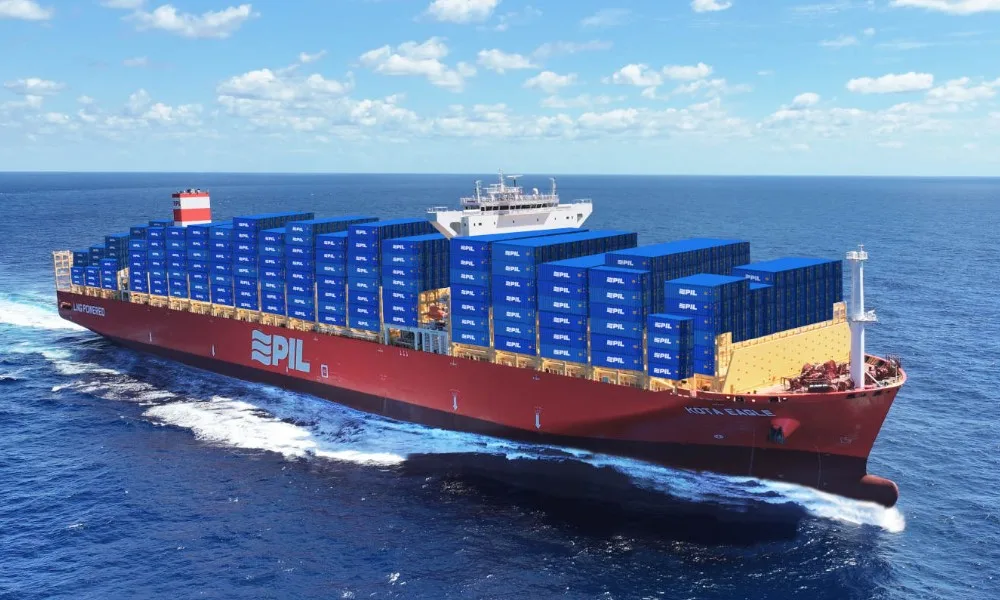
Westbound rates on the transatlantic container tradesfrom Europe to the US are already down by 40% since the beginning of 2025, according to data from Linerlytica, a container shipping consultancy. Transatlantic container imports from North Europe to the US grew by 5.9% in 2025, but growth was already slowing in December and could be further hit by the new tariffs.
Trump announced on January 17 that eight European countries would face increasing tariffs starting at 10% on 1 February and rising to 25% on 1 June.
Lars Jensen from consultancy Vespucci Maritime pointed out via LinkedIn that similar to the announced tariffs on Iran’s trading partners, none of these exist outside of social media and are hence not yet actual law.
“It feels as if we are on the verge of some trigger event. Greenland might be it – with the new tariff threat, it clearly has the potential to push EU over the edge in terms of trade war, destroy NATO, and set the scene for a Chinese invasion of Taiwan,” suggested experts at Sea-Intelligence, a Danish liner consultancy, in their most recent weekly commentary.
In the event that the US does move to take over Greenland, Vespucci’s Jensen warned Denmark’s Maersk would have a problem in relation to Maersk Line Limited which operates US flag vessels and services the US military. The same applies to CMA CGM through APL as France has voiced strong support for Denmark and Greenland in this matter.
Turning to tankers, wehile there are considerable energy trading ties between the US and Europe, tanker analysts at broker BRS suggest looking at earlier Trump decisions that energy tends to be eventually excluded from higher tariffs .
Energy analytics firm Wood Mackenzie notes no crude or chemical tankers have been recorded transiting to Greenland for many years. Trump’s keenness for Greenland lies in its rare earths and Arctic routes, according to Wood Mackenzie.
“Securing domestic rare earth production would allow the US to challenge Asia’s dominance, reduce reliance on vulnerable chokepoints, and strengthen economic resilience,” Wood Mackenzie observed in a new report.
“Rare earths move via geared bulk carriers offering multi-cargo flexibility, strategic nearshoring, and risk mitigation. As traditional chokepoints like the Suez Canal, Panama Canal, and Strait of Hormuz face growing geopolitical and climate risks, Greenland stands as the ‘Tollgate of the North’,” the Wood Mackenzie report argued, going on to discuss Greenland’s pivotal control of Arctic routes.