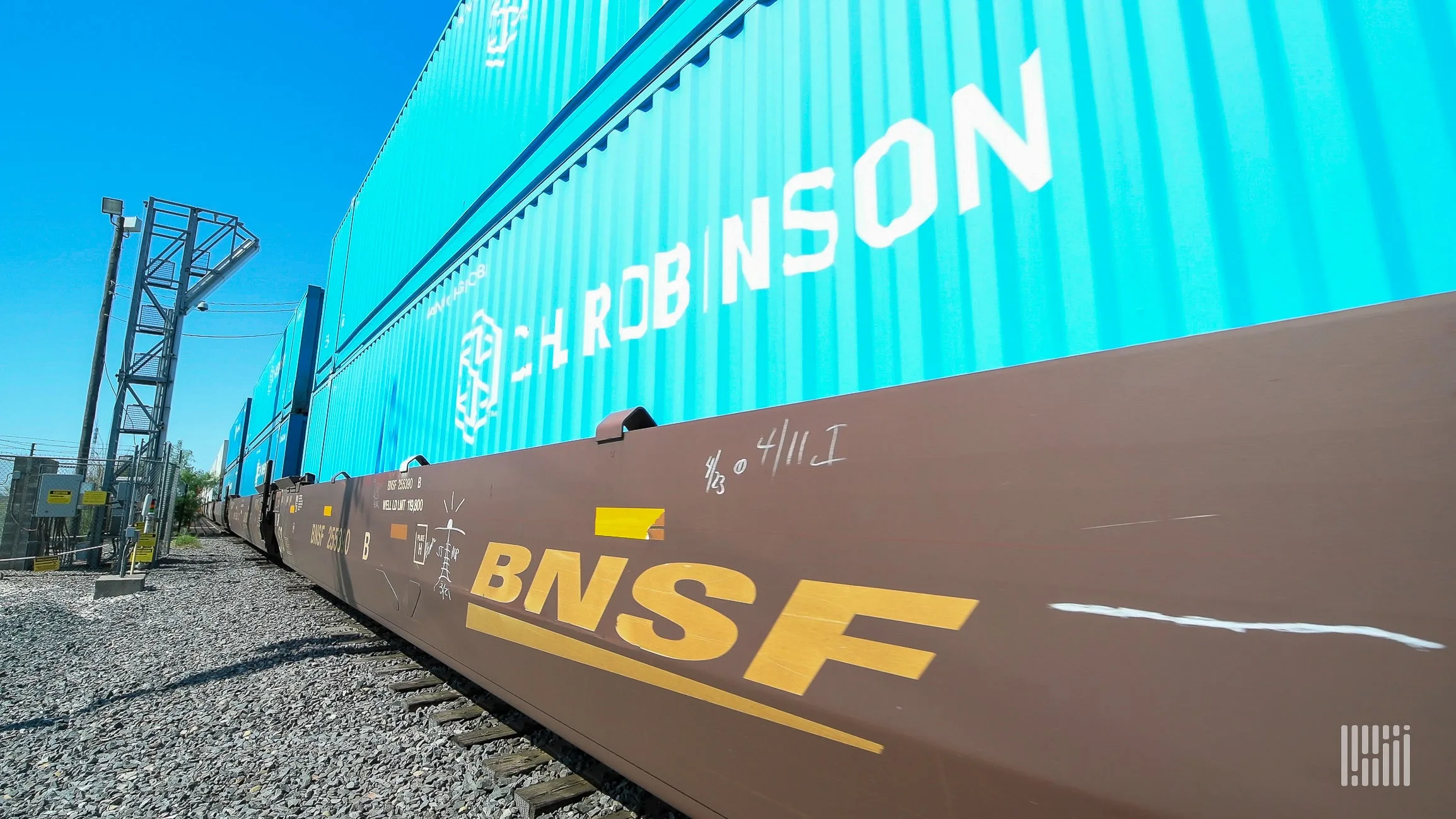
For most of its life, the global dry box container has operated in the shadows.
Once it leaves the terminal, visibility drops off quickly. Unlike trucks or railcars, containers have historically been treated as static assets. Steel boxes that move through the system but rarely speak for themselves. Tracking was viewed as optional, expensive, or reserved for reefers and high-value cargo. That blind spot, long tolerated as a cost of doing business, is becoming increasingly difficult to defend.
Curtis Spencer, CEO of Bloodhound Tracking Device (BTD), argues the shift is already underway. “The value proposition just wasn’t there for dry boxes for a long time,” Spencer said. “But that’s changing fast. We’re right at the edge of about 20% of the global dry container fleet now having some form of tracking. That number is only going one direction.”
The forces driving that change are familiar to anyone moving freight today: organized cargo theft, tighter insurance scrutiny, pressure to reduce loss and damage claims, and a growing push toward data-driven decision-making. What’s different now is the realization that advanced analytics, and increasingly, AI, are only as good as the data feeding them.
“You can’t understand trends, lanes, or risk without raw data,” Spencer said. “All the analytics everyone wants have to come from somewhere.”
Much of the container tracking technology on the market today traces its roots back to vehicle or consumer electronics. Those systems work reasonably well on trucks with reliable cellular coverage and regular human interaction. Containers are a different animal entirely.
They spend weeks at sea, stacked six or seven containers tall, often buried deep in a vessel or yard. Cellular connectivity is inconsistent. Battery access is limited. Devices are exposed to vibration, impact, and tampering, sometimes intentional, sometimes incidental.
“Connectivity loss at sea has been treated as a fact of life,” Spencer said. “We looked at that and said, that’s a design failure.”
BTD’s response was to build Tracker 1 as a container-native platform rather than an adapted one. At the core of that approach is redundancy, specifically, triple-layer communications. Tracker 1 prioritizes cellular connectivity, falls back to satellite when needed, and uses a proprietary IoT mesh network as a third option.
In practice, that means containers can communicate with each other. In one trial, a unit buried lower in a stack was unable to connect directly, but relayed data through another Bloodhound device higher up that had a clear path to the sky. “They talk bloodhound to bloodhound,” Spencer said.
The result, he argues, is the elimination of blind spots. “If you don’t have accurate information globally, you don’t really have visibility at all.”
As cargo theft has become more organized, thieves have grown savvy to visible tracking devices. Spencer described incidents where criminals successfully removed obvious exterior trackers, unaware a second, covert unit remained in place. “The outside unit was Tracker 1,” he said. “We were able to recover both the container and the cargo because they never knew it was there.”
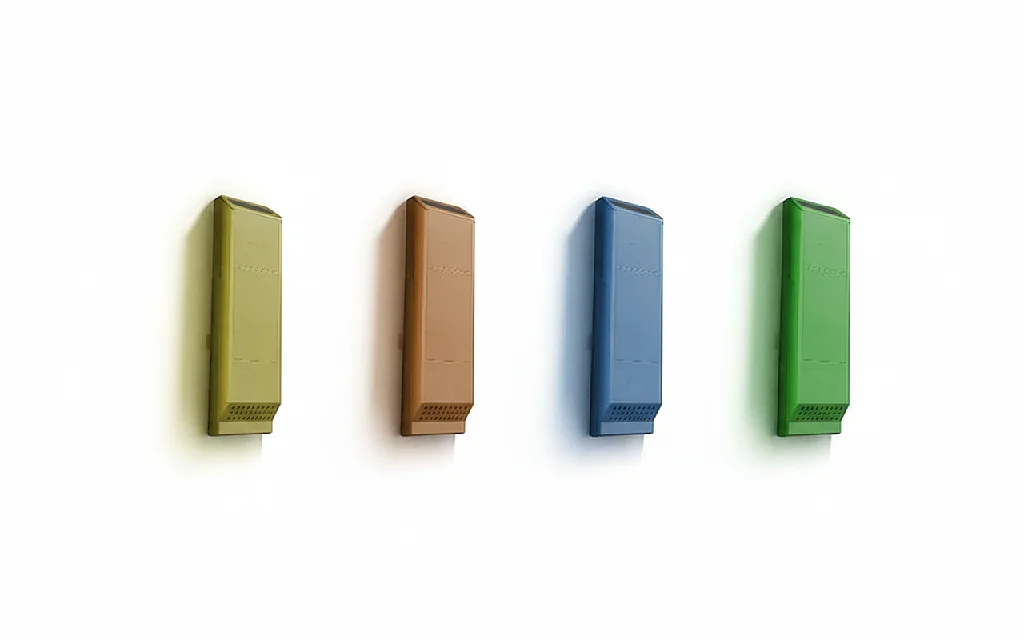
That covert design is central to Tracker 1’s security value proposition. The device fits within the corrugation of the container wall, near the vent area, and is magnetized to withstand up to 75 Gs of force. It requires no drilling, wiring, or external antennas. A physical tamper switch triggers alerts the moment the device is disturbed, recording when and where it was removed.
Beyond theft, the device’s accelerometer provides insight into impacts and handling events during transit. BTD is already trialing the technology with rail partners to help pinpoint where damage occurs, data that could reduce claims disputes and shift accountability upstream.
Visibility also has implications beyond security. Always-on tracking changes how containers are managed across the network, especially when it comes to repositioning empties.
“Containers and trailers don’t have to be hunted down by humans anymore,” Spencer said. “Our units talk. You can see where your assets actually are.”
Geofencing allows operators to know precisely when a container enters or leaves a yard, port, or customer facility. Those rules can be configured remotely, without sending technicians onsite. Installation itself is intentionally simple: scan a QR code to activate the device, photograph the unit and the container number, and it’s live. That simplicity matters if tracking is going to scale.
The post Bloodhound Tracking Device launches Tracker 1, the covert tracking solution for containers appeared first on FreightWaves.