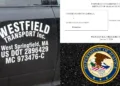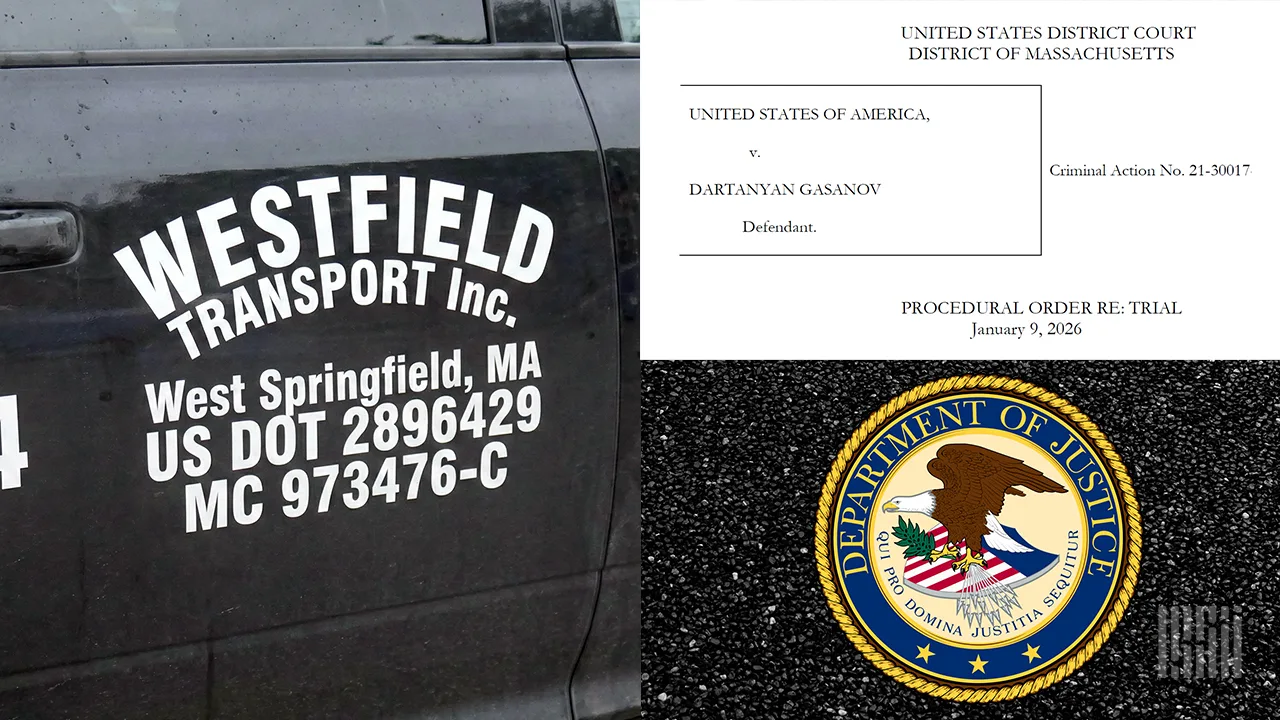
The last defendant connected to the deadliest commercial vehicle crash in New Hampshire history will finally face a jury this spring. Dartanyan Gasanov, co-owner of Westfield Transport Inc., is scheduled for trial beginning March 2, 2026, in U.S. District Court before Judge Mark G. Mastroianni. The case represents the final chapter in a tragedy that exposed catastrophic failures across every layer of trucking safety enforcement and revealed a sprawling network of affiliated carriers that federal investigators believe operated as a chameleon enterprise.
Gasanov reportedly rejected a plea agreement that would have resulted in no prison time. He chose to go to trial instead. In an industry where motor carrier owners rarely face criminal charges even when their negligence kills people, the fact that a no-time deal was even on the table tells you everything about how the system values accountability. The fact that he turned it down tells you something else entirely.
The Crash
On June 21, 2019, a pickup truck towing a flatbed trailer operated by 23-year-old Volodymyr Zhukovskyy crossed the centerline on Route 2 in Randolph, New Hampshire, and plowed through a group of motorcyclists from the Jarheads Motorcycle Club, a charitable organization of Marine Corps veterans. Seven people died in the collision and subsequent fireball. Zhukovskyy, who admitted to consuming heroin, fentanyl, and cocaine earlier that day, stumbled from the wreckage screaming for his mother. He had been hired by Westfield Transport just two days earlier.
What followed was a cascading exposure of systemic rot. The National Transportation Safety Board investigation revealed that Westfield Transport operated more like a criminal enterprise than a trucking company. Of 150 driving logs reviewed by federal investigators, 28 had been falsified. The company instructed drivers to disconnect smartphones from electronic logging devices to avoid accurate recording of driving time. The carrier manager later demonstrated to NTSB investigators exactly how they tampered with KeepTruckin devices to falsify hours-of-service records.
The Driver Who Should Have Never Been Behind the Wheel
Zhukovskyy’s driving history was a parade of red flags that every system designed to protect the public missed. He had a DUI arrest as a teenager. In 2017, a gas station employee found heroin and cocaine in his lost wallet. On May 11, 2019, six weeks before the fatal crash, Connecticut State Police arrested him after he failed a field sobriety test and refused a urine drug test. Connecticut notified Massachusetts, but the notification fell into a bureaucratic black hole at the Registry of Motor Vehicles.
On June 3, 2019, Zhukovskyy ran off the road and overturned a commercial vehicle in Baytown, Texas. He was terminated from his employer, FBI Express, on June 7, for failing to complete a drug test after the crash. On June 18, Westfield Transport hired him anyway, without running a background check. On June 21, seven people were dead.
The Gasanov brothers knew exactly who they were hiring. Federal prosecutors established that Dunyadar Gasanov lied to investigators when he claimed he’d met Zhukovskyy for the first time on the day he was hired. In fact, they had known each other for years, and Gasanov was aware of the driver’s prior DUI arrest.
The Chameleon Carrier Network
The wildest revelation from the NTSB investigation was the discovery of a sprawling network of affiliated carriers connected to Westfield Transport. Federal investigators identified at least 21 motor carriers sharing vehicles, drivers, addresses, and ownership with the Gasanovs, the hallmarks of a chameleon carrier operation designed to evade federal oversight.
The connections traced directly to Zhukovskyy himself. When NTSB investigators visited the driver’s family home in West Springfield, they found a “DAKS Express” sign on the mailbox and vehicles marked “Vlad’s Transport” parked in the driveway. The NTSB determined that Zhukovskyy had worked as a dispatcher at Vlad Transport, a medical transport company operating without a DOT number. DAKS Express, registered to the same address, remains an active DOT-authorized carrier to this day.
The affiliated carrier list reads like a roadmap of regulatory evasion: East Transport, opened by the Westfield owner months before the crash, refused a safety audit and went out of service. East2West Transport, whose manager had worked as a Westfield driver, remains active and employs a driver who previously worked at Westfield Transport and has a suspended license. County Transport Inc. shared three vehicles with identical plates and VINs before it too refused a safety audit. Multiple other carriers shared drivers, vehicles, and equipment across the network.
A System That Failed at Every Level
The FMCSA had ample warning signs. In the 18 months after Westfield Transport graduated from the new entrant safety assurance program, the carrier accumulated 48 roadside inspections resulting in 23 out-of-service violations. The driver OOS rate was 20.8 percent, nearly four times the national average. Three BASICs were in alert status. The agency classified Westfield Transport as “moderate risk” and never conducted a compliance review.
After the crash, FMCSA investigators recommended issuing an imminent hazard order against Westfield Transport. The agency declined. By August 2019, both Westfield Transport and East Transport had notified FMCSA they were “no longer in business.” The affiliated network, however, continued operating.
The Price of Seven Lives
When Zhukovskyy faced trial in August 2022, the criminal justice system delivered an outcome that shocked victims’ families and law enforcement alike. Judge Peter Bornstein dismissed eight impairment-related charges before the case reached the jury, ruling the state hadn’t proven intoxication at the moment of impact. The defense successfully shifted blame to Albert “Woody” Mazza Jr., the lead motorcyclist, whose blood alcohol content was .135. After less than three hours of deliberation, the jury acquitted Zhukovskyy on all 15 remaining charges.
The acquittal didn’t end Zhukovskyy’s legal troubles, but it didn’t lead to meaningful accountability either. Immigration and Customs Enforcement took him into custody immediately after the verdict. An immigration judge ordered deportation in February 2023, but the ongoing war in Ukraine suspended repatriation flights. He was released under an Order of Supervision in April 2023.
Zhukovskyy has since sought to have his driving privileges restored. In May 2024, an administrative law judge found that he drove “in an unlawful or reckless manner” and that this conduct “materially contributed” to the crash, thereby extending his license suspension to the maximum seven years allowed under New Hampshire law. In May 2025, Superior Court Judge Martin Honigberg, the same judge who presided over Zhukovskyy’s criminal trial, upheld that decision, ruling he was “still responsible for the deaths” despite his acquittal.
His suspension runs through June 2026. Five months from now, the driver who killed seven Marines could theoretically petition to get back behind the wheel.
The Sentencing Disparity
Dunyadar Gasanov pleaded guilty in August 2024 to three counts of making false statements to federal investigators. Prosecutors recommended one year in prison. Judge Mastroianni sentenced him to two months, followed by one year of supervised release during which he is prohibited from driving commercially.
Two months. For systematic fraud. For hiring a driver whom he knew had substance abuse problems. For lying to federal investigators about how long he’d known the man who would kill seven people. In describing the operation, the NTSB stated that it exhibited “substantial disregard for and egregious noncompliance with safety regulations.”
That’s what accountability looks like in this industry.
What Happens Next
Dartanyan Gasanov’s trial is scheduled to begin on March 2, 2026, in Springfield. Expert witness disclosures were due January 26, with motions in limine due by January 30. A final pretrial conference is scheduled for February 13. The trial is expected to proceed with 12 jurors and two alternates.
He faces charges of falsification of records, specifically for falsely entering in his driving log that he was off duty when he was actually driving commercial vehicles on three occasions between April and June 2019. If convicted, he faces up to 20 years in federal prison, though sentencing guidelines would likely result in a much shorter term.
The fact that he turned down a no-time plea deal suggests either supreme confidence in his defense or a fundamental miscalculation about how juries respond to evidence of systematic safety fraud when seven Marines are dead.
The Jarheads crash exposed failures that extended far beyond a single reckless driver and a single negligent carrier. It revealed that the Massachusetts RMV hadn’t processed out-of-state notifications since 2013, resulting in thousands of drivers with disqualifying offenses retaining valid licenses. It exposed an FMCSA new entrant program that graduated carriers permanent status without the ability to predict subsequent unsafe operations. It demonstrated how easily chameleon carriers can exploit gaps in federal oversight, sharing vehicles, drivers, and equipment across dozens of affiliated entities while evading accountability.
The NTSB issued multiple safety recommendations following the crash, including calls for additional oversight of recent new entrant graduates, removal of KeepTruckin ELDs from the approved list, and improved interstate communication about license suspensions. Progress has been incremental at best.
Meanwhile, at least some of the carriers affiliated with Westfield Transport remain active. DAKS Express, registered at Zhukovskyy’s family home, still holds operating authority. East2West Transport, staffed by former Westfield personnel, continues to operate.
The system that failed to stop Volodymyr Zhukovskyy before he killed seven people hasn’t fundamentally changed. The carriers that helped enable the tragedy have largely scattered into the regulatory shadows. And in five months, the driver himself could petition to get his license back.
Dartanyan Gasanov’s trial may be the last chapter in the criminal prosecution of those responsible for the Randolph crash. But the systemic failures that made it possible remain an open book.
The post The Trucking Fraud Network That Killed Seven Marines and The Last Defendant in The Crash Faces Trial appeared first on FreightWaves.