The risks facing commercial shipping in the Black Sea escalated sharply over the weekend after two Turkish-controlled vessels were struck amid a wave of Russian attacks on Ukrainian port infrastructure, following Kyiv’s recent strikes on Russian-linked shipping and energy assets.
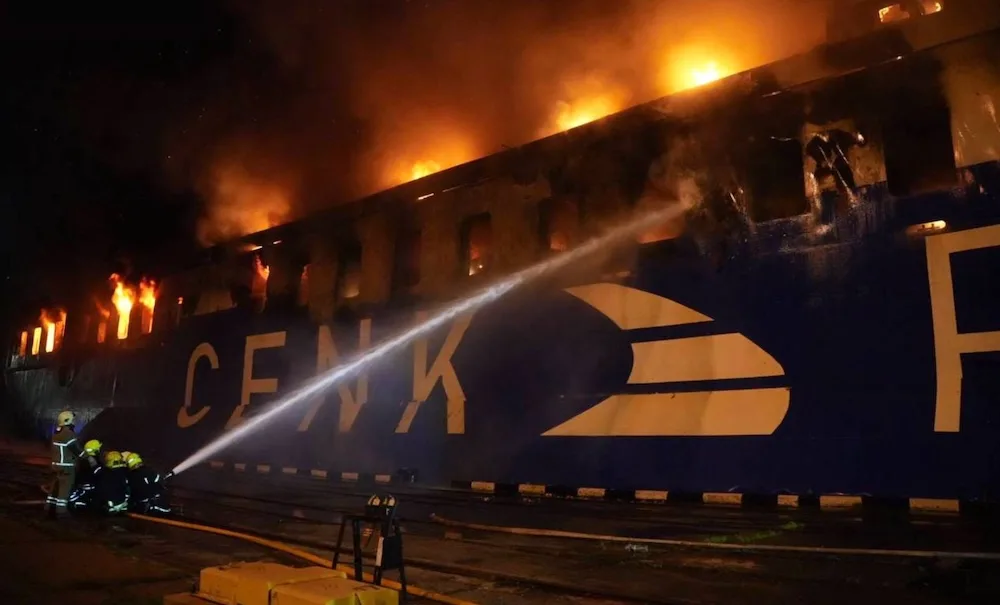
On Friday, Cenk Shipping’s ropax Cenk T (built 1978) caught fire while alongside in Chornomorsk after being hit during a large-scale Russian drone and missile barrage on Odesa region ports. The attack knocked out electricity across wide areas and forced the evacuation of the vessel’s crew.
Ukrainian officials said fires also broke out on a second ship in port, a container crane was damaged and a worker for a private company was injured. Later the same day, Russia again attacked Odesa port, damaging infrastructure and sparking another fire that was quickly extinguished.
Cenk Shipping said its vessel had been attacked at around 1600 local time. “There were no casualties among the crew, and damage was limited,” the owner said.
The violence spilled into open waters on Saturday when Chemtankers’ product tanker Viva (built 1999) was struck by a Russian drone while sailing in Ukrainian waters bound for Egypt. The Tuvalu-flagged, Turkish-owned tanker was carrying sunflower oil and was more than 20 miles off the Ukrainian coast, operating within the recognised grain corridor but outside Ukraine’s air defence coverage. The drone hit the accommodation block, leaving scorch marks and debris visible, but all 11 Turkish crewmembers were uninjured and the vessel continued its voyage.
The attacks came just hours after Turkish president Recep Tayyip Erdogan told Vladimir Putin that a limited ceasefire covering energy facilities and ports could be beneficial.
President Volodymyr Zelenskiy, posting images of a burning ship in Chornomorsk, said: “This proves once again that Russians not only fail to take the current opportunity for diplomacy seriously enough, but also continue the war precisely to destroy normal life in Ukraine.”
Security advisers are now sounding the alarm. Vanguard Tech warned that vessels calling at Odesa, Chornomorsk and Pivdennyi face “elevated risk from short-notice, high-intensity strikes targeting port infrastructure,” as Moscow seeks to make good on threats to cut Ukraine off from the sea after recent attacks on Russia’s so-called shadow fleet.
Labour groups have also weighed in. “Seafarers are not a weapon of war,” said Mark Dickinson of the International Transport Workers’ Federation. “They are civilians simply doing their jobs, often in extremely difficult and precarious conditions.”