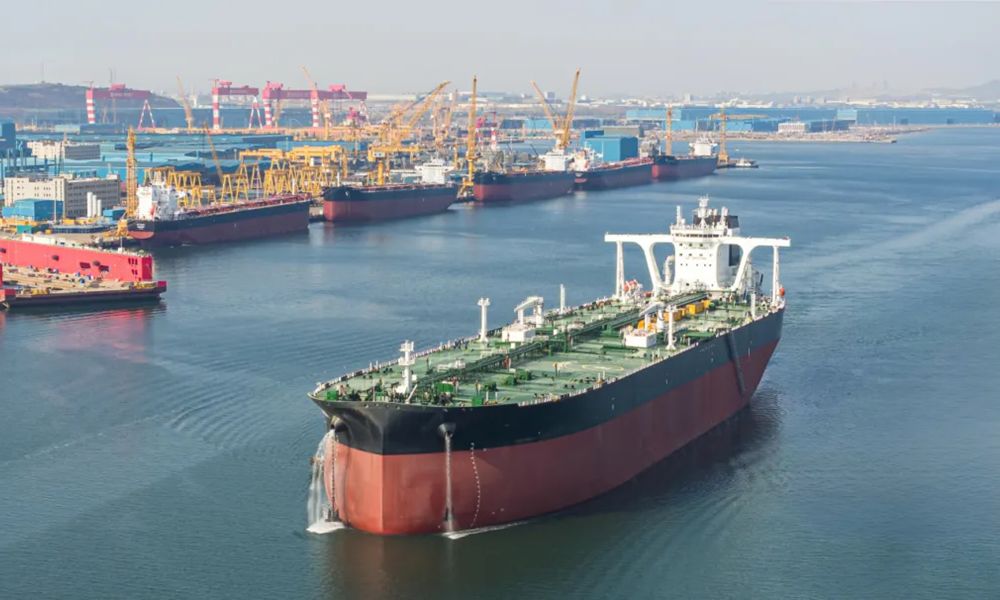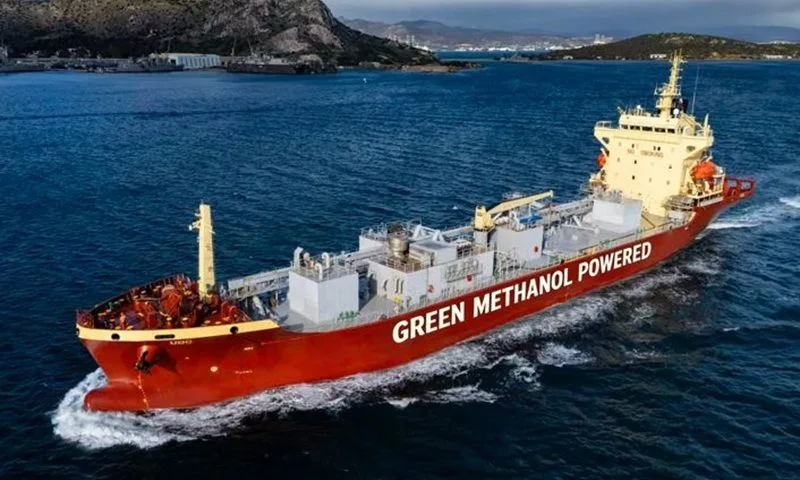
Germany’s Hartmann Group has teamed up with Heidelberg Materials Northern Europe to develop a new methanol-powered pneumatic cement carrier for high-frequency coastal service in Norway. The project includes an option for a second vessel and marks a major step in decarbonising cement transport along the Norwegian coast.
The newbuild will operate under a 10-year charter to Heidelberg Materials and is scheduled to enter service in early 2028. Designed to run on a mix of diesel and green methanol, the vessel is expected to reduce CO₂ emissions by around 80% — equivalent to as much as 6,000 tonnes annually compared with today’s fossil-fuelled ships.
Hartmann Reederei will oversee the vessel’s design, while United Bulk Carriers USA, another Hartmann subsidiary, will operate the ship. The former Hartmann company, InterMaritime Shipmanagement, will act as the technical manager. The three companies have a long history of working together with Heidelberg Materials on low-emission shipping projects.
The carrier is being engineered specifically for Norwegian coastal distribution, delivering cement from Brevik to major markets including Oslo, Bergen, Kristiansand and Stavanger. With a cargo capacity of about 9,000 dwt, roughly 1,000 tonnes more than the ship it will replace — the newbuild will consume less energy thanks to an optimised hull and power arrangement, the companies said.
Heidelberg Materials’ logistics director for Northern Europe, Knut Omreng, said the contract demonstrates the company’s long-term commitment to cleaner transport. “The vessel reduces emissions by 80% and increases our overall transport efficiency. A ten-year contract signals our commitment to supporting innovation and building lasting partnerships,” he said.
Hartmann Group CEO Niels Hartmann said the project underlines shipping’s ability to accelerate the shift to low-carbon fuels when cargo owners and operators work together. “We are committed to investing in environmentally friendly technologies that reduce the maritime carbon footprint. This initiative shows how collaboration can drive innovation in low-emission transport,” he said.
The Norwegian NOx Fund has approved NOK60m ($6m) in support for the project. According to NOx Fund CEO Tommy Johnsen, the grant was essential to making the methanol newbuild financially viable. “This vessel is a concrete result of public–private collaboration,” he said, adding that it sets a new standard for low-emission bulk transport.