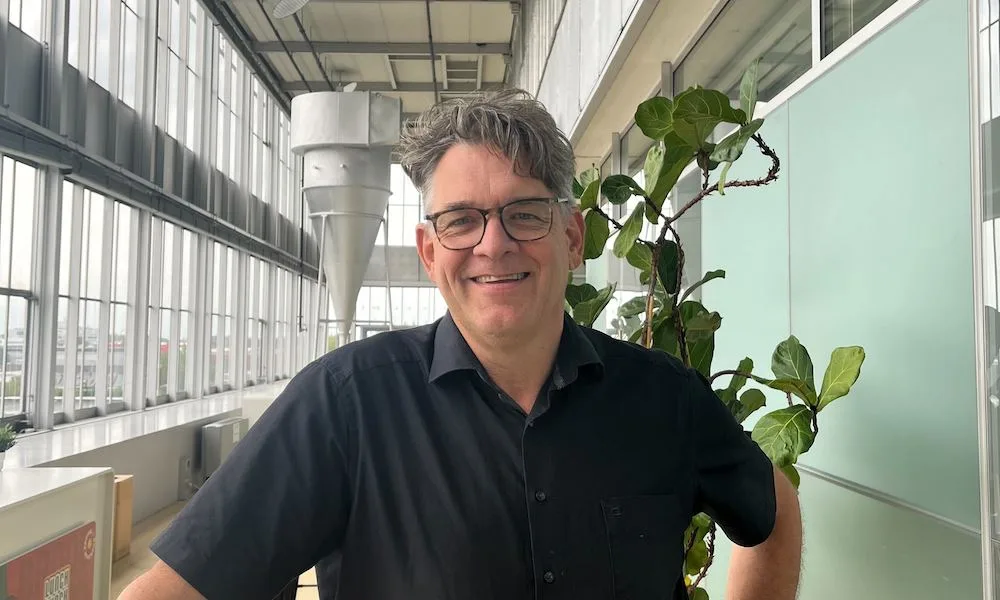
Shipping is standing on the edge of its biggest productivity shift in a generation – and this time, it’s not driven by a new hull design or fuel type, but by artificial intelligence. After years of hype, experimentation is giving way to practical deployment, and 2026 looks set to separate what works from what doesn’t, says Léon Gommans, the CEO of Dutch maritime digital specialist Teqplay.
“I think everyone expects AI to start changing things, and it definitely will have a big impact on the industry. People are experimenting, using it, and already seeing the advantages. In the next 12 months, we’ll learn what’s possible, what’s not yet possible, and what may even turn out to be infeasible,” Gommans tells Maritime CEO.
Gommans sees maritime as particularly suited to AI because so much of its workload is structured, repetitive and highly document-driven. “In maritime, there are many small, well-defined tasks people do, such as typing statements of facts, copying bills of lading, and entering them into systems. These are the kinds of activities AI will transform first.”
Beyond task automation, Gommans believes AI will increasingly move up the value chain into decision support.
“AI-supported tools will make decision-making easier by aggregating data and putting it into context instead of people searching and combining everything manually,” Gommans says. “Agentic AI, which connects the dots across data, is especially powerful here. It’s what humans were doing in many cases, and we’ll see that foundational layer being created now,” he explains.
At Teqplay, AI is already embedded in daily operations. “We use AI extensively in building solutions for the shipping market. It supports coding, testing, and development. It also helps in practical ways, such as doing research, spotting trends, and getting your head around ideas fast. Something that might have taken a day can now be done in minutes at a high level,” Gommans explains.
He is clear, however, that human oversight remains essential. “Is it perfect? No. But for what we use it for, it already does 80% of the work, with humans still in the loop. That will remain the case for quite a while.”
Across the wider industry, adoption is uneven. “As for shipping, AI is a hype, so everyone sees potential,” Gommans says, adding: “Some front-runners are creating smart applications, but actual use across companies is still limited. Bigger players are building knowledge, while smaller ones are applying it in practical ways such as drafting documents, contracts, emails, or validating information. It’s not yet a systemic change, but it has the potential to become one. With repetitive tasks, it’s not if but when.”
Cost remains the main barrier, as Gommans explains. “Shipping is always looking to reduce operational costs. That’s the main challenge for introducing new technologies. If something increases costs, companies won’t go for it unless there’s clear proof that savings outweigh the spend. The industry is conservative, it doesn’t act on belief but on things proven and trusted. That won’t change.”
Cost remains the main barrier, as Gommans explains. “Shipping is always looking to reduce operational costs. That’s the main challenge for introducing new technologies. If something increases costs, companies won’t go for it unless there’s clear proof that savings outweigh the spend. The industry is conservative, it doesn’t act on belief but on things proven and trusted. That won’t change.”
Looking ahead, Gommans is targeting one of shipping’s biggest inefficiencies: endless communication loops.
“A lot of work in the industry still revolves around communication, with people calling and emailing each other about the same facts,” Gommans says, adding: “Everyone talks about having a single point of truth, but the challenge is that everyone needs to adopt it, which isn’t easy because it disrupts relationships between people.”
Teqplay’s next step is aimed at untangling that web. “What we’re working on is a way to reduce the amount of communication or make it much easier. The goal is to give users knowledge at hand, not only by looking at a screen but also by showing them the relevant relationships connected to that knowledge.”